The Lure of the Self(ie) The Lure of the Self(ie)
Presentations:
Create a collage of images that represent the different typologies of the lure of the image, or explore a specific form of image seduction.
Create an image made of appropriated pictures or details, or a visual study through a grid of images. Look at the examples from Sara Cwynar, Alina Frieske, Jenny Odell, and Penelope Umbrico.
Upload a screenshot of your assignment with your name and a caption on this online document
Algorithmic selves: building identities through digital images
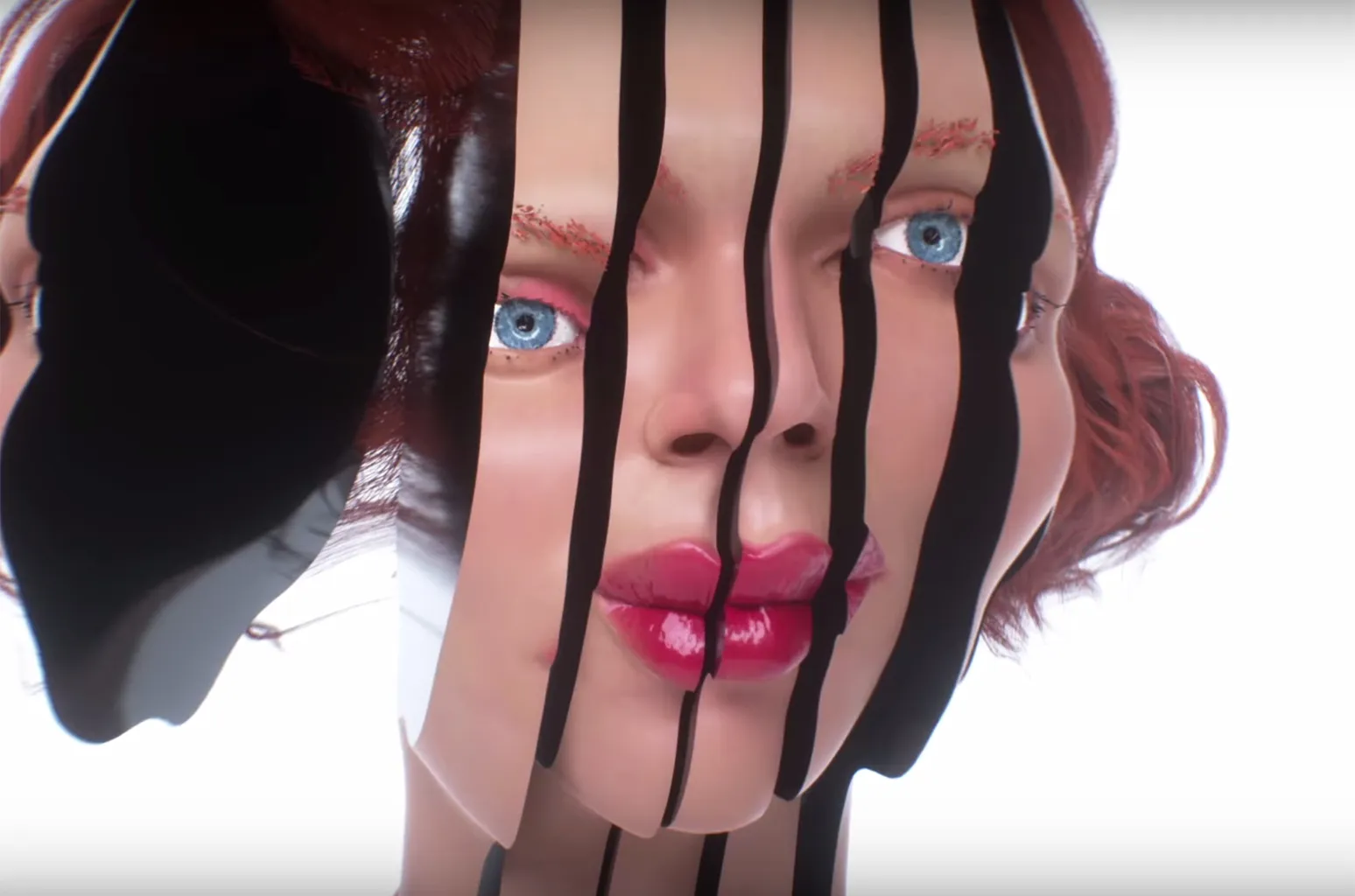
Sophie, Faceshopping, 2018
Claude Cahun, Selbstporträt, 1925
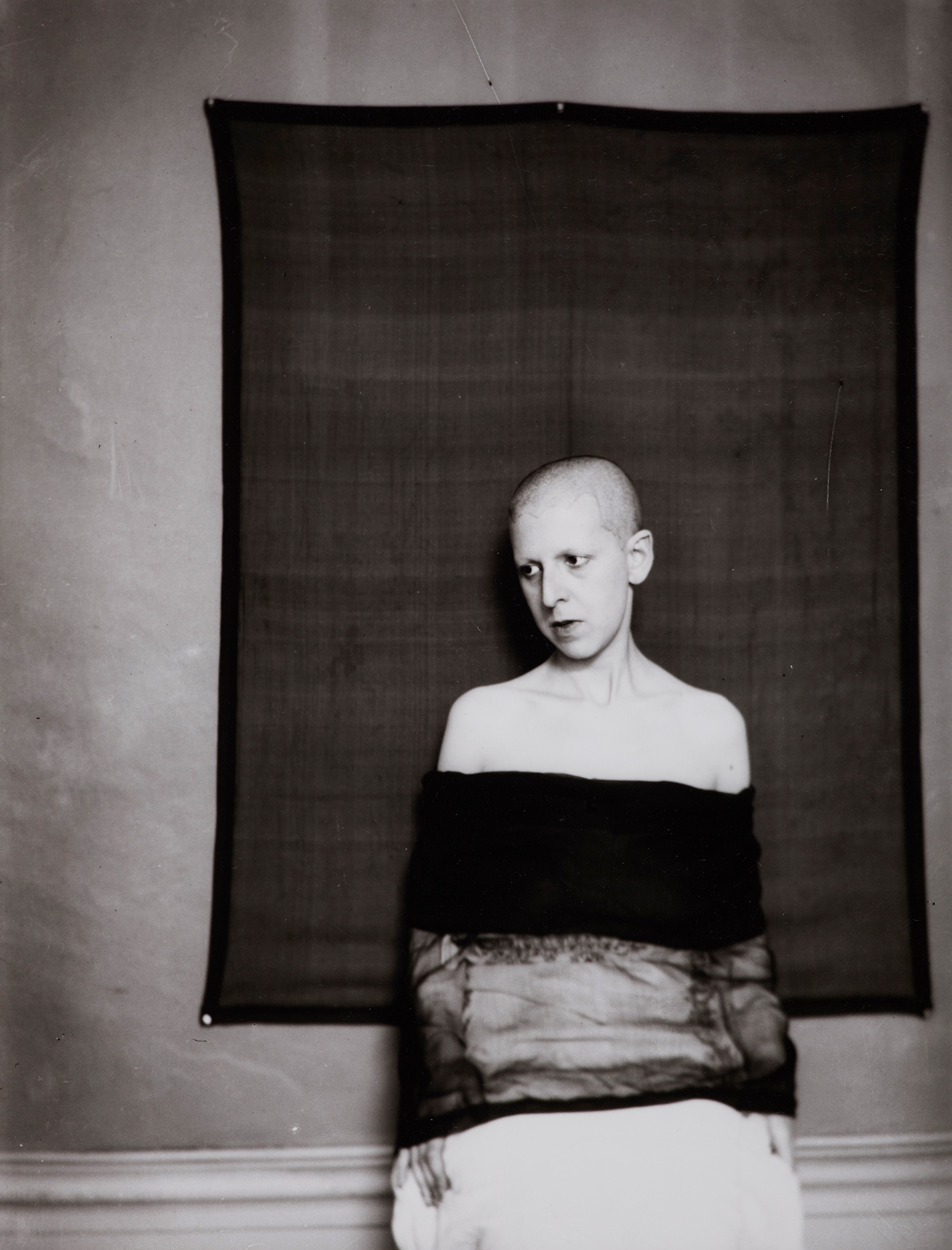
Within only a moment, we determine the identity of other people for ourselves. With her performative self-portraits, the French photographer Claude Cahun (1894–1954) undermines this social gaze by deliberately blurring the binary boundaries between the sexes. Consequently, the depicted personae, into whose shoes she briefly slips, cannot be clearly read as female or male.
Whether with the help of a barbell or by using accentuated lips – Cahun reinforces this gender-fluid game by integrating elements into her photographs that inevitably evoked binary connotations during her lifetime. Through exaggerated staging, Cahun exposes gender as a constructed, socio-cultural masquerade. The fact that her photographs were taken at a time when anti-Semitism and homophobia were prevalent makes the images seem all the more significant today. Finally, Cahun’s surrealist selfportraits also point to an early anticipation of the game with one’s own identity that one can now explore and express more fluidly by making use of avatars or face filters.ship to resurface.
Martha Rosler, Makeup/Hands Up, c. 1967–72
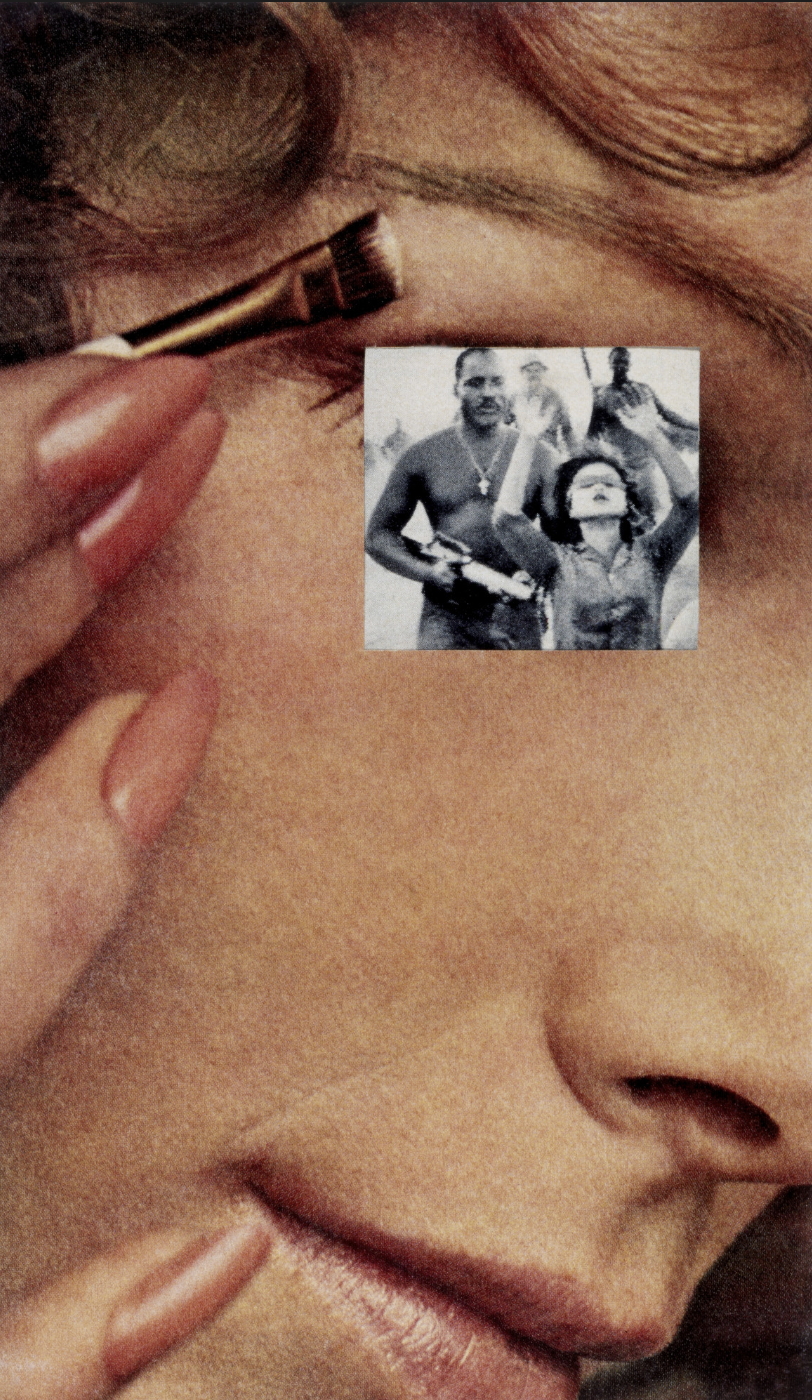
Martha Rosler originally distributed photocopies of House Beautiful: Bringing the War Home at anti–Vietnam War demonstrations. “I saw House Beautiful not as art,” she later reflected. “I wanted it to be agitational.” The artist created the original photomontages, from which these collages are derived, by combining news photographs of scorched battlefields in Vietnam with glossy advertisements for US homes, layering images of soldiers within cut-out silhouettes of men from polo-shirt advertisements; and splicing pictures of soldiers’ burials with those of military marches. By tying the destruction abroad to untroubled affluence at home, Rosler gave visual form to the description of the conflict as “the living-room war”—so called because it was the first war to be televised.
Cindy Sherman, Untitled Film Still #21, 1978
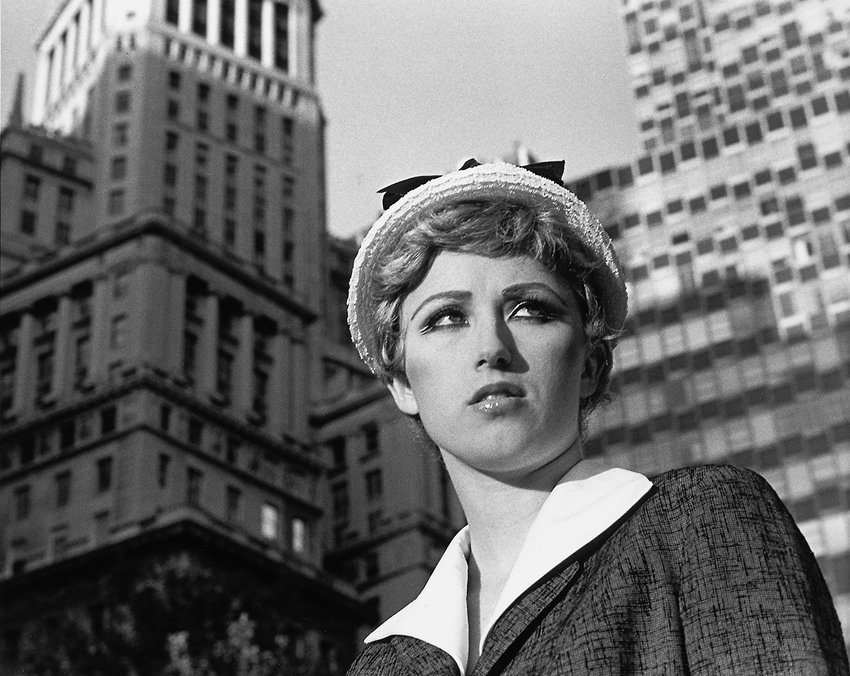
Cindy Sherman’s Untitled Film Stills (1977–1980) is a seminal series that redefines portrait photography by blurring the boundaries between identity, performance, and the constructed nature of self-representation. In these self-portraits, Sherman adopts various personas from imagined film stills, positioning herself as both subject and creator. This role play challenges traditional notions of the portrait as a singular, authentic representation of the self. Instead, Sherman’s work explores the fluidity of identity and the performative aspects of gender and social roles, highlighting how the self is often a role played for the camera, rather than a fixed essence. Through this subversion, Sherman prompts viewers to question the authenticity of identity in both the personal and public spheres. Sherman has worked with notion of identity, the self, and role playing throughout her entire career, also engaging with platforms like Instagram and AR face filters.
Andy Kassier, You Were Born To Stand Out – An Intimate ASMR Selfie Tutorial with Andy Kassier, 2019
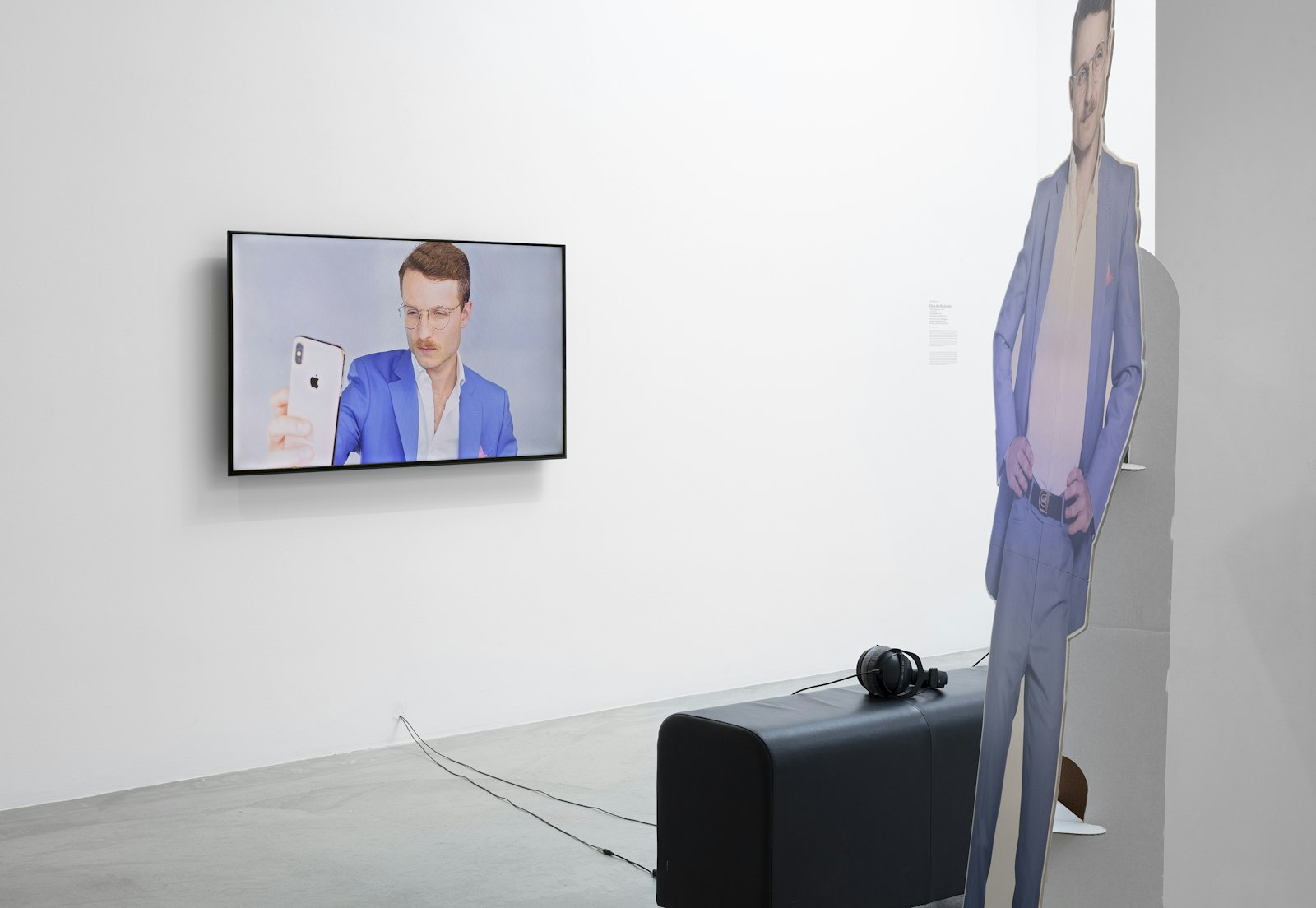
The Instagram performance Success Is Just a Smile Away (2013–) by German conceptual artist Andy Kassier is primarily concerned with issues of self-marketing on social media. With a healthy dash of irony, conveyed in overstated selfies and overmotivated captions, Kassier exposes the deceptive world of self-dramatisation and the depraved ideals of influencers who act as role models day in, day out on online platforms. They express themselves in an increasingly uniform visual language of prosperity by posing with money and luxury items – the flaunting and simultaneous exploitation of their own bodies for the mere sake of clicks and likes, an over-egged striving for success and an almost compulsive self-optimisation. The artist created the ASMR video tutorial You Were Born to Stand Out – An Intimate ASMR Selfie Tutorial with Andy Kassier for Fotomuseum Winterthur as a guide to taking the perfect selfie. In a few, simple steps, visitors can learn how to achieve media recognition thanks to an acoustically stimulating demonstration and then apply this directly next to a life-size cardboard stand-up of Andy Kassier.
Yuyi John, Julia’s Twitter 2, 2016
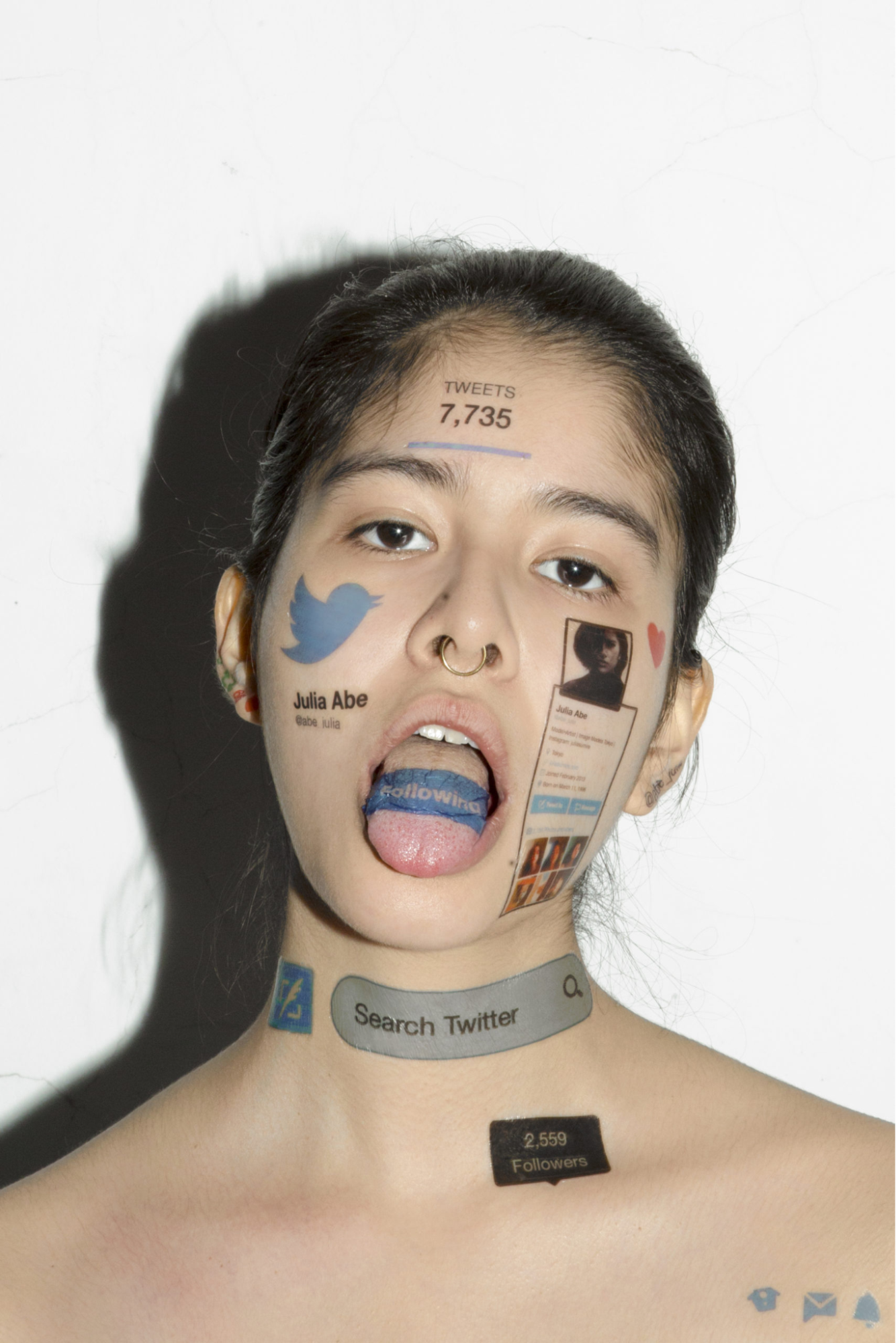
In the age of social media, the value of an image is determined by the number of likes and shares it gets: they transform the fleeting attention that the images are given into measurable and quantifiable units. Yuyi John (b. 1991) gives visual expression to this trend by affixing relevant icons to her skin as temporary tattoos.
The fact that attention has become the main form of currency is also illustrated by the artist’s cooperation with prestige brands, whose logos she tattoos onto her skin before posting her self-portraits on Instagram as promotion. In this way, the Taiwanese artist shows how the body has become the vehicle of media attention on social networks. At the same time, she also demonstrates how our bodies are occupied by these very platforms. They have an influence on how we present and perceive ourselves – and determine the value that we give to ourselves.
Robbie Cooper, Alter-ego, 2007–
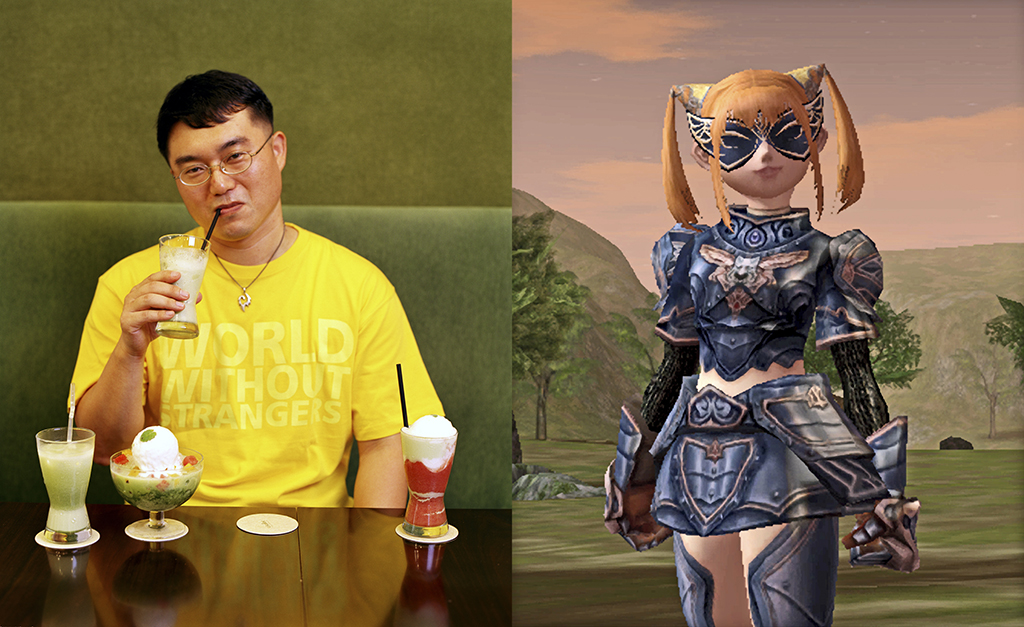
In the photo series Alter Ego, photographer Robbie Cooper presents side-by-side portraits of individuals and the digital avatars they inhabit in online virtual worlds. He began the project in 2007 after meeting people who spent meaningful parts of their lives inside platforms such as Second Life and World of Warcraft. Cooper photographed each participant in person and then captured the avatar they designed to represent themselves digitally, allowing viewers to see how identity changes when it is self-created rather than biologically inherited.
Through these pairings, Alter Ego explores how virtual spaces create opportunities for reinvention. Avatars can be idealised, exaggerated or used to express aspects of the self that may be hidden offline. The work examines the psychological distance between the body we have and the persona we build and asks whether our digital representations function as fantasies, projections or a more honest expression of who we are.
Lil Miquela, from Fluocéane
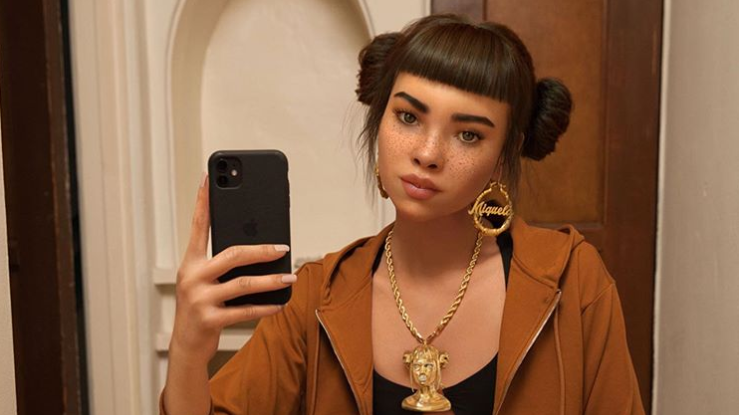
Lil Miquela is a digital character and virtual influencer created using computer-generated imagery (CGI). She first appeared on social media in 2016, presenting herself as a 19-year-old Brazilian-American model and musician. Despite being entirely fictional, Lil Miquela blurs the line between reality and virtuality, often engaging with fans, endorsing brands, and participating in social activism campaigns just like a human influencer. Her presence raises intriguing questions about identity, authenticity, and the future of social media marketing, as she interacts with real people in ways that challenge traditional notions of celebrity and influence.
Cibelle Cavalli Bastos, Themme Jewel, 2021
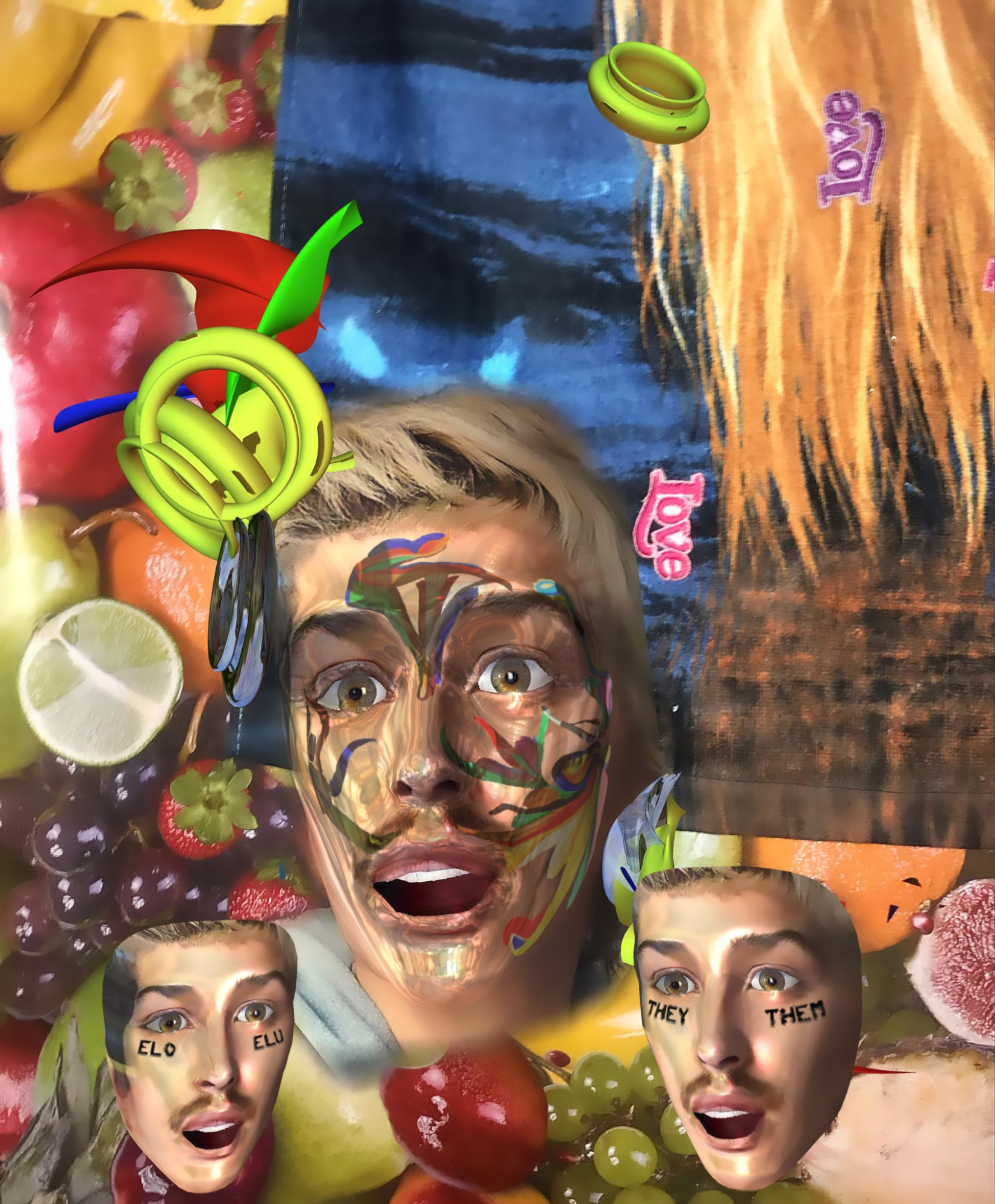
Brazilian-born artist and musician Cibelle Cavalli Bastos (b. 1978) uses their Instagram account @aevtarperform to create a continuous durational performance that challenges dominant narratives and normative ideas of gender and beauty reproduced and reinforced by the social media platform. Using Augmented Reality face filters that promote an understanding of non-binary identity and sharing critical content that supports trans-activist and anti-racist movements, the artist engages in a game with the platform, embracing the rules of networked image sharing while at the same time exposing the social construction of gender.
Cavalli Bastos also takes advantage of this mechanism by allowing users to ‘wear’ the artist’s filter – which overlays the pronouns ‘They/Them’ on their face – and to infiltrate their selfies into the social space of Instagram. Cavalli Bastos’s work reveals the fluid way in which identity is shaped and represented and the possibility of reclaiming corporate social media platforms as a space to investigate and shape the self.
Ines Alpha, from Fluocéane
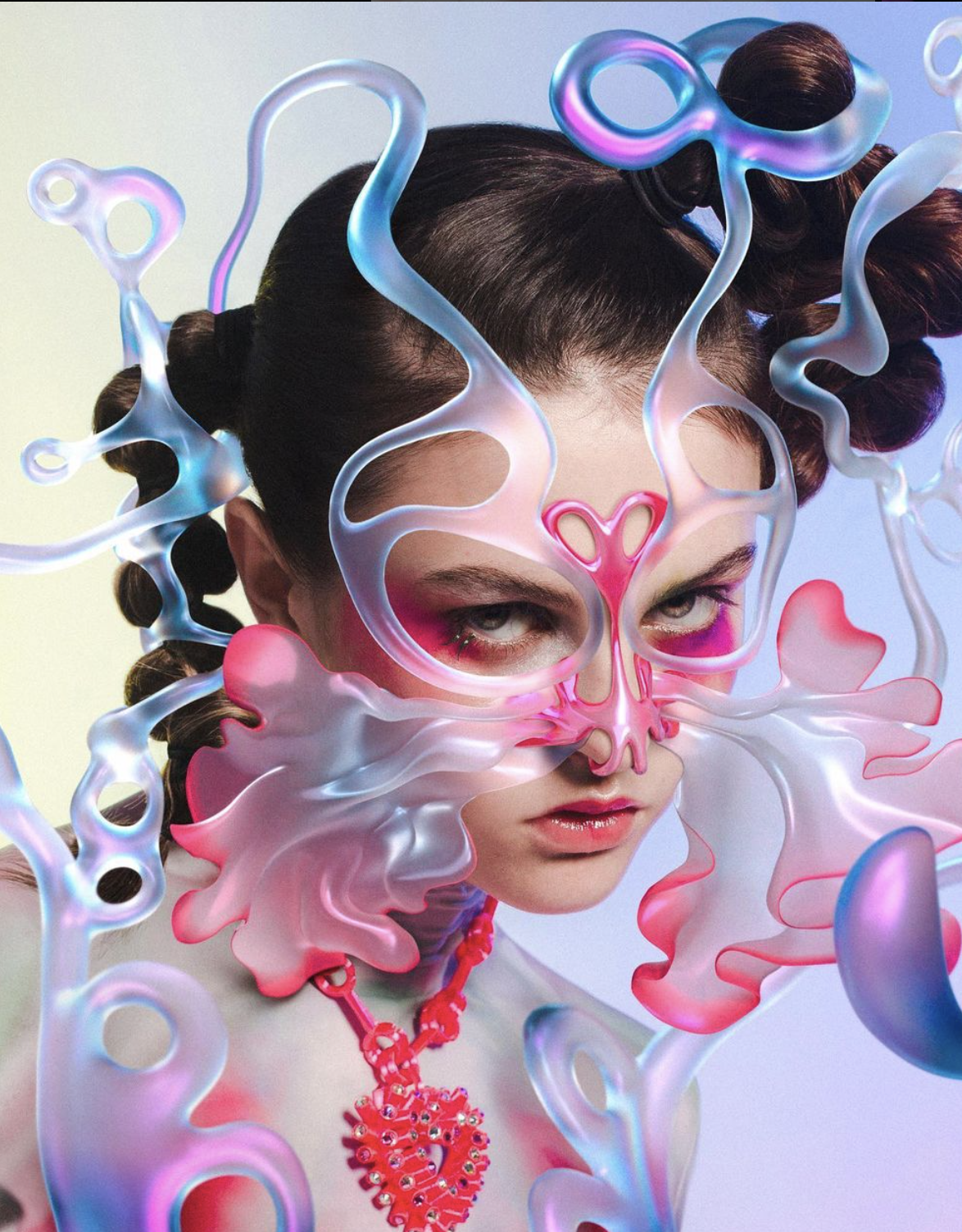
ines alpha is a digital artist and hybrid creator who started experimenting with 3D while digging the beauty industry as an art director. She then started to develop her signature style: 3D makeup. Using 3D softwares to combine makeup with tech, ines unfolds a forward-thinking approach to create ethereal, futuristic narratives and a new future within the beauty space.
Screen Walk with Zaiba Jabbar, 2020
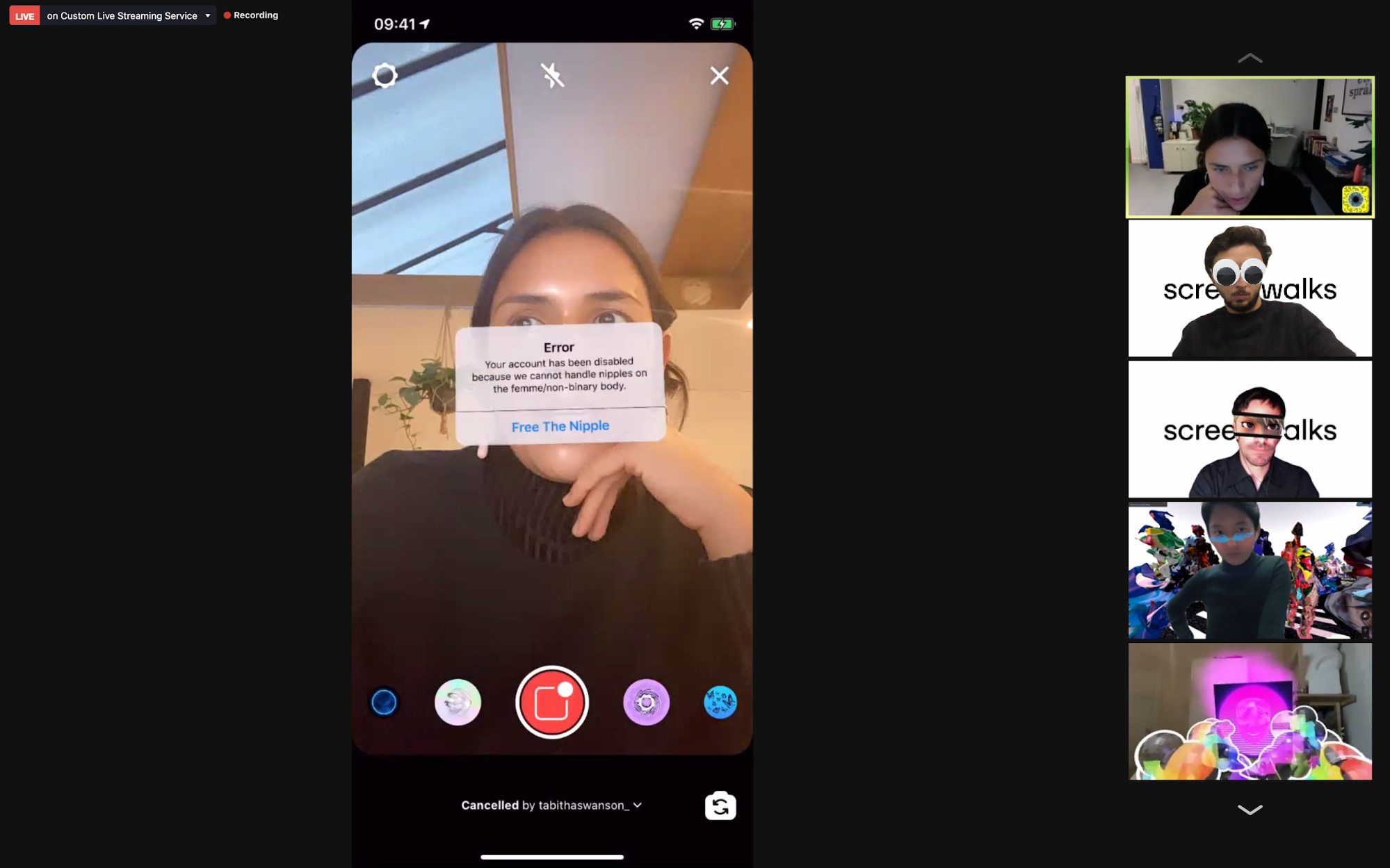
Screen Walk with Zaiba Jabbar, 2020
Screen Walk with Lauren A. Miller, 2024
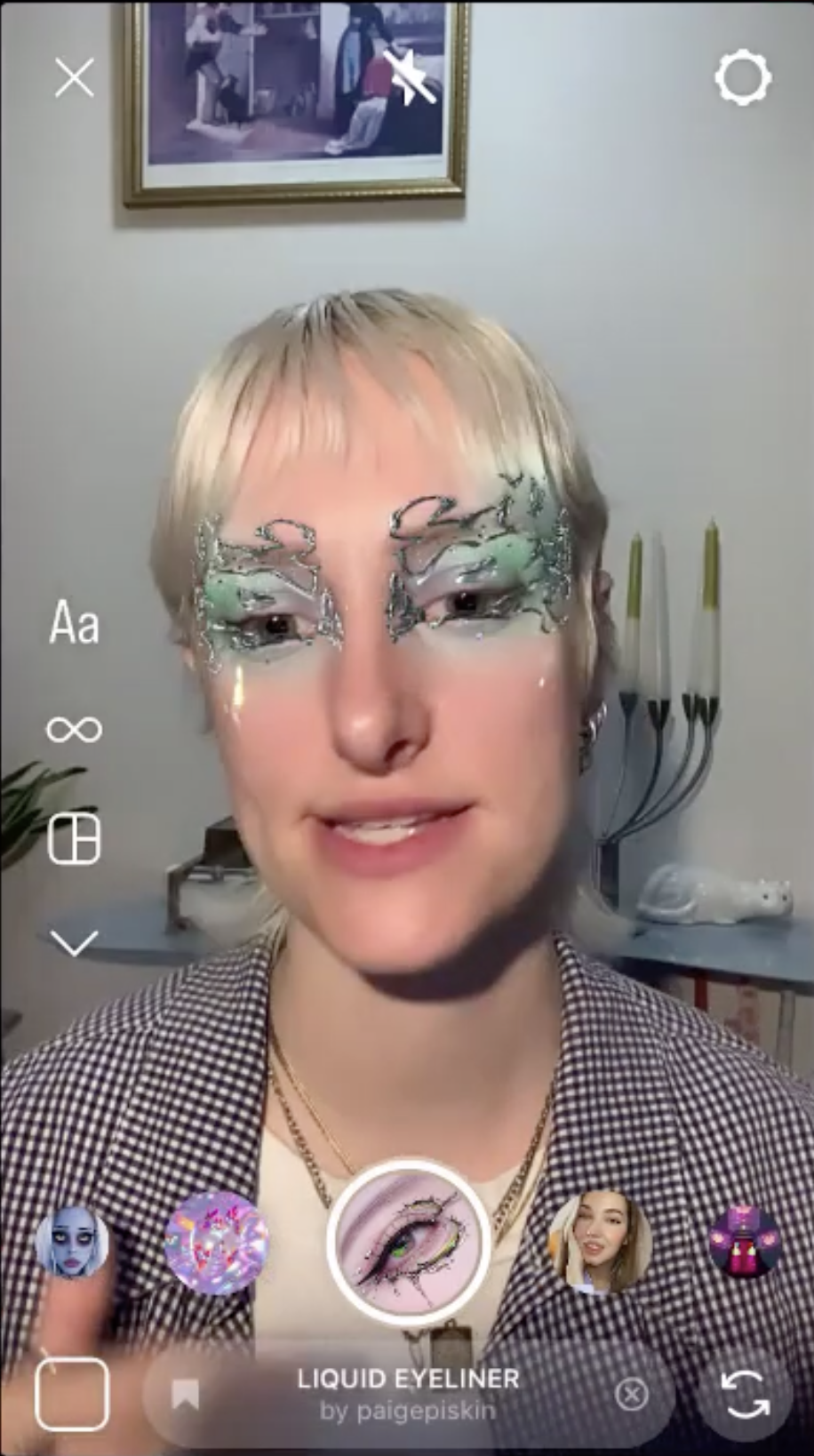
Screen Walk with Lauren A. Miller, 2024
Miller, L. A. (2025). Preserving the ephemeral: A visual typology of augmented reality filters on Instagram. Visual Studies, 40(3), 472–485. https://doi.org/10.1080/1472586X.2024.2341296
Éamonn Freel x Lynski, In the future, everything will be a trend for 15 seconds, 2025
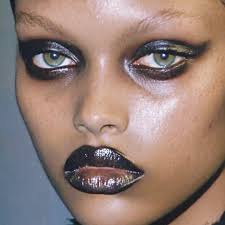
In the future, everything will be a trend for 15 seconds by visual artist Éamonn Freel (b. 1987) and makeup artist Lynski (b. 1991) explores the fleeting nature of digital beauty trends. Ethereal faces with glittering highlights and intricate 3D elements morph in rapid succession, creating an alluring yet unsettling viewing experience. The video work mirrors the accelerated trend cycles of the digital age, whose aesthetics emerge and fade within weeks, driven by ALGORITHMS [→P.7] and a continuous need of global online communities for novelty. At the heart of the work lies performative belonging through shared image material. Digital beauty culture is caught between the desire to conform to globalised ideals and the simultaneous urge to stand out through niche trends. Freel and Lynski envision a dystopian loop where individuals endlessly adopt and discard trends, performing them in real-time through AUGMENTED REALITY (AR) FILTERS [→P.7]. Their work comments on the blurring of the boundaries between identity, performance and the capitalist systems that perpetuate this cycle.
Tutorial
Assignment
Read: Gwendolyn Fàssler, The Allure of the Unreal: The Rise and Fall of Digital Trends, 2025
Make: Create a portrait that combines traditional photography and face filter techniques (or other digital forms of manipulation), and reflects on ideas of beauty, identity, and the role of digital and networked images in seducing through portrait photography and images of the face.