Virtual World Photoreportages Fotoreportagen aus virtuellen Welten
Presentations
Explore the idea of image copy through digital or analogue cameraless techniques: screenshots, digital scans, photograms or cyanotypes. Create a new context for the original images you copy inspired by the artworks explored in class. Create a series of at least 3 images.
Upload a screenshot of your assignment with your name and a caption on this online document
Study Cases
Marco Cadioli, Arenae, 2005
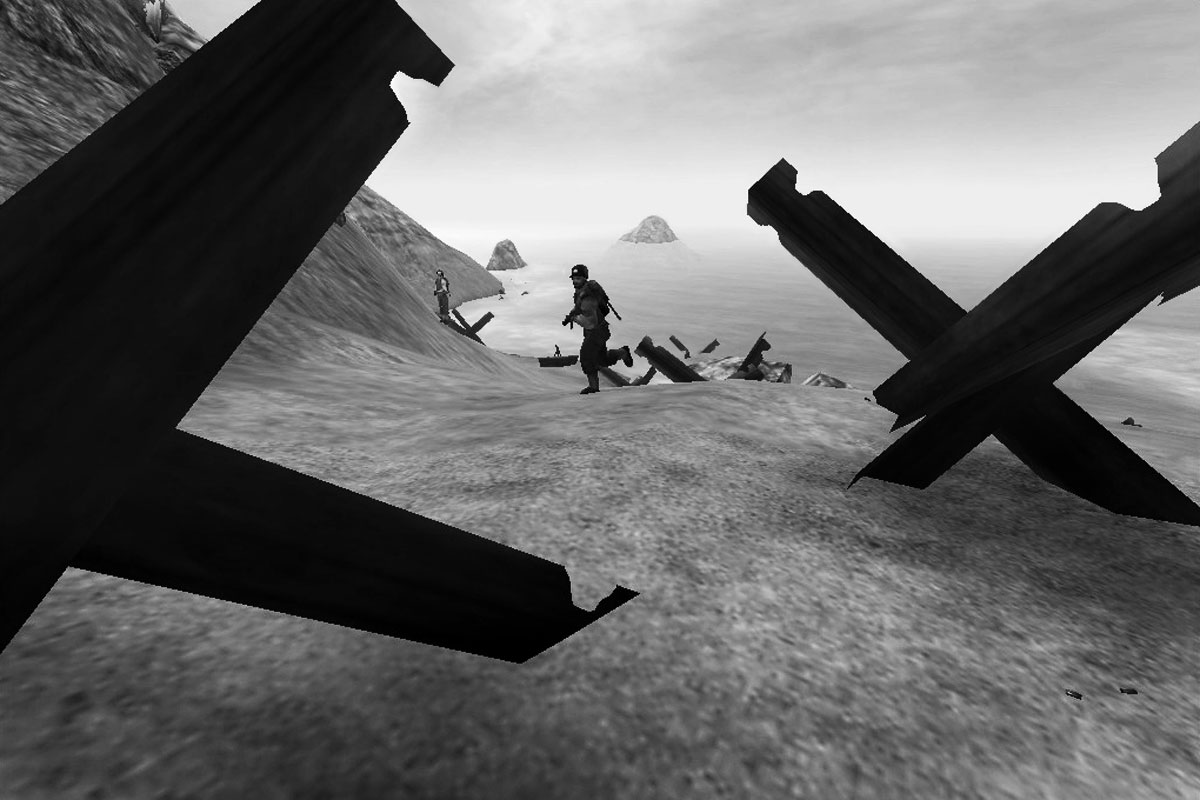
"Arenae [...] is the title of Marco Cadioli's photographic reportages from the virtual battlefields scattered across the net. Cadioli investigates the notion of simulated combat in online multiplayer games such as Counter-Strike, Wolfenstein: Enemy Territory, and Quake III: Arena. As the title itself suggests, Cadioli sees today's ludic arenae as an extension of the traditional arena, where gladiators fought for their lives to entertain a blood-thirsty audience. Multiplayer first-person shooters allow thousands of players to engage in a violent game of cat-and-mouse. These virtual spaces have their own rules, conventions, and limitations: one must search and destroy, kill or be killed, fight or be finished, hide and seek. Cadioli joins the servers, but only to play a peculiar role. He shoots, but does not kill. His weapon is a (virtual) camera. Like a modern-day Robert Capa, the Milanese photographer gets knee-deep in the trenches to capture the intensity of the fights. Under the guidance of an expert player, Gnj, Cadioli takes pictures of the soldiers. [...] He is using a virtual zoom, specifically designed for the job. The resulting 35mm black and white digital photographs evoke the look-and-feel of the "real" war stock photos. The collusion between memory and media is striking. All images are staged and fabricated, Cadioli implicitly suggests, so there seems to be not a significant difference between the photographs of a "real" war and screenshots take during gameplay. Our notions of past, conflict, and violence are made up of images. Arenae exemplifies Cadioli's fascination for what he calls "Internet Landscapes", the vistas and panorama that modern day explorers encounter on the net. Cadioli's goal is to document the transient, preserving these ephemeral moments form disappearing into oblivion. But the enclosed areas in which the fight takes place are also spaces of experimentation, interstitial zones between different planes of reality. Shooting avatars online becomes a pretext to socialize and interact." – Matteo Bittanti, 2005 – quoted on [artist website](https://marcocadioli.com/arenae/)
More about Arenae: marcocadioli.com/arenae
Roc Herms, Postcards from Home, 2016
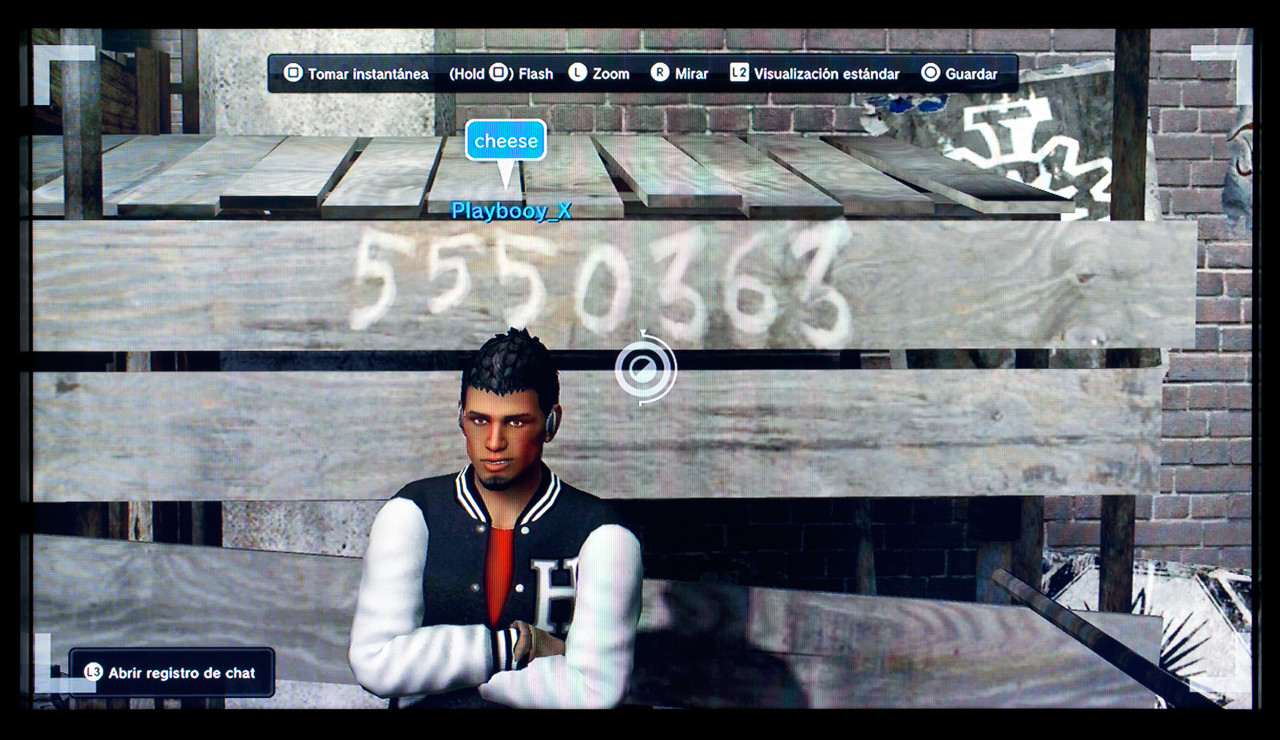
"With Second Life and virtual reality platforms like PlayStation Home, the world has split in two. In it we have total freedom to invent our own personality and choose any lifestyle we want; on screen we can continue our everyday tedium or we can embark on intrepid adventures. We can decide which virtual urban tribes we want to subscribe to, and, logically, in this world of possibilities, we can become photographers and choose between creating reports in the style of Cartier-Bresson or Robert Frank, or styling portraits like Richard Avedon or Diane Arbus. These dilemmas are some that Barcelonan Roc Herms faces with his project "Postcards from Home". In his virtual life, Herms is always there, camera at the ready, seeking out defining moments that celebrate diversity, in both thematic fixations and stylistic approaches." – Joan Fontcuberta, 2013 – quoted on [*artist website*](https://www.rocherms.com/projects/postcards-from-home/?lang=en)
- More about Postcards from Home: rocherms.com/projects/postcards-from-home
- Screen Walk with Roc Herms: youtube.com/watch?v=_T8ytKjhk1o
- Roc Herms’ Guided Tour of Virtual Worlds: youtube.com/watch?v=uzL4_bF9Ees
Robbie Cooper, Alter Ego, 2007
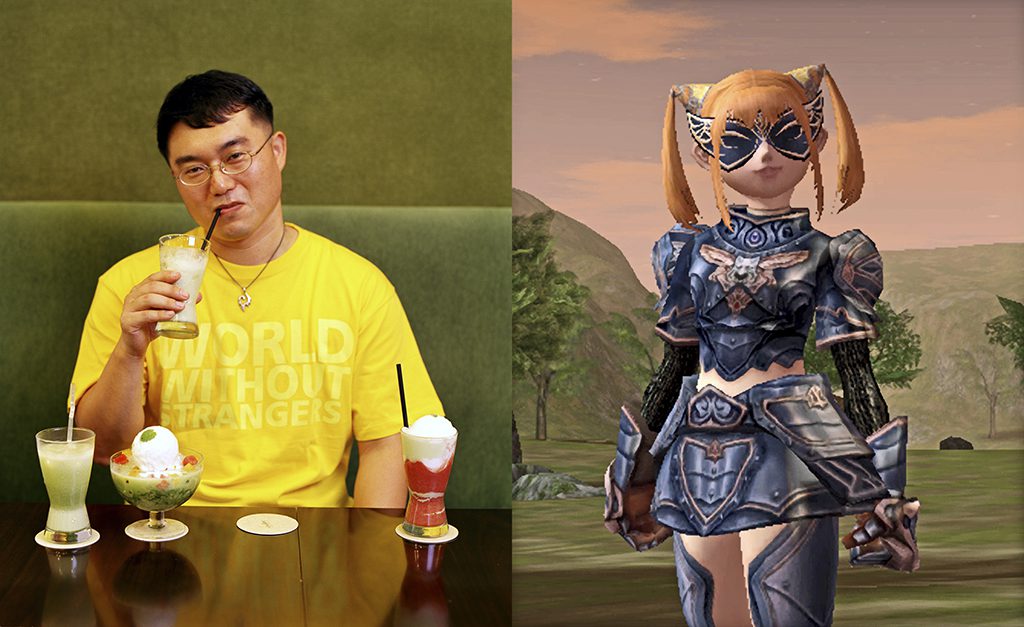
In 2003 I was photographing the CEO of a company, when he told me that he used virtual world games to play with his children. He was divorced and had bad access to them, so he would meet them every evening in "Everquest", where they would play and chat. I asked him, what did they talk about? He told me that they discussed things like homework, school, their mother; the normal stuff of humdrum reality. His description of this banal but emotionally important exchange, taking place in the vivid fantasy of the game, got me thinking about the nature of the game itself; it's a world of surface appearances and symbols. Within that, their interaction had been reduced to text; it was a technological extension of psychological models- the imaginary, and the symbolic structure of language. Reading the work of the economist Edward Castronova, it was already obvious that these surface appearances were rapidly achieving significant real world value, as items for sale between players. Castronova's 2001 paper "Virtual Worlds: A First Hand Account of Market and Society on the Cyberian Frontier" now seems quaint in how far it underestimated the rate of growth in this secondary market. But the level of demand was already climbing at an extraordinary rate. I spent the next three years, on and off, travelling to places like Korea, China, France and Germany to photograph people who use virtual world games. By recording the appearance of the real person, alongside that of their avatar, I wanted to compare each person with the identity that they'd created to interact with others online. – Robbie Cooper, [artist website](https://robbiecooper.com/project/alter-ego)
More about Alter Ego: robbiecooper.com/project/alter-ego
Eva and Franco Mattes, Portraits, 2006–2007
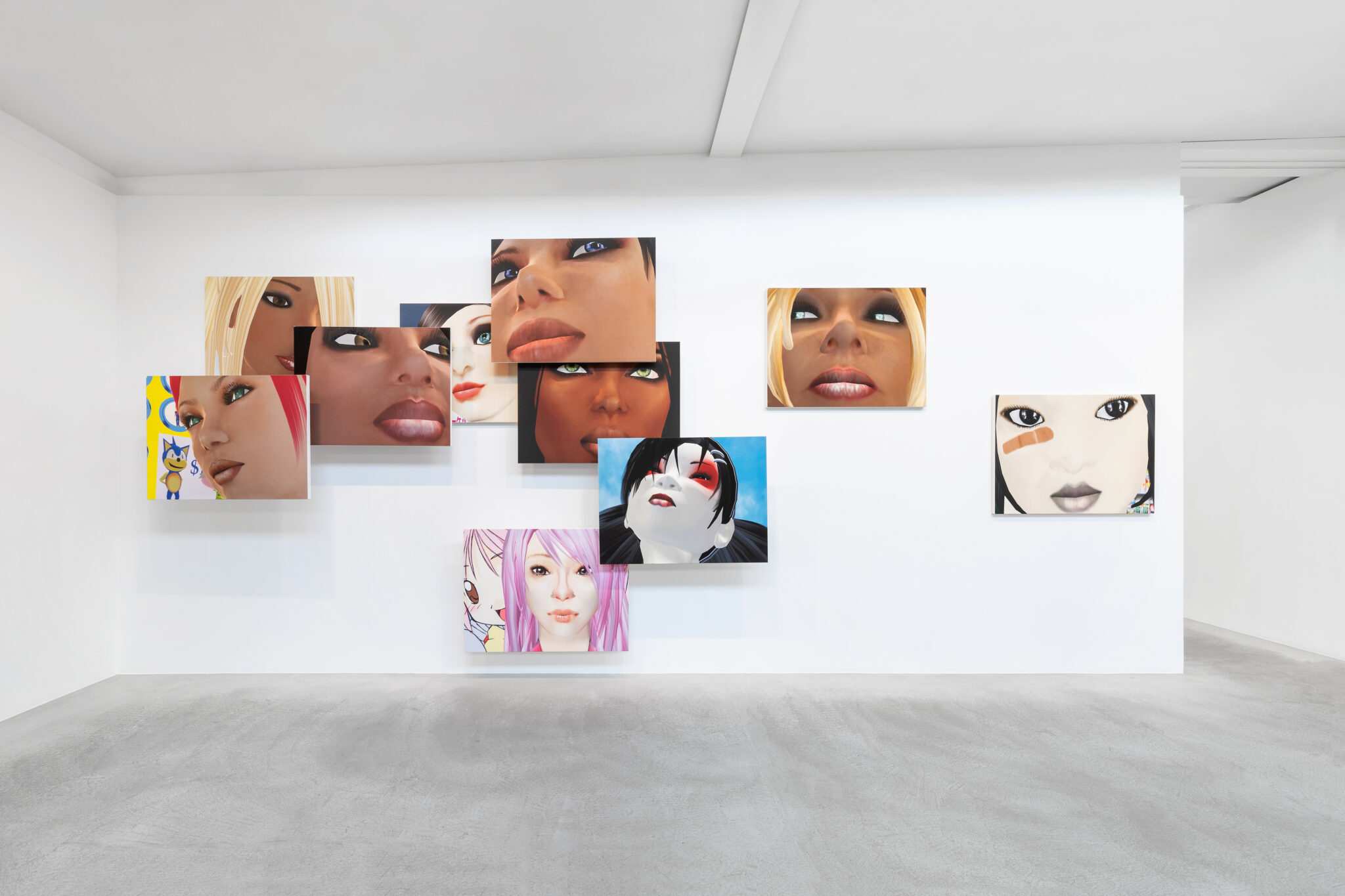
Portraits is an investigation into the construction of online identity through avatars, the virtual characters that we create as our proxy personas in video games and on online platforms. For their series of portraits, Eva & franco Mattes invited members of the Second Life community to virtual photo shootings, thus transferring the traditional photographic processes of sets, light and poses to an in-game environment. Printed on large-format canvases, the screenshot portraits are emotionally charged by the way their gazes address each other through the arrangement in the space. Computer-generated and pixelated, these portraits manifest a somewhat dated digital aesthetic that is reflective of the mid-2000s, while emphasising technological imperfection in the pursuit of digital photorealism. At the same time, they also speak to the ambivalence of their creators' hidden desires: the choice of avatar is both a projection and a retreat behind the digital facade. However, the women's faces, full-lipped and photographically frozen in extreme close-up, are trapped in stereotypical ideals of beauty – an expression of how the conventional gaze is perpetuated online and in virtual worlds, along with sexualised and sexist gender roles. – Doris Gassert, Fabio Paris, Mona Schubert (eds.), *Eva and Franco Mattes: Dear Imaginary Audience*, Exhibition Catalogue, Fotomuseum Winterthur, 2021
More about Portraits: 0100101110101101.org/portraits/
Joe Hunting, We met in VR Chat, 2022
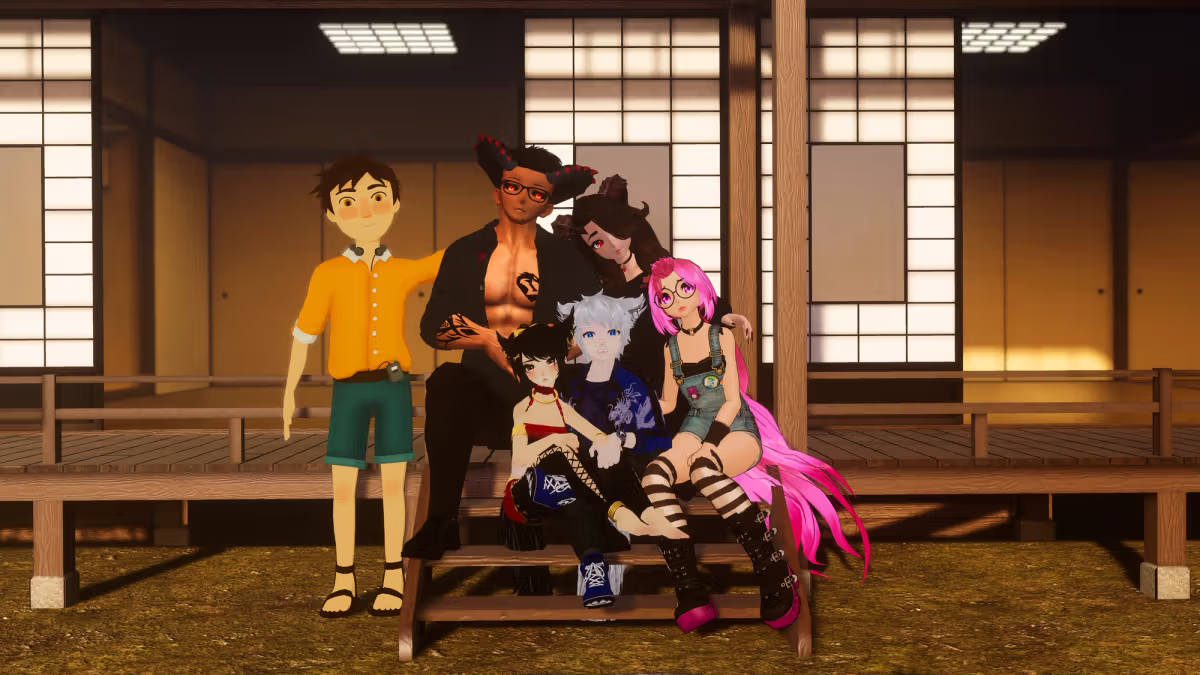
Filmed entirely inside the world of virtual reality, this immersive and revealing documentary roots itself in several unique communities within VRChat, a burgeoning social VR platform. Through observational scenes captured in real-time, in true documentary style, the film reveals the growing power and intimacy of several relationships formed in the virtual world, many of which began during the Covid-19 lockdown, while so many in the physical world were facing intense isolation. Although remaining wholly within the VR domain of avatars and imagined worlds, the film has the same elements of humour, serendipitous interactions and unexpected events that characterise documentary films made in real life. WE MET IN VIRTUAL REALITY tenderly documents the stories of people experiencing love, loss, and unexpected connection, expressing vulnerability around mental health struggles and questions about identity, offering a hyper real journey into the human experience of an online world that may soon shape the future. – [Raindance Immersive](https://www.raindanceimmersive.com/we-met-in-vr)
Other Accessible Virtual Worlds for Photography
Beyond VRChat, several other virtual platforms offer opportunities for photographic exploration:
- Second Life — The original social virtual world, still active with a photography community. It has a built-in snapshot tool with depth of field, lighting controls, and customizable resolution. Many of the artists discussed in this lesson worked extensively in Second Life.
- IMVU
- Rec Room — A free, cross-platform social game with simpler graphics but easy accessibility. Its camera tool allows basic photo capture in a wide variety of user-created environments.
- Hubs (previously Mozilla Hubs) — A web-based virtual world that runs directly in your browser. The service has been discontinued by the Mozilla Foundation but the Hubs Foundation has taken over. Setting up a new Hub requires time and resources, but joining an existing Hub is easy (try these or check the Hubs Foundation Discord). Screenshots can be taken with standard screen capture tools. Its accessibility makes it a low-barrier entry point for virtual world exploration.
Assignment
Choose a virtual world — VRChat, Second Life, Rec Room, IMVU, Roblox or another platform — and produce a photoreportage that documents a community, event, or aspect of daily life within it. Your reportage should go beyond simply capturing scenic environments. Approach the virtual world as a photojournalist would approach a physical location: observe how people behave, identify stories or social dynamics, and build a visual narrative around what you find.
Specifically, your project should include:
- A series of 8–12 images that together tell a coherent story or convey a specific theme.
- A short written text (200–300 words) that accompanies the images, contextualizing your reportage: Where did you go? What did you find? What story are you telling, and why?
Think about the photographic decisions you’re making: framing, timing, point of view, proximity to subjects. Consider how the conventions of documentary photography translate — or fail to translate — into a virtual context. What can you show in a virtual world that you couldn’t in the physical one? What is lost?
Präsentationen
Erkunde die Idee der Bildkopie durch digitale oder analoge kameralose Techniken: Screenshots, digitale Scans, Fotogramme oder Zyanotypien. Schaffe einen neuen Kontext für die Originalbilder, die du kopierst, inspiriert von den in der Lehrveranstaltung untersuchten Kunstwerken. Erstelle eine Serie von mindestens 3 Bildern.
Lade einen Screenshot deiner Aufgabe mit deinem Namen und einer Bildunterschrift in diesem Online-Dokument hoch.
Fallstudien
Marco Cadioli, Arenae, 2005
"Arenae [...] is the title of Marco Cadioli's photographic reportages from the virtual battlefields scattered across the net. Cadioli investigates the notion of simulated combat in online multiplayer games such as Counter-Strike, Wolfenstein: Enemy Territory, and Quake III: Arena. As the title itself suggests, Cadioli sees today's ludic arenae as an extension of the traditional arena, where gladiators fought for their lives to entertain a blood-thirsty audience. Multiplayer first-person shooters allow thousands of players to engage in a violent game of cat-and-mouse. These virtual spaces have their own rules, conventions, and limitations: one must search and destroy, kill or be killed, fight or be finished, hide and seek. Cadioli joins the servers, but only to play a peculiar role. He shoots, but does not kill. His weapon is a (virtual) camera. Like a modern-day Robert Capa, the Milanese photographer gets knee-deep in the trenches to capture the intensity of the fights. Under the guidance of an expert player, Gnj, Cadioli takes pictures of the soldiers. [...] He is using a virtual zoom, specifically designed for the job. The resulting 35mm black and white digital photographs evoke the look-and-feel of the "real" war stock photos. The collusion between memory and media is striking. All images are staged and fabricated, Cadioli implicitly suggests, so there seems to be not a significant difference between the photographs of a "real" war and screenshots take during gameplay. Our notions of past, conflict, and violence are made up of images. Arenae exemplifies Cadioli's fascination for what he calls "Internet Landscapes", the vistas and panorama that modern day explorers encounter on the net. Cadioli's goal is to document the transient, preserving these ephemeral moments form disappearing into oblivion. But the enclosed areas in which the fight takes place are also spaces of experimentation, interstitial zones between different planes of reality. Shooting avatars online becomes a pretext to socialize and interact." – Matteo Bittanti, 2005 – zitiert auf der [Website des Künstlers](https://marcocadioli.com/arenae/)
Mehr über Arenae: marcocadioli.com/arenae
Roc Herms, Postcards from Home, 2016
"With Second Life and virtual reality platforms like PlayStation Home, the world has split in two. In it we have total freedom to invent our own personality and choose any lifestyle we want; on screen we can continue our everyday tedium or we can embark on intrepid adventures. We can decide which virtual urban tribes we want to subscribe to, and, logically, in this world of possibilities, we can become photographers and choose between creating reports in the style of Cartier-Bresson or Robert Frank, or styling portraits like Richard Avedon or Diane Arbus. These dilemmas are some that Barcelonan Roc Herms faces with his project "Postcards from Home". In his virtual life, Herms is always there, camera at the ready, seeking out defining moments that celebrate diversity, in both thematic fixations and stylistic approaches." – Joan Fontcuberta, 2013 – zitiert auf der [*Website des Künstlers*](https://www.rocherms.com/projects/postcards-from-home/?lang=en)
- Mehr über Postcards from Home: rocherms.com/projects/postcards-from-home
- Screen Walk mit Roc Herms: youtube.com/watch?v=_T8ytKjhk1o
Robbie Cooper, Alter Ego, 2007
Im Jahr 2003 fotografierte ich den CEO eines Unternehmens, als er mir erzählte, dass er virtuelle Welten nutzte, um mit seinen Kindern zu spielen. Er lebte getrennt von ihnen und hatte nur eingeschränkten Zugang zu ihnen, weshalb er sie jeden Abend in "Everquest" traf, wo sie gemeinsam spielten und plauderten. Ich fragte ihn, worüber sie sprachen. Er erzählte mir, dass sie über Dinge wie Hausaufgaben, die Schule und ihre Mutter redeten — die ganz normalen Dinge des Alltags. Seine Beschreibung dieses banalen, aber emotional bedeutsamen Austauschs, der in der lebhaften Fantasie des Spiels stattfand, ließ mich über die Natur des Spiels selbst nachdenken: Es ist eine Welt der Oberflächen und Symbole. Innerhalb dieser Welt war ihre Kommunikation auf Text reduziert — eine technologische Erweiterung psychologischer Modelle: des Imaginären und der symbolischen Struktur der Sprache. Durch die Lektüre des Ökonomen Edward Castronova wurde mir bereits klar, dass diese Oberflächen und Erscheinungen rasch einen bedeutenden realen Wert erlangten, da Gegenstände zwischen Spieler:innen gehandelt wurden. Castronovas Aufsatz von 2001 „Virtual Worlds: A First Hand Account of Market and Society on the Cyberian Frontier" wirkt heute naiv angesichts dessen, wie stark er das Wachstum dieses Sekundärmarkts unterschätzt hat. Doch die Nachfrage stieg damals bereits in außerordentlichem Tempo. In den folgenden drei Jahren reiste ich immer wieder in Länder wie Korea, China, Frankreich und Deutschland, um Menschen zu fotografieren, die virtuelle Welten nutzen. Indem ich das Erscheinungsbild der realen Person neben dem ihres Avatars festhielt, wollte ich jeden Menschen mit der Identität vergleichen, die er oder sie sich geschaffen hatte, um online mit anderen zu interagieren. – Robbie Cooper, [Website des Künstlers](https://robbiecooper.com/project/alter-ego)
Mehr über Alter Ego: robbiecooper.com/project/alter-ego
Eva und Franco Mattes, Portraits, 2006–2007
Portraits ist eine Untersuchung der Konstruktion von Online-Identität durch Avatare — jene virtuellen Figuren, die wir als Stellvertreter-Personas in Videospielen und auf Online-Plattformen erschaffen. Für ihre Porträtserie luden Eva & Franco Mattes Mitglieder der Second-Life-Gemeinschaft zu virtuellen Fotoshootings ein und übertrugen damit die traditionellen fotografischen Prozesse von Set, Licht und Pose in eine In-Game-Umgebung. Auf großformatigen Leinwänden gedruckt, entfalten die Screenshot-Porträts eine emotionale Wirkung durch die Art, wie die Blicke der Dargestellten sich in der räumlichen Anordnung begegnen. Computergeneriert und pixelig, verkörpern diese Porträts eine etwas veraltete digitale Ästhetik, die für die Mitte der 2000er Jahre typisch ist, und betonen dabei technologische Unvollkommenheit im Streben nach digitalem Fotorealismus. Zugleich verweisen sie auf die Ambivalenz der verborgenen Wünsche ihrer Schöpfer:innen: Die Wahl des Avatars ist sowohl Projektion als auch Rückzug hinter die digitale Fassade. Die Gesichter der Frauen jedoch — vollippig und fotografisch eingefroren in extremer Nahaufnahme — sind in stereotypen Schönheitsidealen gefangen; ein Ausdruck dafür, wie der konventionelle Blick online und in virtuellen Welten fortgeschrieben wird, zusammen mit sexualisierten und sexistischen Geschlechterrollen. – Doris Gassert, Fabio Paris, Mona Schubert (Hg.), *Eva and Franco Mattes: Dear Imaginary Audience*, Ausstellungskatalog, Fotomuseum Winterthur, 2021
Mehr über Portraits: 0100101110101101.org/portraits/
Joe Hunting, We met in VR Chat, 2022
Filmed entirely inside the world of virtual reality, this immersive and revealing documentary roots itself in several unique communities within VRChat, a burgeoning social VR platform. Through observational scenes captured in real-time, in true documentary style, the film reveals the growing power and intimacy of several relationships formed in the virtual world, many of which began during the Covid-19 lockdown, while so many in the physical world were facing intense isolation. Although remaining wholly within the VR domain of avatars and imagined worlds, the film has the same elements of humour, serendipitous interactions and unexpected events that characterise documentary films made in real life. WE MET IN VIRTUAL REALITY tenderly documents the stories of people experiencing love, loss, and unexpected connection, expressing vulnerability around mental health struggles and questions about identity, offering a hyper real journey into the human experience of an online world that may soon shape the future. – [Raindance Immersive](https://www.raindanceimmersive.com/we-met-in-vr)
Weitere zugängliche virtuelle Welten für die Fotografie
Neben VRChat bieten verschiedene andere virtuelle Plattformen Möglichkeiten zur fotografischen Erkundung:
- Second Life — Die ursprüngliche soziale virtuelle Welt, noch immer aktiv mit einer Fotografiegemeinschaft. Sie verfügt über ein integriertes Snapshot-Tool mit Schärfentiefe, Lichtsteuerung und anpassbarer Auflösung. Viele der in dieser Lektion besprochenen Künstler:innen haben intensiv in Second Life gearbeitet.
- IMVU
- Rec Room — Ein kostenloses, plattformübergreifendes Sozialspiel mit einfacherer Grafik, aber leichter Zugänglichkeit. Das Kamera-Tool ermöglicht grundlegende Fotoaufnahmen in einer Vielzahl von nutzergenerierten Umgebungen.
- Hubs (ehemals Mozilla Hubs) — Eine webbasierte virtuelle Welt, die direkt im Browser läuft. Der Dienst wurde von der Mozilla Foundation eingestellt, aber die Hubs Foundation hat ihn übernommen. Die Einrichtung eines neuen Hubs erfordert Zeit und Ressourcen, aber das Beitreten zu einem bestehenden Hub ist einfach (probiere diese aus oder schaue im Hubs Foundation Discord nach). Screenshots können mit Standard-Bildschirmaufnahme-Tools erstellt werden. Die Zugänglichkeit macht es zu einem niedrigschwelligen Einstiegspunkt in die Erkundung virtueller Welten.
Aufgabe
Wähle eine virtuelle Welt — VRChat, Second Life, Rec Room, IMVU, Roblox oder eine andere Plattform — und erstelle eine Fotoreportage, die eine Community, ein Ereignis oder einen Aspekt des Alltagslebens darin dokumentiert.
Deine Reportage sollte über das bloße Erfassen malerischer Umgebungen hinausgehen. Nähere dich der virtuellen Welt so, wie ein Fotojournalist oder eine Fotojournalistin einen physischen Ort angehen würde: Beobachte, wie sich Menschen verhalten, identifiziere Geschichten oder soziale Dynamiken und baue eine visuelle Erzählung um das auf, was du findest.
Konkret sollte dein Projekt Folgendes umfassen:
- Eine Serie von 8–12 Bildern, die gemeinsam eine kohärente Geschichte erzählen oder ein bestimmtes Thema vermitteln.
- Einen kurzen schriftlichen Text (200–300 Wörter), der die Bilder begleitet und deine Reportage kontextualisiert: Wohin bist du gegangen? Was hast du vorgefunden? Welche Geschichte erzählst du, und warum?
Denke über die fotografischen Entscheidungen nach, die du triffst: Bildausschnitt, Timing, Blickwinkel, Nähe zu den Motiven. Überlege, wie sich die Konventionen der Dokumentarfotografie in einen virtuellen Kontext übertragen lassen — oder eben nicht. Was kannst du in einer virtuellen Welt zeigen, was in der physischen Welt nicht möglich wäre? Was geht verloren?