Digital Architecture Photography Digitale Architekturfotografie
Presentations
Choose a virtual world and produce a photoreportage that documents a community, event, or aspect of daily life within it. Your reportage should go beyond simply capturing scenic environments. Approach the virtual world as a photojournalist would approach a physical location: observe how people behave, identify stories or social dynamics, and build a visual narrative around what you find.
- A series of 8–12 images that together tell a coherent story or convey a specific theme.
- A short written text (200–300 words) that accompanies the images, contextualizing your reportage: Where did you go? What did you find? What story are you telling, and why?
Upload the text and the images with your name and a caption on this online document
Architecture has become increasingly entangled with digital image-making. Long before a building is constructed, it exists as a rendering: a photorealistic simulation circulated in planning documents, projected onto construction hoardings, or shared in urban development campaigns. The same logic governs virtual worlds — the buildings that populate computer games, metaverses, and online environments are designed and photographed through the same tools and conventions as their real-world counterparts, yet they follow entirely different rules of physics, materiality, and access.
In this lesson, we look at artists and designers who approach this digital architecture with a photographic mindset — using screenshotting, modded cameras, and digital photogrammetry to investigate spaces that can only exist on screen. Their practices raise cultural and political questions of simulation, and the role of architecture between digital image and physical reality.
Study Cases
Mascha Negri, Luftige Enge, 2023
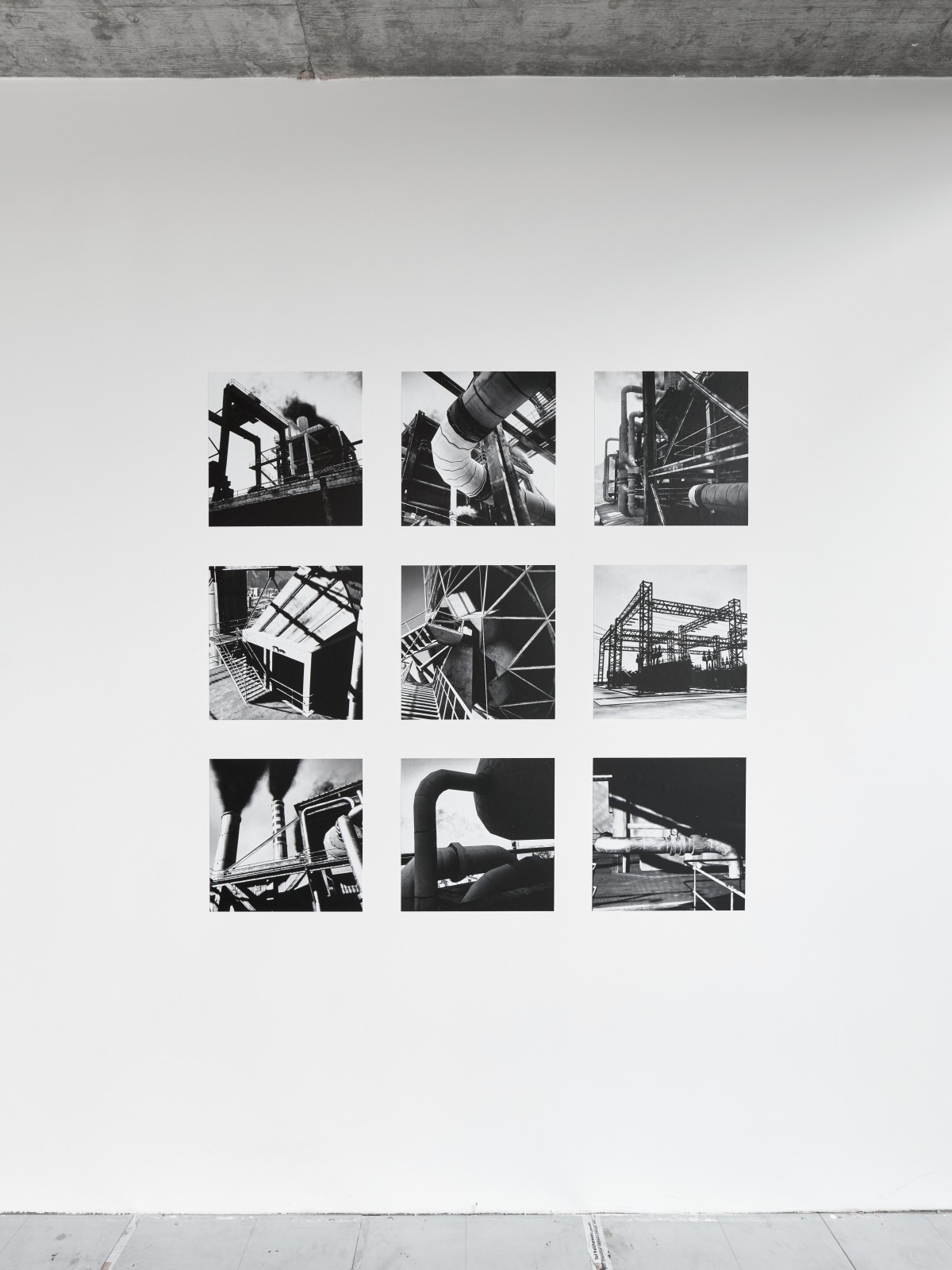
In Luftige Enge, Mascha Negri explores the industrial zones of Los Santos, seeking perspectives and angles reminiscent of photographers Germaine Krull as well as Bernd and Hilla Becher. As Negri navigates through the game's structures, the images reveal the pixels of the screen, the polygons shaping the 3D architecture, and the textures of virtual pipes and chimneys. Utilising a smartphone camera, Negri captures the game screen, emphasising the simulated environment's characteristics while aligning with the tradition of black and white architectural photography. Through digital editing on a smartphone app, she applies high-contrast black and white filters to accentuate the geometric forms of the structures. «Airy narrow» – the English translation of Luftige Enge – aptly describes the juxtaposition of the ephemeral smoke emanating from the pipes against the substantial, densely packed buildings. This title points to the contrasts between the ethereal and the solid, the analog and the digital. Furthermore, these dichotomies reflect broader themes: the shift from a post-industrial society to the burgeoning game industry economy, and the representation of disappearing heavy industries in the West through the game's virtual buildings. Finally, Negri's project invites viewers to consider the temporality and transience of urban industrial landscapes, both real and simulated. By focusing on the interplay of light and shadow, her photographs not only document the environment of Los Santos but also evoke a sense of puzzling nostalgia for the architectural heritage of industrialisation, further enriching the layers of interpretation in her work. This element adds depth to the visual dialogue about the evolution of industrial spaces in both physical and digital realms. – Marco De Mutiis and Matteo Bittanti, The Photographer's Guide to Los Santos, 2024
- More about Luftige Enge: gta5.photography/artworks/luftige-enge
Maxim Zmeyev, Type 1.5.11., 2021
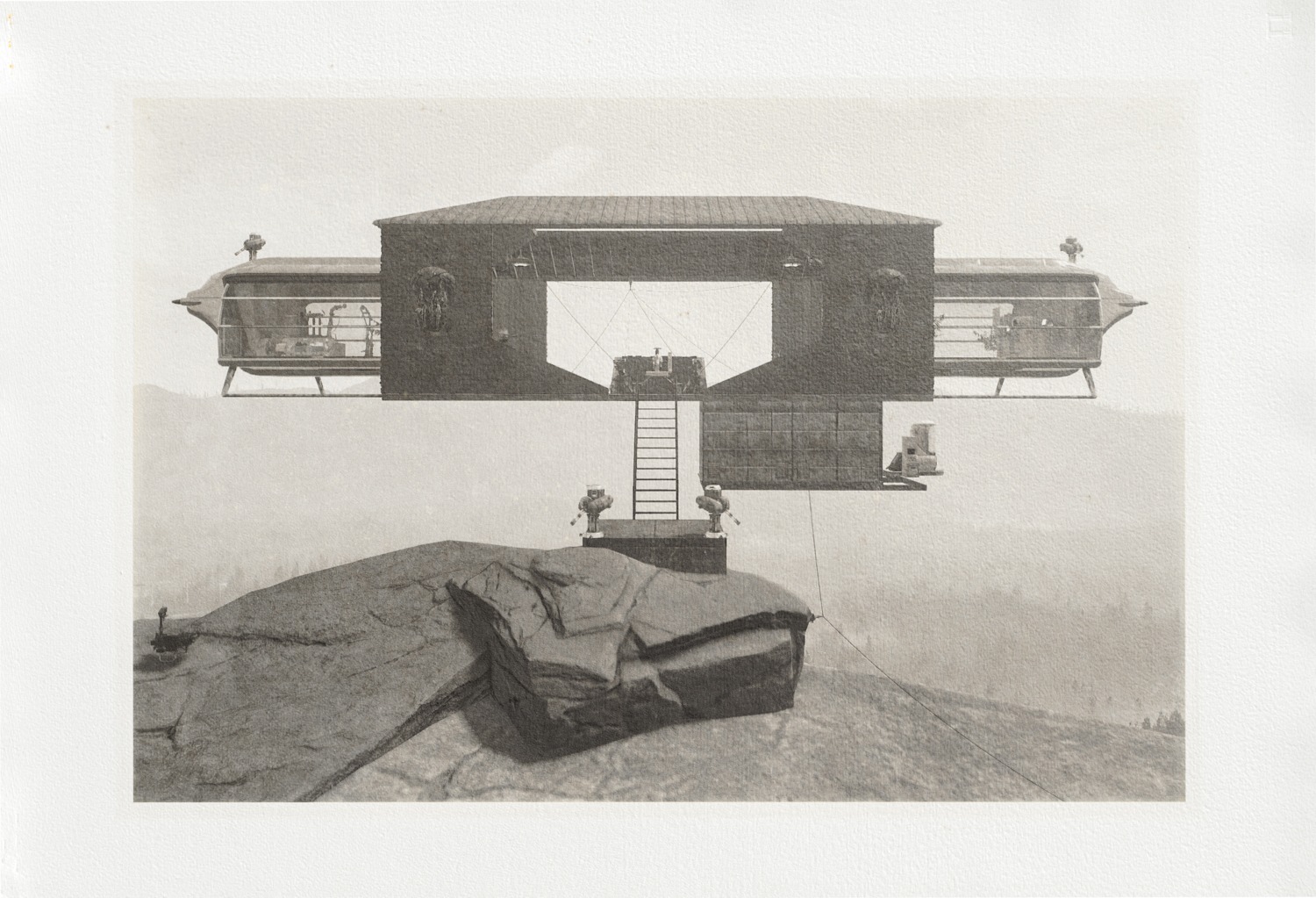
"This project contains photographs taken in Fallout 76, a prequel to an MMO (massively multiplayer online video game) action role-playing video game saga that is set in a future world devastated by nuclear war. The images are similar to architectural drawings, and show the shelters or houses created by the players with DLC additions, downloadable content which is used to customise the game. The photographer Maxim Zmeyev thus shows five types of facades, corresponding to five psychological profiles: the warrior profile, who covers their house with weapons and military symbols; the merchant, who sets up advertisements and vending machines; the farmer, who surrounds the house with fruit trees and cereal crops; the craftsman, who makes tools to repair all types of objects, and the philosopher profile, whose shelter is minimalist, and includes no practical or ornamental elements. With his extensive experience as a photojournalist, Zmeyev vindicates the documentary value of virtual environments where, in his opinion, we express our deepest fears and desires. "These photographs show worlds that do not exist and are made with a camera that does not exist, but they document emotions and relationships that are real." – Getxo Photo 2024, project page
- More about Type 1.5.11.: maximzmeyev.com/type-1511
Rayane Jemaa, How to Build a Mosque, 2026 –
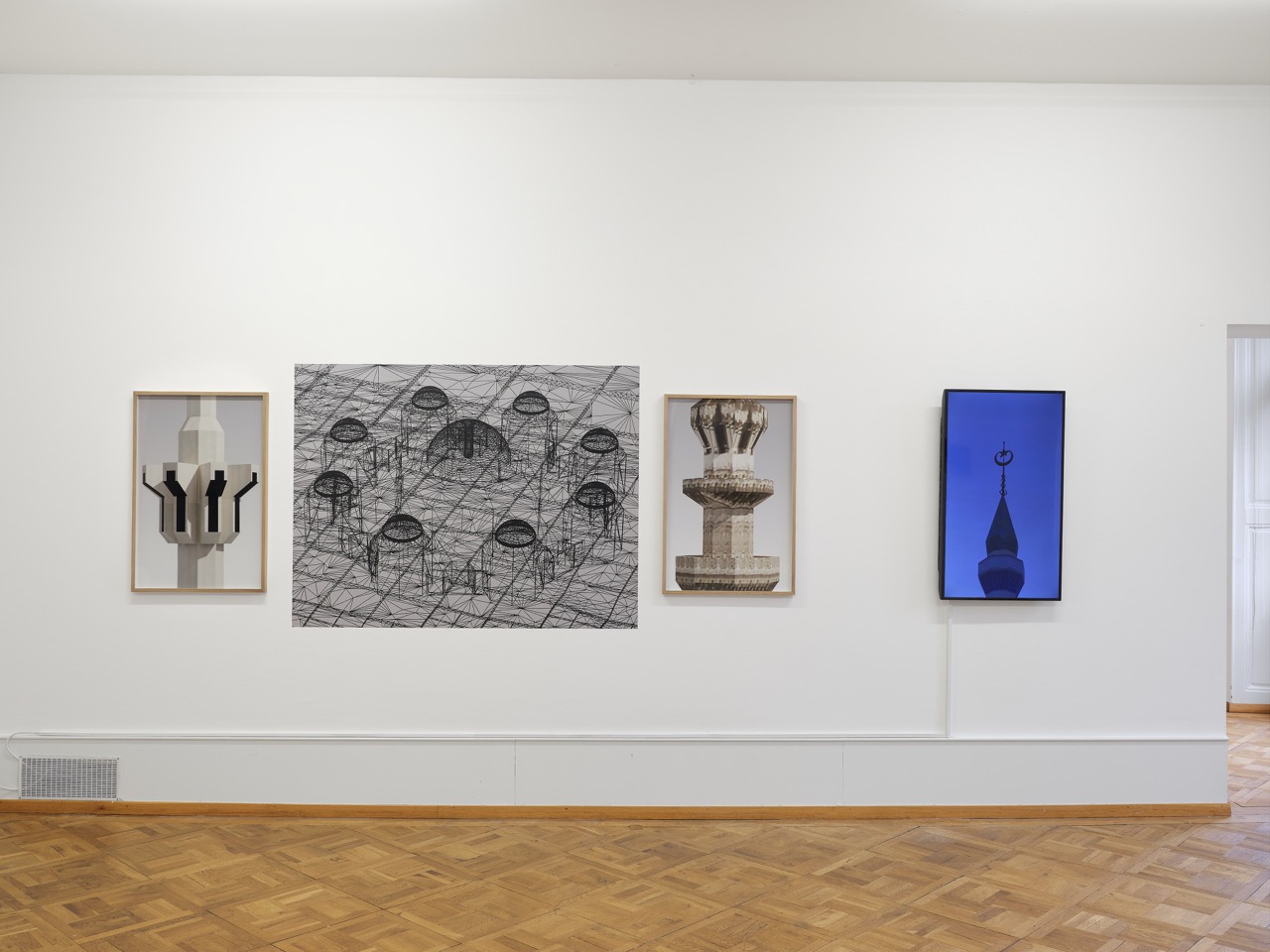
"How to Build a Mosque" explores how mosques - as spiritual, architectural, and cultural spaces - are represented, disseminated, and commodified in digital environments. Drawing on Michel Foucault's concept of heterotopia and Gilles Deleuze's notion of deterritorialization, the project traces the transformation of the mosque: from a place of worship rooted in a specific geography to a downloadable file, from a communal landmark to a generic 3D object. Using screenshots and 3D renderings of models sourced from platforms like Google Earth, Minecraft, Call of Duty, and online asset marketplaces, the project compiles representations of mosques in various styles and for diverse purposes. These models, often accessed through technical hacks or drawn from open archives, are typically created by anonymous contributors, stripped of their original context, and reused in games, simulations, or digital environments. In this process, a mosque once embedded in ritual and geography becomes a floating, decontextualized object within a frictionless digital economy, where spiritual form is transformed into exchangeable content." – Rayane Jemaa, artist website
- More about How to Build a Mosque: rayanejemaa.info/#HTBAM
- Screen Walk with Rayane Jemaa: youtube.com/watch?v=eXQhBsQz8FE
Robert Overweg, The End of the Virtual World, 2010
"Worlds within video games are no longer ‘virtual’, but an extension of the physical worlds which functions as the new public space of contemporary society. Robert Overweg takes landscape and portrait photographs of these game environments. By capturing inattentive graphic errors, he reveals the glitch within the established order, and the distortion hidden beneath the apparent harmony. The End of the Virtual World, a photo series consisted of seven prints, explores the limbs of the world found in first-person shooter games such as Left 4 Dead, Half-life, and Modern Warfare. This part of the virtual world, flat with hard-cut edges, is not like the round and thus endless physical world. However, it is also differs from the typical aesthetics of the virtual world where over-meticulous visuals overwhelm the viewer, by displaying an unusually peaceful environment. Through this strange landscape of abandoned and unfinished spaces, emerges a world in between the physical and virtual." – The 7th Seoul Media City Biennale, [online project page](https://www.mediacityseoul.kr/en/yesterday/artworks/the-end-of-the-virtual-world), 2012
- More about The End of the Virtual World: shotbyrobert.com/end-of-the-virtual-world
- BBC article: bbc.com/news/technology-10608667
Raphael Brunk, Captures, 2016 – 2018

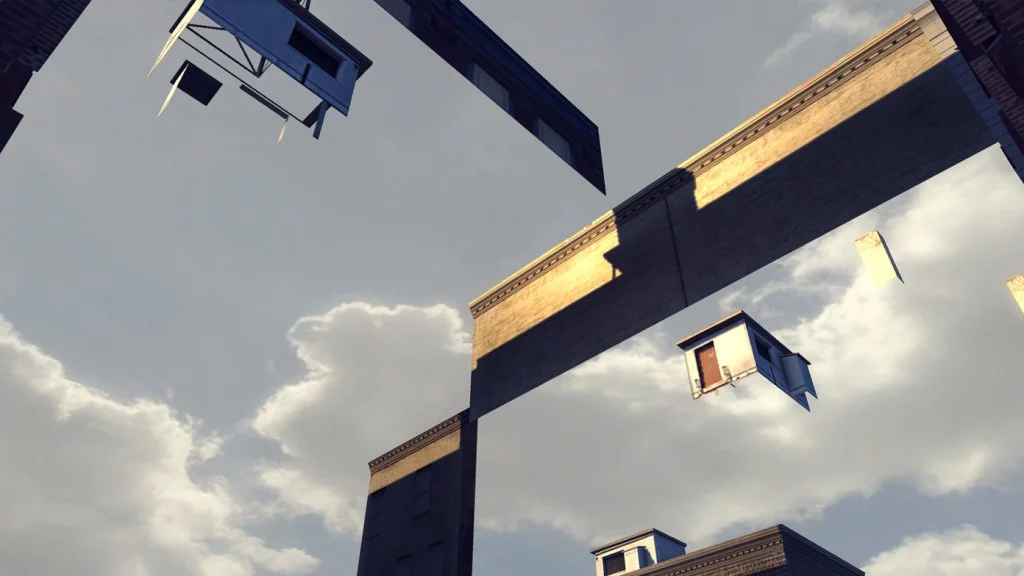
"In his series Captures, Brunk refuses his role of player, and breaks free of the constrictions that chain his character to the game camera. Instead of walking the streets of Los Santos taking pictures from the point of view of the player, he takes control of the camera and starts moving across the virtual world free from gravity and passing through planes and walls. This act is not just a statement of refusal – against the way the game is supposed to be played – or an artistic exploration of this computational world – investigating spaces one is not allowed to enter – but a full on intervention in the game code that reclaims the software as an artistic tool and the game object as both a landscape, a photo studio and an apparatus. [...] Brunk's modded camera is a rogue and subversive apparatus, and yet the artist's gaze is trained in the tradition of architecture photography. His compositions follow the way 3D models create spaces, looking at photographic textures and software models that intersect and construct the world on the screen. We are stuck in the process of creation, with unfinished staircases and water surfaces without bodies. We inhabit impossible viewing points, floating, flying, frozen in mid-air. We see through walls, and inhabit insides as outside and outsides as inside. We are what is technically defined as "out of bounds": a place that is usually considered an error by game developers, a glitch that requires fixing. Yet here, not only is out of bounds a deliberate choice, but it turns into a state of contemplation. The glitchy software appears not as an accident or a bug, but as a space of digital sublime. It invites the viewer to imagine the creation of alternative universes, of space constructed through different rules, different materials and elements, different scientific principles. Captures reveals a virtual architecture of impossibility, yet also engages with the specificities of the game world. It is a form of architecture that can only exist with the constructed digital space where the laws of physics do not apply, and where the making of photorealistic spaces is deconstructed through the artist's interventions. This approach reminds of artist Gordon Matta-Clark's Building Cuts (1972-78): large-scale sculptural forms created by the artist dissecting existing architecture. Matta-Clark's massive, temporary interventions carved precise geometric openings into neglected buildings in New York and Paris. By cutting into these abandoned structures, he turned them into sculptural voids that exposed their internal spaces, commented on urban deterioration, and challenged traditional ideas about architecture. Brunk's move into the game infrastructure seeks to create new understandings of a subject's relationship to a space: but a virtual algorithmic space with its own rules and structure." – Marco De Mutiis, Capturing Glitched Landscapes Between Virtual Sublime and Digital "Anarchitecture", in Raphael Brunk. Digital Imaging, Kerber Verlag, 2026.
- More about Captures: gta5.photography/artworks/captures
Tutorial
See the manual section on gta5.photography
Assignment
Choose a computer game or virtual environment and conduct a photographic survey of one architectural type within it (e.g. churches, domestic interiors, industrial structures, public spaces).
You can use screenshots, digital photogrammetry or virtual cameras to produce the images. You can choose to go out of bounds and explore the glitchy architecture of the software, or use a specific angle, style and materialisation process, based on traditions of architecture photography and the examples seen in class.
Create a series of 8–12 images that document this typology consistently, as if producing an architectural record. Accompany the series with a short text (150–200 words) describing your approach and the environment you chose.
Präsentationen
Wähle eine virtuelle Welt und produziere eine Fotoreportage, die eine Gemeinschaft, ein Ereignis oder einen Aspekt des Alltagslebens darin dokumentiert. Deine Reportage sollte über das reine Festhalten von Umgebungen hinausgehen. Gehe an die virtuelle Welt heran wie ein Fotojournalist an einen realen Ort: Beobachte, wie sich Menschen verhalten, identifiziere Geschichten oder soziale Dynamiken, und baue eine visuelle Erzählung um das, was du vorfindest.
- Eine Serie von 8–12 Bildern, die gemeinsam eine kohärente Geschichte erzählen oder ein bestimmtes Thema vermitteln.
- Ein kurzer Text (200–300 Wörter), der die Bilder begleitet und deine Reportage kontextualisiert: Wohin bist du gegangen? Was hast du gefunden? Welche Geschichte erzählst du, und warum?
Lade den Text und die Bilder mit deinem Namen und einer Bildunterschrift in diesem Online-Dokument hoch.
Architektur ist zunehmend mit digitaler Bildproduktion verflochten. Lange bevor ein Gebäude errichtet wird, existiert es als Rendering: als fotorealistische Simulation, die in Planungsdokumenten zirkuliert, auf Baustellenzäune projiziert oder im Rahmen städtebaulicher Kampagnen verbreitet wird. Dieselbe Logik bestimmt virtuelle Welten — die Gebäude, die Computerspiele, Metaversen und Online-Umgebungen bevölkern, werden mit denselben Werkzeugen und Konventionen entworfen und fotografiert wie ihre realen Pendants, folgen jedoch völlig anderen Regeln der Physik, der Materialität und des Zugangs.
In dieser Lektion betrachten wir Künstlerinnen und Künstler sowie Designerinnen und Designer, die sich dieser digitalen Architektur mit einem fotografischen Blick nähern — mithilfe von Screenshots, modifizierten Kameras und digitaler Photogrammetrie, um Räume zu untersuchen, die nur auf dem Bildschirm existieren können. Ihre Praktiken werfen kulturelle und politische Fragen der Simulation auf sowie die Rolle von Architektur zwischen digitalem Bild und physischer Realität.
Fallstudien
Mascha Negri, Luftige Enge, 2023
In Luftige Enge erkundet Mascha Negri die Industriezonen von Los Santos und sucht nach Perspektiven und Winkeln, die an die Fotografinnen und Fotografen Germaine Krull sowie Bernd und Hilla Becher erinnern. Während Negri durch die Strukturen des Spiels navigiert, enthüllen die Bilder die Pixel des Bildschirms, die Polygone, die die 3D-Architektur formen, sowie die Texturen virtueller Rohre und Schornsteine. Mit einer Smartphone-Kamera fotografiert Negri den Spielbildschirm und betont dabei die Merkmale der simulierten Umgebung, während sie sich in der Tradition der Schwarz-Weiß-Architekturfotografie verortet. Durch digitale Bearbeitung in einer Smartphone-App wendet sie kontrastreiche Schwarz-Weiß-Filter an, um die geometrischen Formen der Strukturen zu akzentuieren. «Luftige Enge» beschreibt treffend die Gegenüberstellung des ephemeren Rauchs aus den Rohren und der massiven, dicht gepackten Gebäude. Dieser Titel verweist auf die Kontraste zwischen dem Flüchtigen und dem Soliden, dem Analogen und dem Digitalen. Darüber hinaus spiegeln diese Gegensätze übergeordnete Themen wider: den Wandel von einer postindustriellen Gesellschaft zur aufstrebenden Spieleindustriewirtschaft und die Darstellung verschwindender Schwerindustrien im Westen durch die virtuellen Gebäude des Spiels. Schließlich lädt Negris Projekt die Betrachtenden dazu ein, über die Zeitlichkeit und Vergänglichkeit urbaner Industrielandschaften nachzudenken — sowohl realer als auch simulierter. Durch den Fokus auf das Zusammenspiel von Licht und Schatten dokumentieren ihre Fotografien nicht nur die Umgebung von Los Santos, sondern evozieren auch eine rätselhafte Nostalgie für das architektonische Erbe der Industrialisierung. – Marco De Mutiis und Matteo Bittanti, The Photographer's Guide to Los Santos, 2024
- Mehr über Luftige Enge: gta5.photography/artworks/luftige-enge
Maxim Zmeyev, Type 1.5.11., 2021
„Dieses Projekt enthält Fotografien, die in Fallout 76 aufgenommen wurden, einem Prequel zu einer MMO (Massively Multiplayer Online)-Action-Rollenspiel-Saga, die in einer durch einen Atomkrieg verwüsteten Zukunftswelt angesiedelt ist. Die Bilder ähneln Architekturzeichnungen und zeigen die Unterstände oder Häuser, die von den Spielerinnen und Spielern mit DLC-Erweiterungen — herunterladbaren Inhalten zur Anpassung des Spiels — erschaffen wurden. Der Fotograf Maxim Zmeyev zeigt fünf Fassadentypen, die fünf psychologischen Profilen entsprechen: das Kriegerprofil, dessen Haus mit Waffen und militärischen Symbolen bedeckt ist; das Händlerprofil, das Werbung und Verkaufsautomaten aufstellt; das Bauernprofil, das das Haus mit Obstbäumen und Getreidepflanzen umgibt; das Handwerkerprofil, das Werkzeuge zur Reparatur aller Art von Gegenständen herstellt; und das Philosophenprofil, dessen Unterstand minimalistisch ist und weder praktische noch ornamentale Elemente enthält. Mit seiner umfangreichen Erfahrung als Fotojournalist verteidigt Zmeyev den dokumentarischen Wert virtueller Umgebungen, in denen wir seiner Meinung nach unsere tiefsten Ängste und Wünsche zum Ausdruck bringen. „Diese Fotografien zeigen Welten, die nicht existieren, und wurden mit einer Kamera gemacht, die nicht existiert, aber sie dokumentieren Emotionen und Beziehungen, die real sind." – Getxo Photo 2024, Projektseite
- Mehr über Type 1.5.11.: maximzmeyev.com/type-1511
Rayane Jemaa, How to Build a Mosque, 2026 –
„How to Build a Mosque" untersucht, wie Moscheen — als spirituelle, architektonische und kulturelle Räume — in digitalen Umgebungen repräsentiert, verbreitet und kommodifiziert werden. Ausgehend von Michel Foucaults Konzept der Heterotopie und Gilles Deleuzes Begriff der Deterritorialisierung verfolgt das Projekt die Transformation der Moschee: von einem in einer spezifischen Geografie verwurzelten Ort der Andacht zu einer herunterladbaren Datei, von einem gemeinschaftlichen Wahrzeichen zu einem generischen 3D-Objekt. Mithilfe von Screenshots und 3D-Renderings von Modellen, die von Plattformen wie Google Earth, Minecraft, Call of Duty und Online-Asset-Marktplätzen stammen, versammelt das Projekt Darstellungen von Moscheen in verschiedenen Stilen und für unterschiedliche Zwecke. Diese Modelle — oft durch technische Hacks zugänglich gemacht oder aus offenen Archiven bezogen — werden in der Regel von anonymen Beitragenden erstellt, aus ihrem ursprünglichen Kontext herausgelöst und in Spielen, Simulationen oder digitalen Umgebungen wiederverwendet. In diesem Prozess wird eine Moschee, die einst in Ritual und Geografie eingebettet war, zu einem schwebenden, dekontextualisierten Objekt innerhalb einer reibungslosen digitalen Ökonomie, in der spirituelle Form in austauschbaren Inhalt verwandelt wird." – Rayane Jemaa, artist website
- Mehr über How to Build a Mosque: rayanejemaa.info/#HTBAM
- Screen Walk mit Rayane Jemaa: youtube.com/watch?v=eXQhBsQz8FE
Raphael Brunk, Captures, 2016 – 2018
„In seiner Serie Captures verweigert Brunk die Rolle des Spielers und befreit sich von den Zwängen, die seinen Charakter an die Spielkamera ketten. Anstatt die Straßen von Los Santos aus der Perspektive des Spielers zu fotografieren, übernimmt er die Kontrolle über die Kamera und bewegt sich schwerelos durch die virtuelle Welt, durchdringt Ebenen und Wände. Dieser Akt ist nicht nur eine Verweigerungsgeste — gegen die Art, wie das Spiel gespielt werden soll — oder eine künstlerische Erkundung dieser computerbasierten Welt — die Untersuchung von Räumen, die man nicht betreten darf — sondern ein vollständiger Eingriff in den Spielcode, der die Software als künstlerisches Werkzeug und das Spielobjekt als Landschaft, Fotostudio und Apparat zurückerobert. [...] Brunks modifizierte Kamera ist ein unberechenbares und subversives Instrument, und dennoch ist der Blick des Künstlers in der Tradition der Architekturfotografie geschult. Seine Kompositionen folgen der Art und Weise, wie 3D-Modelle Räume erzeugen, und betrachten fotografische Texturen und Softwaremodelle, die sich überschneiden und die Welt auf dem Bildschirm konstruieren. Wir befinden uns mitten im Entstehungsprozess, mit unfertigen Treppen und Wasseroberflächen ohne Körper. Wir bewohnen unmögliche Blickpunkte — schwebend, fliegend, in der Luft eingefroren. Wir sehen durch Wände und bewohnen Innenräume als Außenräume und Außenräume als Innenräume. Wir sind das, was technisch als „out of bounds" definiert wird: ein Ort, der von Spieleentwicklerinnen und -entwicklern in der Regel als Fehler betrachtet wird, als Glitch, der behoben werden muss. Doch hier ist „out of bounds" nicht nur eine bewusste Entscheidung, sondern wird zu einem Zustand der Kontemplation. Die fehlerhafte Software erscheint nicht als Unfall oder Bug, sondern als Raum des digitalen Erhabenen. Sie lädt die Betrachtenden ein, sich die Erschaffung alternativer Universen vorzustellen, Räume, die nach anderen Regeln, anderen Materialien und Elementen, anderen wissenschaftlichen Prinzipien konstruiert sind. Captures offenbart eine virtuelle Architektur der Unmöglichkeit und befasst sich zugleich mit den Spezifika der Spielwelt. Es ist eine Architekturform, die nur im konstruierten digitalen Raum existieren kann, wo die Gesetze der Physik nicht gelten und die Herstellung fotorealistischer Räume durch die Eingriffe des Künstlers dekonstruiert wird. Dieser Ansatz erinnert an Gordon Matta-Clarks Building Cuts (1972–78): großformatige skulpturale Formen, die durch das Zerschneiden bestehender Architektur entstanden. Matta-Clarks massive, temporäre Eingriffe schnitten präzise geometrische Öffnungen in vernachlässigte Gebäude in New York und Paris. Indem er in diese verlassenen Strukturen einschnitt, verwandelte er sie in skulpturale Leerstellen, die ihre inneren Räume freilegten, urbanen Verfall kommentierten und traditionelle Vorstellungen von Architektur herausforderten. Brunks Vordringen in die Spielinfrastruktur zielt darauf ab, neue Verständnisse der Beziehung eines Subjekts zu einem Raum zu schaffen — einem virtuellen algorithmischen Raum mit seinen eigenen Regeln und Strukturen." – Marco De Mutiis, Capturing Glitched Landscapes Between Virtual Sublime