The Counter Lure The Counter Lure
Presentations:
Presentations of your work in progress for the final projects
The Counter Lure: from luring the bots of the attention economy to diverting the male gaze
Zoe Aubry, #Ingrid, 2022
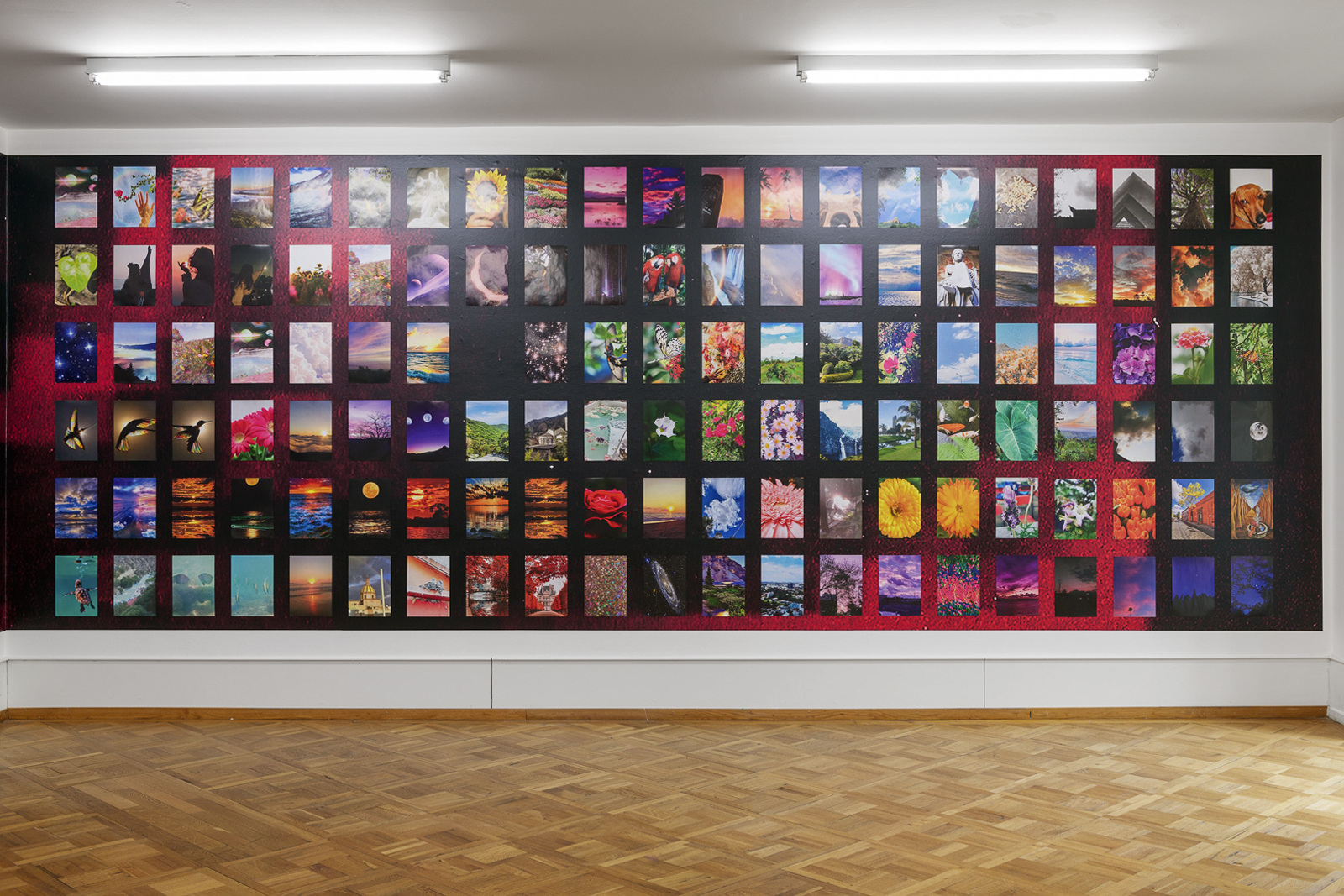
On 9 February 2020, a 25-year-old woman named Ingrid Escamilla Vargas was murdered by her partner in Mexico City. Photographs of the femicide — taken at the crime scene by police — were published across Mexican tabloid front pages. The complicity between law enforcement and the gutter press provoked immediate outrage: a call circulated on social media for users to bury the images by flooding the hashtag #IngridEscamillaVargas with photographs of peaceful landscapes, flowers, lakes, and sunsets — overwhelming search results with beauty in order to make the crime-scene images algorithmically invisible.
Zoé Aubry (b. 1992), who had been researching the systemic phenomenon of femicide and its media coverage since 2017, gathered the images posted as part of this collective online response and turned them into an installation and artist book, produced in close collaboration with Delia — who initiated the online movement — and the Mexican independent publisher Gato Negro Ediciones. In the installation, the flood of nature photographs is arranged in the foreground to cover a pixelated cyanotype of one of the tabloid images. #Ingrid refuses the voyeurism incited by images of violence while demonstrating the image as a weapon: an instrument of feminist resistance capable of exploiting the very algorithmic logic it seeks to subvert.
#ProudBoys on Instagram and hashtag activism
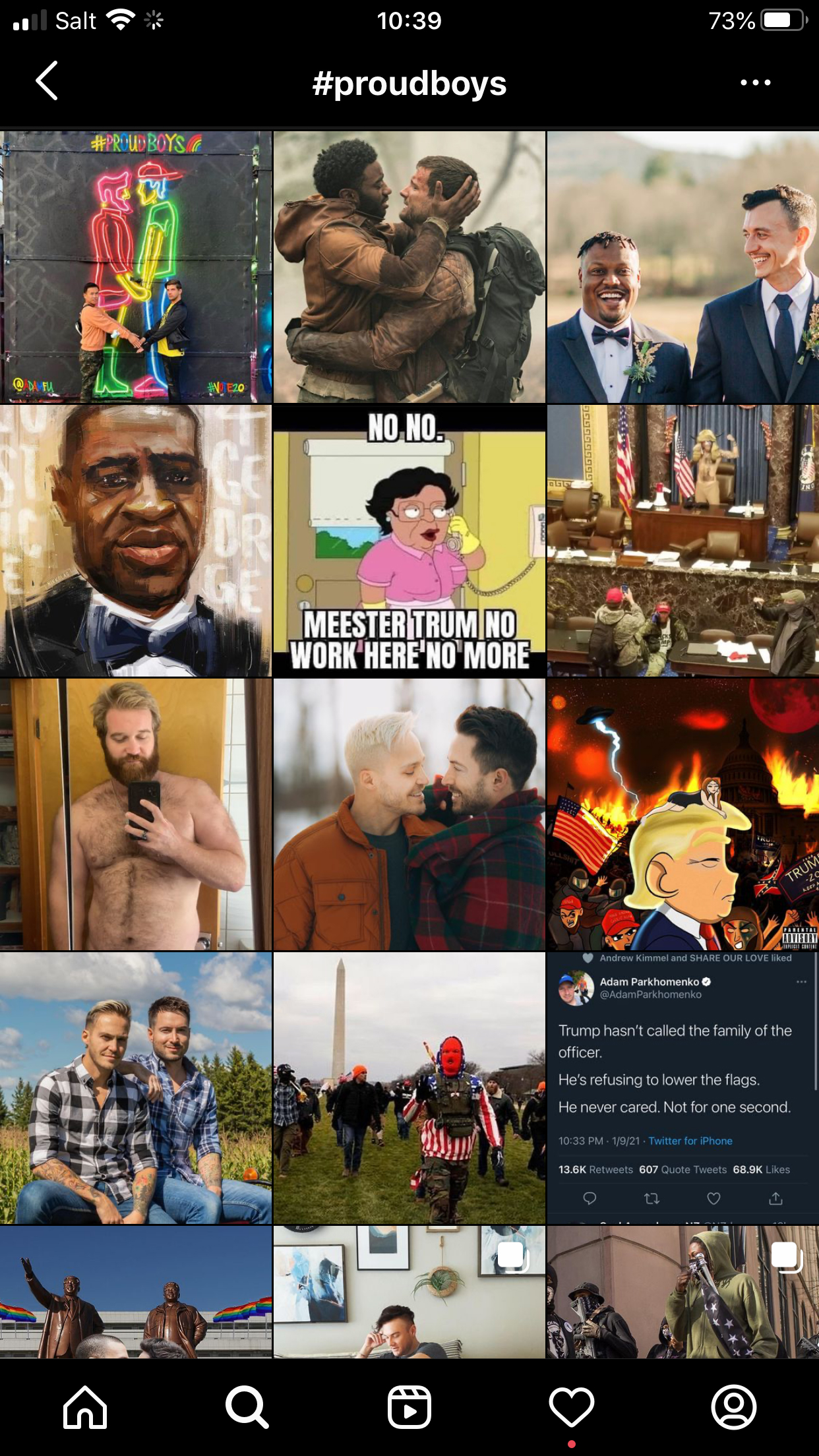
In October 2020, following the first US presidential debate in which Donald Trump declined to condemn white supremacists and instead told the far-right group the Proud Boys to “stand back and stand by,” the hashtag #ProudBoys began trending on social media as group members celebrated the remark. Within days, LGBTQ+ users hijacked it: flooding the feed with photographs of gay couples, wedding portraits, pride imagery, and declarations of love. Celebrities including actor and activist George Takei joined in, turning a hashtag weaponised by a hate group into an expression of queer visibility. The intervention worked not through confrontation but through sheer volume — using the platform’s own logic of image accumulation and algorithmic amplification to displace the original content.
The #ProudBoys hijacking is a landmark example of hashtag activism: the practice of collectively redirecting a term, platform feature, or search index to serve political ends other than those intended. Where traditional protest occupies physical space, hashtag activism occupies informational space — seizing the infrastructure of visibility and bending it toward counter-messaging. Like #Ingrid, it reveals how the attention economy’s dependence on images and keywords can be turned against itself.
bot bait
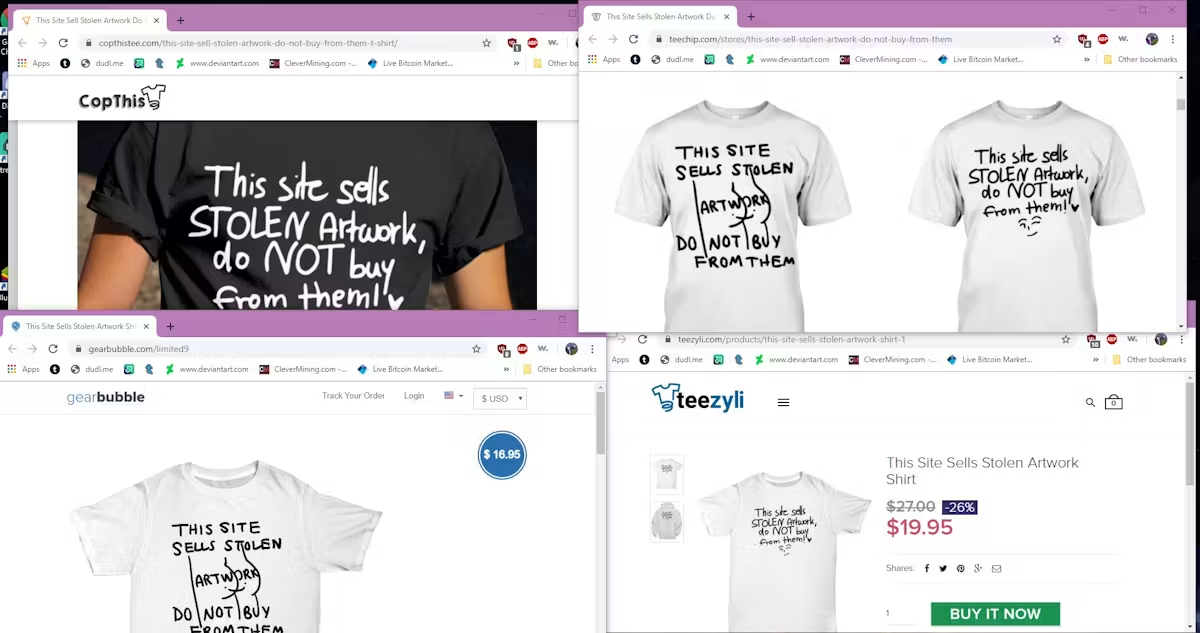
In 2018, a peculiar phenomenon emerged on print-on-demand t-shirt platforms such as Amazon Merch, Redbubble, and Teepublic: thousands of listings appeared bearing nonsensical combinations of words — phrases like “Fishing Grandpa 4th of July Corgi Birthday Vintage Retro” printed on garments that no human would plausibly want. These were not mistakes but strategies, generated by seller bots crawling search data to identify niche keyword combinations with low competition and non-zero demand, then auto-generating product listings to capture any possible purchase. The images themselves — clip-art collages assembled without human aesthetic intention — existed solely as bait for other algorithms: search bots, recommendation engines, and automated ranking systems that indexed them as legitimate products.
The episode exposed something fundamental about the visual economy of e-commerce platforms: an enormous volume of images circulating online are not addressed to human eyes at all, but produced by machines for machines, in an automated conversation about attention, indexing, and rank. Bot bait is the logical endpoint of SEO-driven image production — a visual culture generated entirely within the feedback loops of the attention economy, illegible as aesthetic experience but perfectly optimised for algorithmic capture.
Gretchen Andrew, Thirst Trap Glitch GIFs, 2022
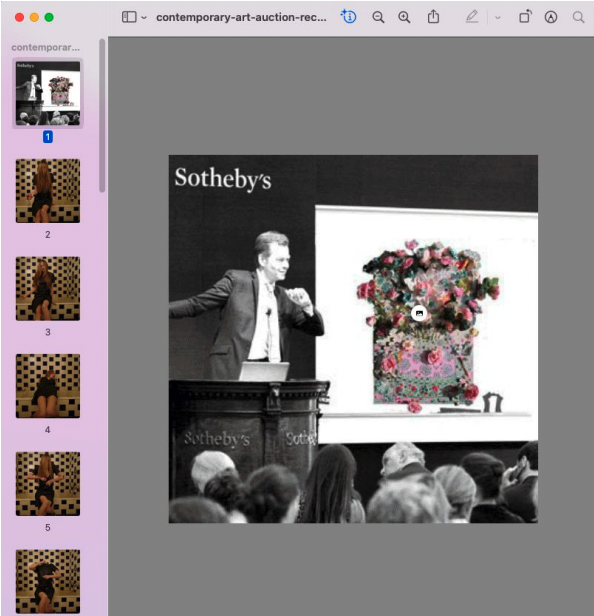
Thirst Trap Glitch GIFs appropriates one of social media’s most familiar image formats — the “thirst trap,” a carefully staged photograph designed to attract desire and attention — and repurposes it as a vehicle for algorithmic infiltration. Gretchen Andrew (b. 1988) combines SEO optimisation, natural language processing, and embedded metadata to make GIFs that perform as thirst traps for human viewers while simultaneously feeding false signals to machine vision systems. What appears to a person as a glitch — an error, a visual disruption — registers to Google’s image-recognition infrastructure as unambiguous truth.
The work operates on two registers at once, exploiting the gap between how humans and algorithms read the same image. By converting the currency of online attention (desire, spectacle, the lure of the body) into a tool for manipulating search infrastructure, Andrew reveals the invisible mechanics — the rankings, classifications, and priority scores — that determine what we see and what we don’t. Thirst Trap Glitch GIFs asks whose gaze is really being catered to in a visual culture shaped as much by algorithmic sorting as by human desire.
Mattia Dagani Rio, Los Santos, 2023
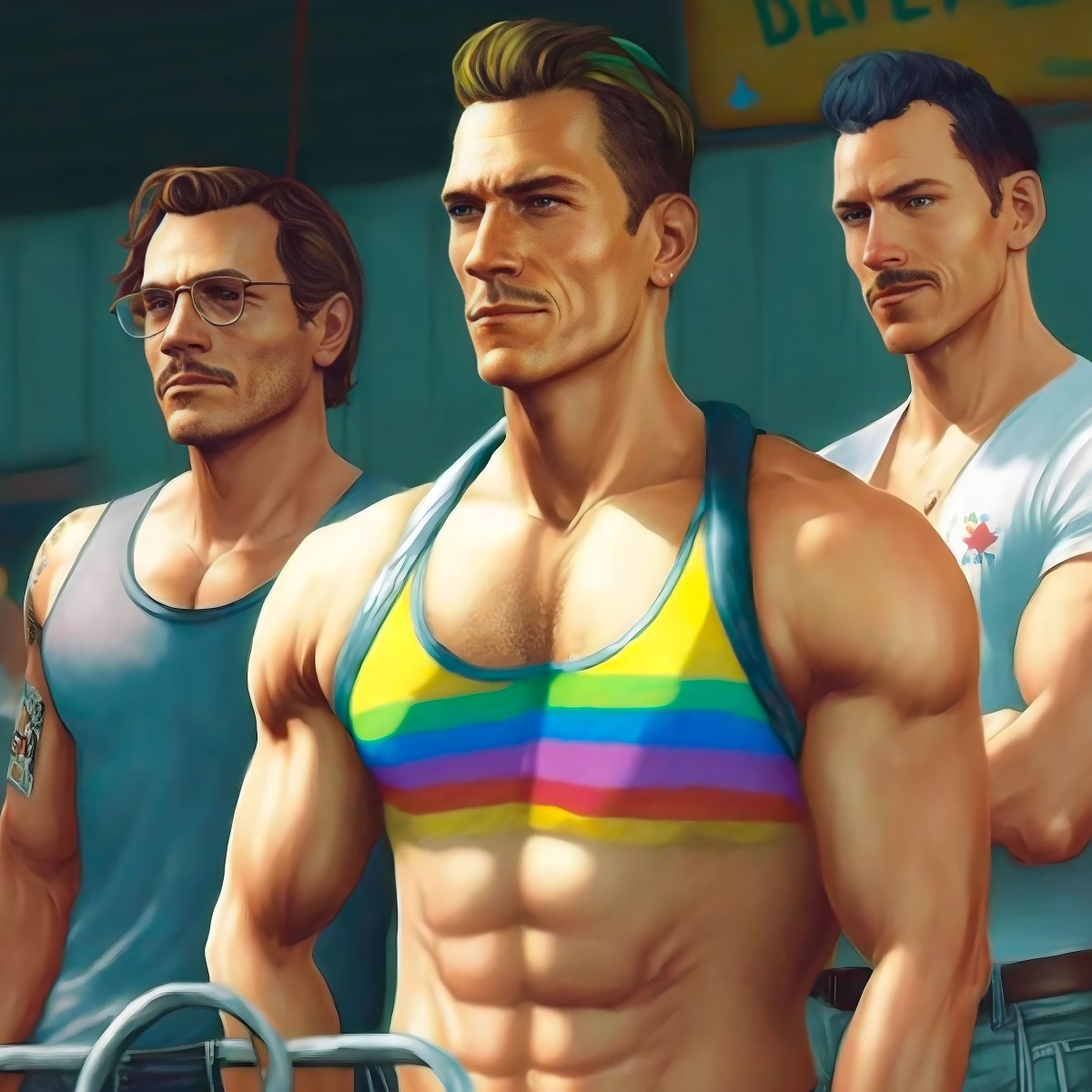
Grand Theft Auto V (2013) is one of the most commercially successful video games ever made — and one of the most ideologically saturated: a world built on the visual and narrative lures of guns, fast cars, gang violence, and hypersexualised femininity, where wealth, brutality, and heterosexual conquest are the default grammar of masculine aspiration. The fictional city of Los Santos, modelled on Los Angeles, is a landscape designed to seduce through transgression.
In Los Santos, Mattia Dagani Rio uses AI image generation to reimagine that world from within. Training generative systems on the game’s visual language, he produces an alternative version of GTA V centred on LGBTQ+ characters navigating love, heartbreak, intimacy, and personal growth. The original protagonists — Michael De Santa, Franklin Clinton, and Trevor Philips — are recast as gay men whose lives are shaped by tenderness rather than dominance. Objectified women and violent gangsters give way to queer characters and their romantic lives. The work does not simply critique the game’s machismo from outside; it plays with the game’s own aesthetics and tools to forge, from within its visual logic, a space of counter-representation. Los Santos demonstrates how marginalised communities can occupy the dominant images of popular culture and bend them toward visibility, desire, and resistance.
Assignment
Read: Doris Gassert, When they search for your name, they will find flowers, 2025
Make: Using in-game photography, hashtag intervention, image annotation, or any other strategy explored in this lesson, create a work that enacts a counter-lure: a piece that turns the seductive logic of a platform, algorithm, or visual convention against itself. The work should engage with at least one of the dynamics discussed in the lesson — algorithmic manipulation, hashtag hijacking, the male gaze, the lure of guns and macho culture, or the gap between how humans and machines read images — and reflect on what it means to use the image as a tool of resistance rather than seduction.