Remembering & Translating Erinnern & Übersetzen
Presentations
Upload a screenshot of your assignment with your name and a caption on this online document
This session traces photography’s relationship to memory in two directions. The first is social and political: how photography constructs, preserves, and distorts collective and personal memory — in the ritualised images of tourism, in the intimate archive of the family album, and in the photographs of communities whose histories have been systematically excluded from official record. The second is formal and historical: how photography has translated the conventions of painting — above all the still life tradition, with its meditation on time, mortality, and the persistence of objects — into a new medium, inheriting its questions while transforming its means. Together, these two directions reveal photography not simply as a technology of record but as a practice deeply entangled with how we understand what lasts, what disappears, and what it means to leave a trace.
Travel and Tourist Photography
Tourism is one of the most photographically saturated practices in contemporary life, and one of the oldest — the impulse to bring an image back from elsewhere predates the camera, inheriting the tradition of the Grand Tour and the painted veduta. What photography added was accessibility and volume: the possibility of a personal record, reproducible and shareable, that anyone could make. What that accessibility produced, over time, was a remarkably standardised visual culture — the same angles, the same gestures, the same sites reproduced billions of times. The photographers gathered here examine that standardisation critically, asking what tourist photography remembers, what it flattens, and what it leaves out.
Martin Parr, Small World, 1990–2017
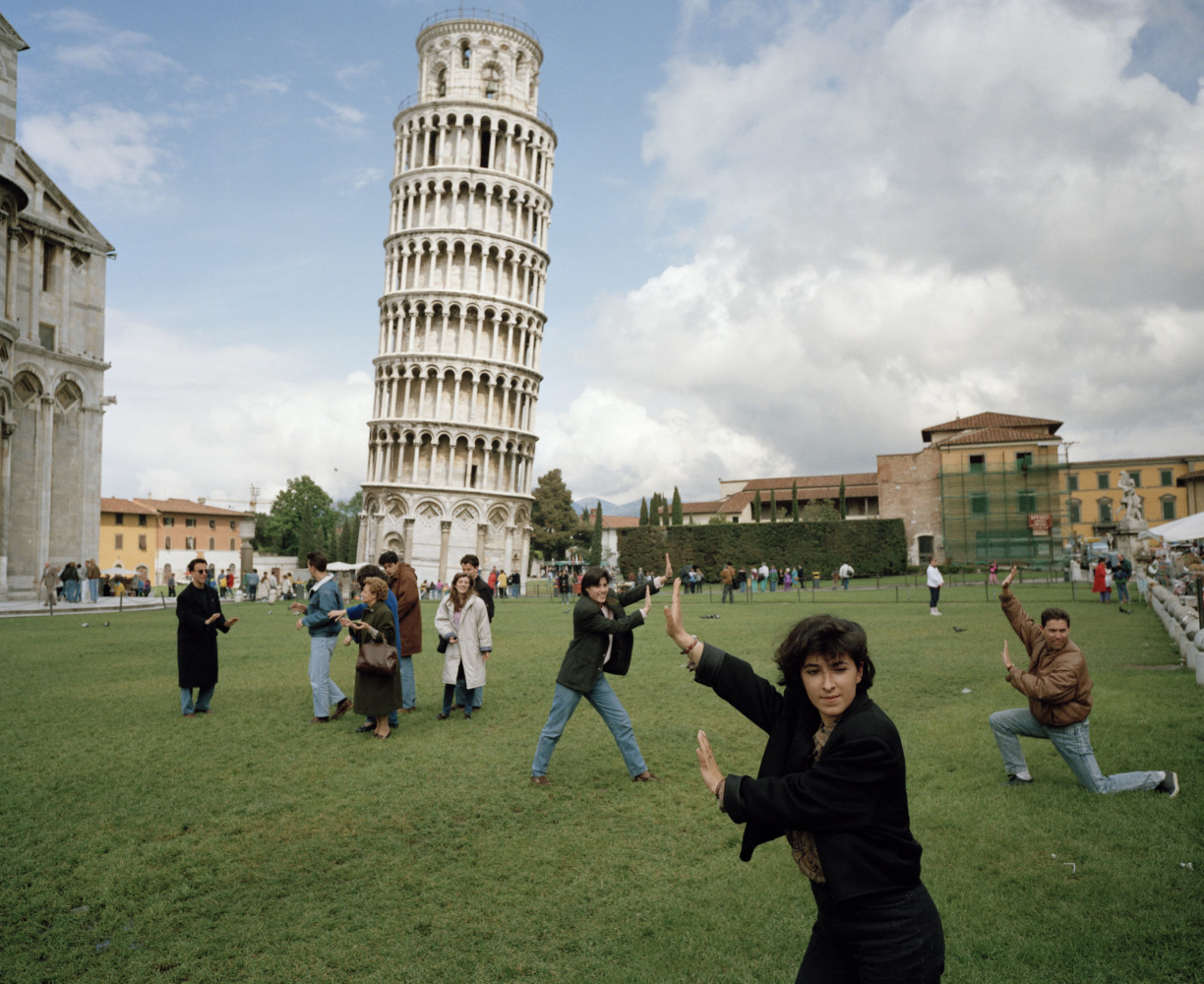
Martin Parr’s Small World is a sustained, sardonic examination of mass tourism produced over nearly three decades across dozens of countries. Working with the garish flash and saturated colour that became his signature, Parr photographs the rituals of tourist experience — the queue for the landmark, the selfie with the monument, the souvenir stall, the tour group moving in formation — with a precision that tips constantly between comedy and critique. The images are not misanthropic; Parr is too interested in his subjects for that. But they are relentlessly attentive to the gap between the experience tourism promises (encounter with the extraordinary, immersion in the foreign) and what it typically delivers (a crowd of people doing what you are doing, in a place that has been arranged for people doing what you are doing). Small World raises the question of what travel photography actually remembers: whether the tourist image is a record of a place visited or a record of a performance staged — and whether that distinction matters once the photograph is in the album.
Roc Herms, Hacer Pantallazo, 2014–
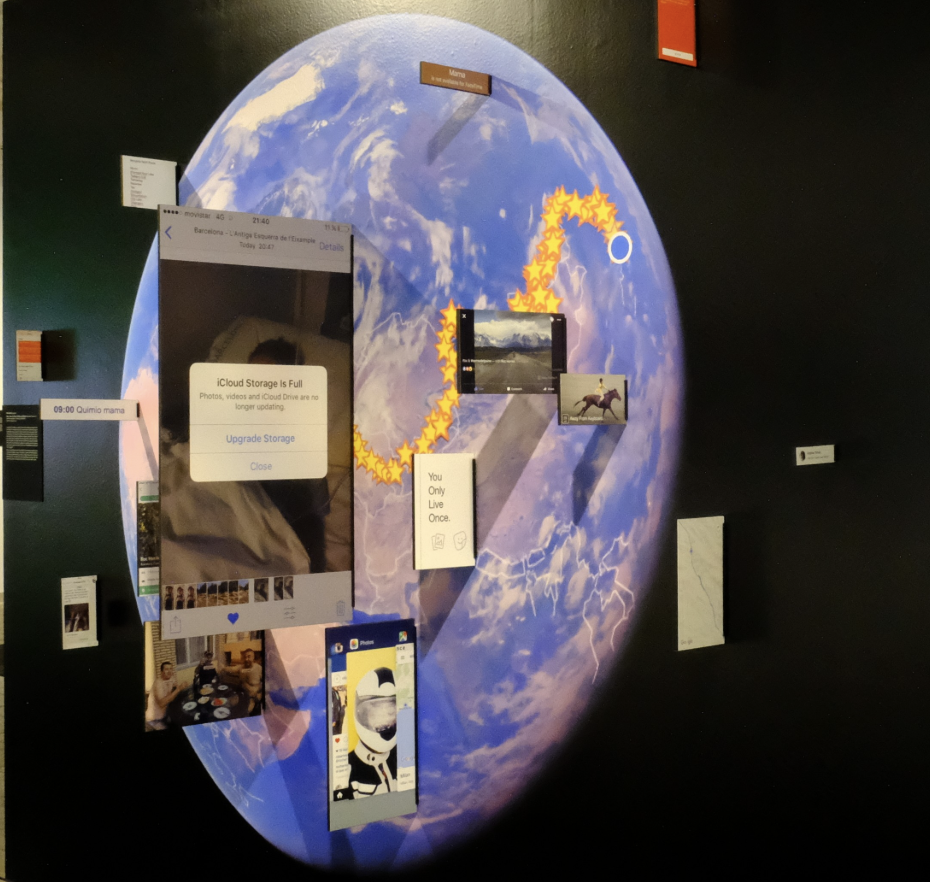
Where Parr positioned himself physically inside tourist scenes with a camera, Roc Herms operates entirely at a remove — photographing his phone screen as it displays travel images found online, producing screenshots of screenshots in a chain of reproduction that progressively degrades the original image while multiplying its circulation. Hacer Pantallazo (roughly: “to take a screenshot”) treats the tourist image as a unit of digital currency: something passed between hands, re-posted, re-framed, removed from any specific context of making or experience. The gesture — pointing a camera at a screen — makes visible what is usually invisible in the circulation of travel photography: that most of what we consume as images of places are not photographs of places but photographs of photographs, images of images, memories of memories. Herms’ work also raises questions about authorship and the status of the found image that connect to the broader digital image culture the course returns to in later sessions.
Family Photography between Chosen Bonds and Dysfunctional Intimacies
The family photograph is perhaps the most ubiquitous form of photography in existence — and one of the most ideologically loaded. The family album is a record not simply of what happened but of what the family chooses to remember: it is edited, curated, and performed. The photographs in it tend toward celebration — birthdays, holidays, milestones — and away from conflict, illness, grief, or ambivalence. The photographers gathered here work against that tendency, or beside it: making images that record what the family album typically excludes, or that reimagine what family and intimacy can mean. They extend the session’s broader inquiry into who gets remembered and how.
Richard Billingham, Ray’s a Laugh, 1996
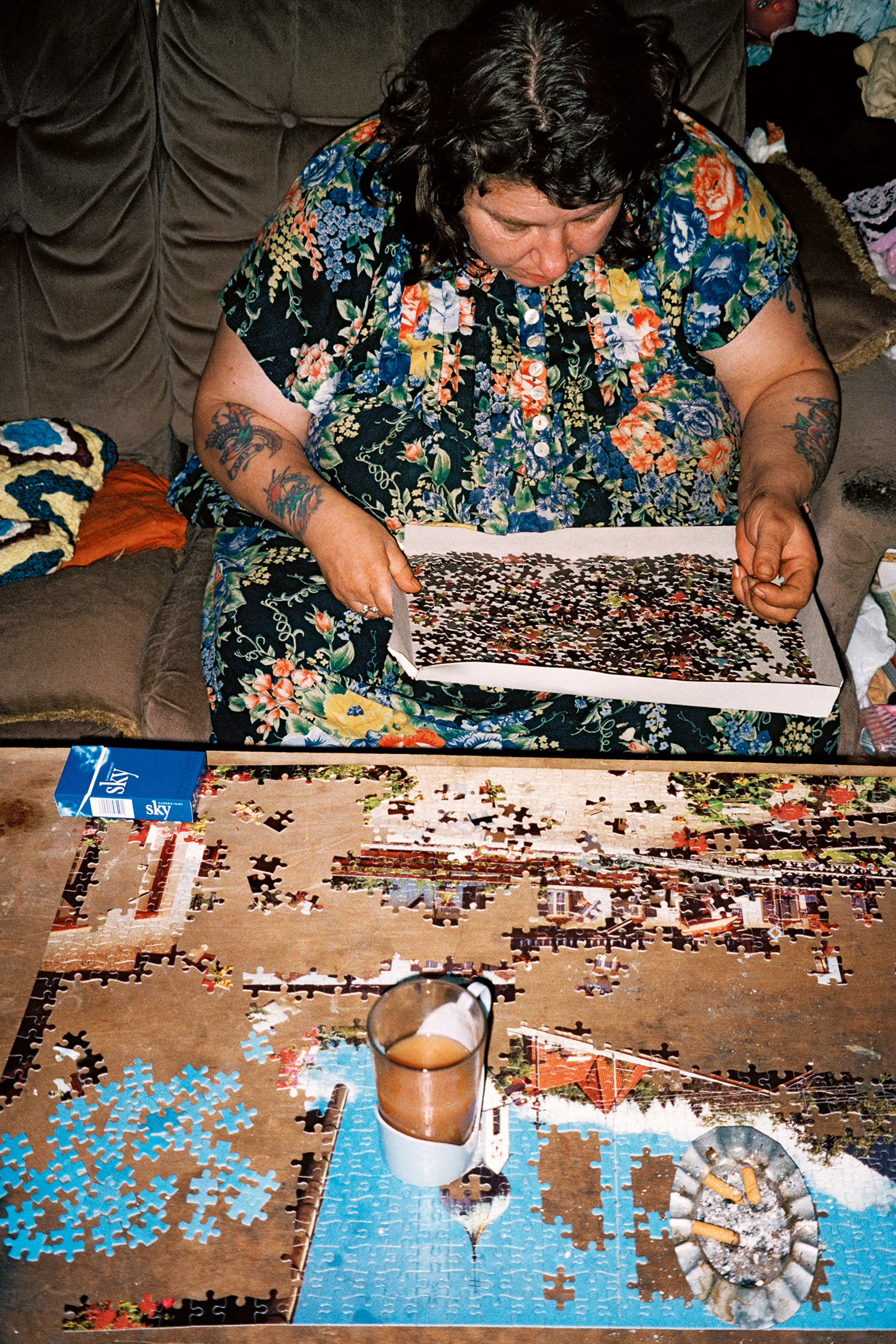
Richard Billingham began photographing his family in a cramped council flat in the West Midlands in the early 1990s — initially to gather reference material for paintings, without any intention of exhibiting the photographs themselves. What emerged was Ray’s a Laugh, a raw, often shocking record of his father Ray’s alcoholism, his mother Liz’s tattooed domesticity, and the texture of a life lived in poverty and chaos. The images are technically imperfect — flash-blown, grainy, shot in close quarters — and that imperfection feels essential: these are photographs made the way you photograph your own family, without the distancing apparatus of professional image-making. What Billingham produced, without planning to, was an anti-album: images of everything the conventional family photograph excludes. Like Larry Clark’s Tulsa, which we encountered in the previous session, Ray’s a Laugh raises the question of what it means to photograph people you are bound to by circumstance rather than choice — people who may not be in a position to weigh the consequences of appearing in images that will circulate beyond the home. Unlike Clark, however, Billingham has consistently maintained that the work was made from love, and that his family were aware of and comfortable with its eventual publication.
Anna & Bernhard Blume, Transzendentaler Konstruktivismus, 1993–1995
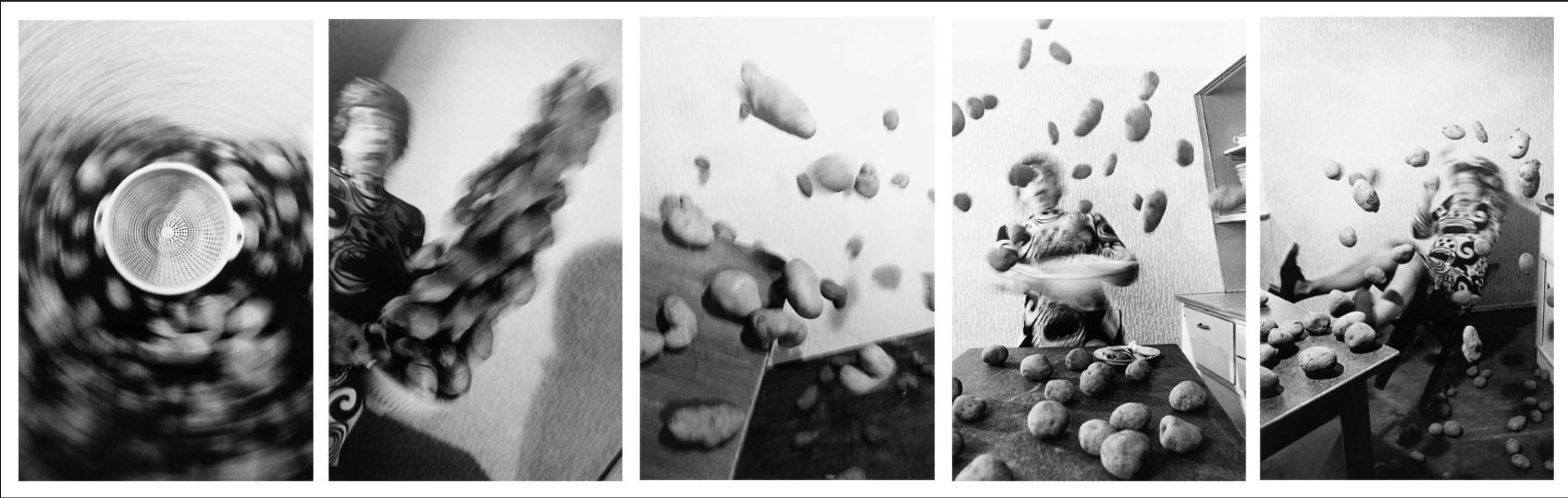
Anna and Bernhard Blume were a German artist couple who worked collaboratively from the 1970s through the 2000s, producing large-format staged photographs that deploy the visual conventions of the domestic snapshot — flash-lit, slightly unstable, seemingly candid — to stage scenes of spectacular domestic chaos. In their best-known series, including Transzendentaler Konstruktivismus and Vasenekstasen, ordinary kitchen and living-room environments erupt into grotesque disorder: furniture levitates, crockery explodes in mid-air, the figures of the artists themselves — always the sole performers — are caught in poses of exaggerated alarm or submission as the domestic interior revolts around them. The formal strategy is precise: by mimicking the aesthetic of the family snapshot, the Blumes make their critique from inside the genre they are dismantling. Where Billingham’s anti-album is documentary — the chaos is real, the imperfection unplanned — the Blumes’ chaos is entirely constructed, which shifts the register from exposure to parody. Their work asks what the tidy, celebratory family photograph is actually suppressing: what erupts when the performance of domestic normality is pushed to its limit. As a German-speaking artist couple working explicitly within and against European bourgeois domestic culture, the Blumes also offer a counterpoint to the predominantly American and Asian perspectives elsewhere in this section.
Dayanita Singh, Privacy, 2003
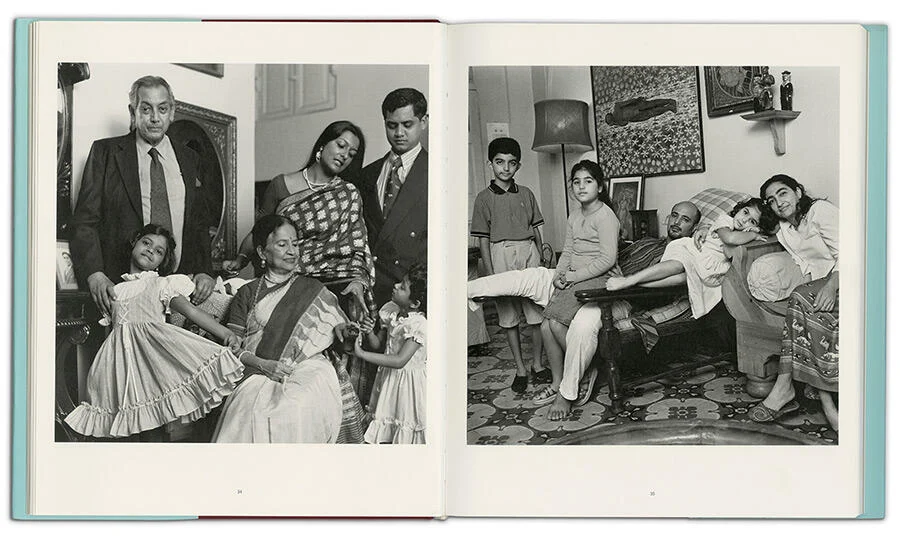
Dayanita Singh’s Privacy photographs the interiors of upper-middle-class Indian homes — drawing rooms, dining tables, bedrooms, verandahs — often without their inhabitants present. The absence is the point: these are spaces saturated with the evidence of lives lived (the arranged furniture, the family photographs on the wall, the objects accumulated over generations) from which the people themselves have momentarily withdrawn. Singh made the work over several years with the cooperation of the families she photographed, which distinguishes it sharply from voyeuristic documentary: the access is intimate, the relationship collaborative, the images made possible by trust. Privacy extends the session’s thinking about what the domestic space remembers — the way objects and arrangements preserve the shape of a life even when the person is absent — and raises questions about the relationship between photography, domesticity, and the gendered spaces that women in particular both inhabit and maintain. Singh is also one of the central figures in contemporary Indian photography, and her work offers a perspective on family and memory that is not organised by the Euro-American traditions that dominate much of this course.
Leigh Ledare, Pretend You’re Actually Alive, 2009
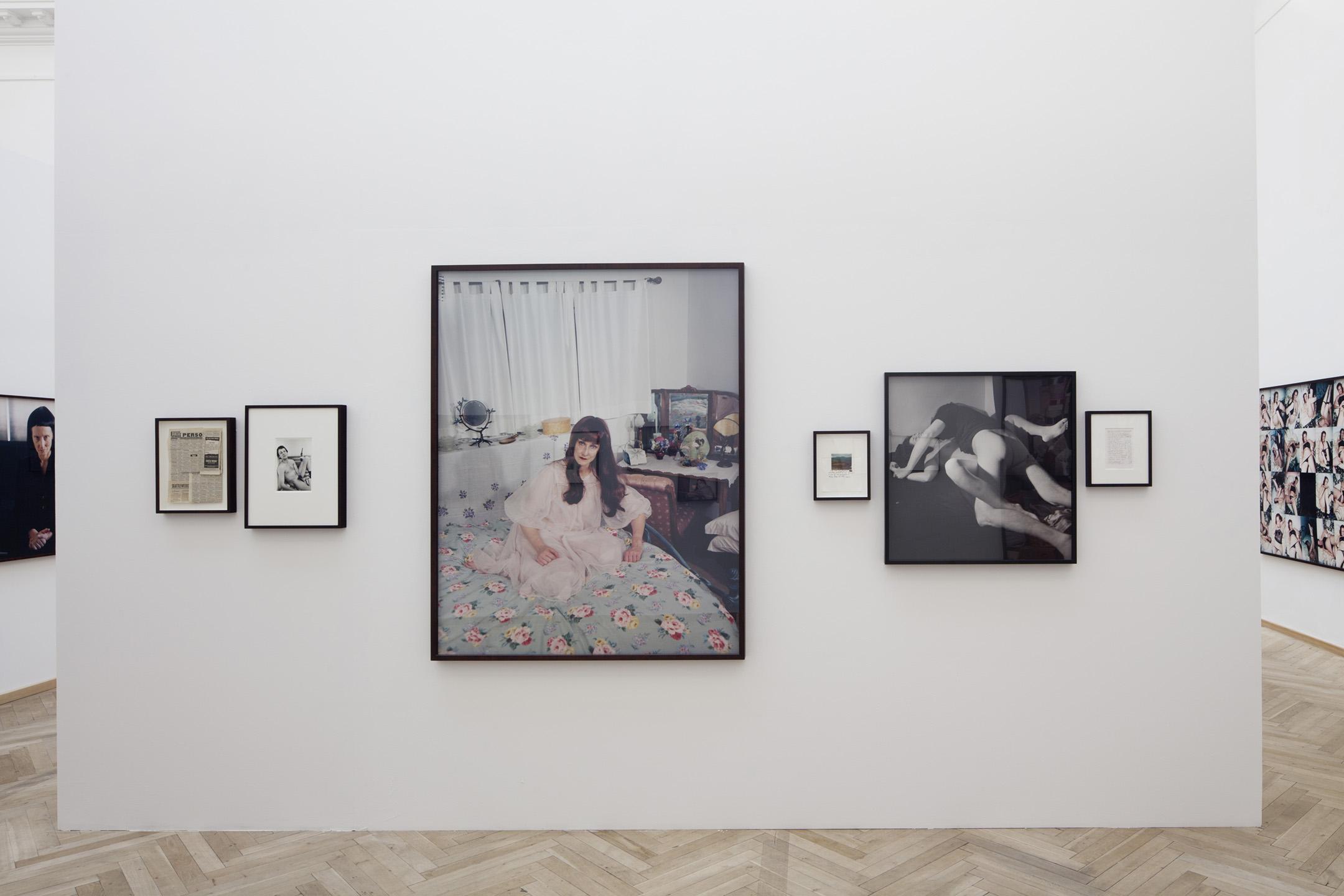
Leigh Ledare’s Pretend You’re Actually Alive is one of the most ethically and psychologically complex bodies of work in contemporary photography. Over several years, Ledare photographed his mother Tina — an ageing former ballet dancer — in her domestic life, including in sexually explicit situations with her various partners. The work was made with Tina’s full participation and active collaboration; she frequently initiated the photographic situations and has spoken publicly about the project in terms of agency and self-representation. The critical debate around the work has nonetheless been intense, focusing on questions the images cannot settle by themselves: Can the family relationship between photographer and subject ever be fully separated from the power dynamics it carries? Does the apparent consent of the subject resolve the ethical questions raised by the act of photographing and exhibiting? What does the viewer’s own position in relation to these images involve? Pretend You’re Actually Alive earns its place in this section not because it provides answers but because it makes unavoidable the questions that family photography usually manages to avoid — questions about desire, control, complicity, and the difference between being seen and being represented.
Charlie Engman, Mom, 2020
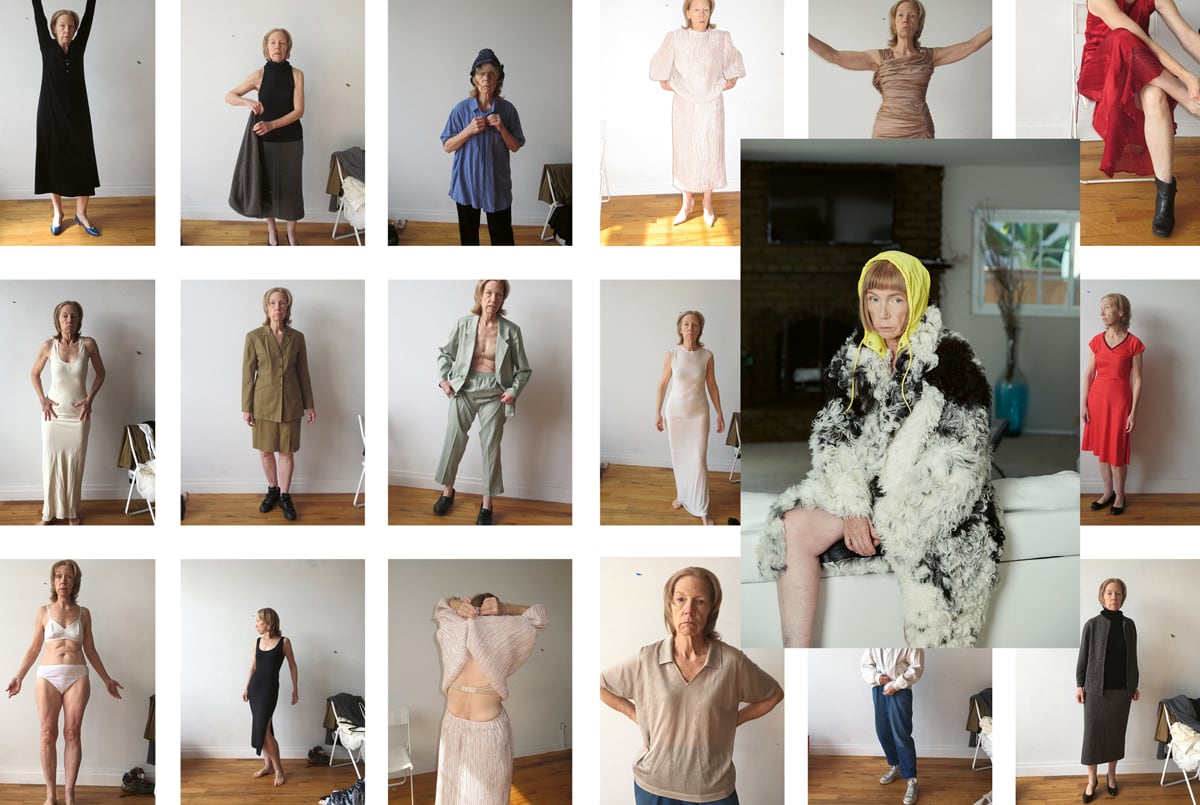
Charlie Engman’s Mom documents a sustained collaborative photographic project between the artist and his mother, Kathleen, made over many years during his visits home to Illinois. The images are formally inventive and often strange: Kathleen appears in elaborate domestic tableaux, sometimes in surreal or theatrical situations that seem to parody or extend the conventions of family portraiture. What makes the project distinctive is the nature of the collaboration — Engman and his mother are genuinely co-authors, and the work reflects a relationship in which the usual hierarchies of photographer and subject have been substantially renegotiated. Mom is a portrait of a relationship across time as much as it is a portrait of a person: the book accumulates images from different phases of both their lives, making visible how the mother-child relationship shifts, persists, and transforms. It extends the course’s ongoing inquiry into what collaborative, ethically grounded photography looks like in practice.
Pixy Liao, Experimental Relationship, 2007–
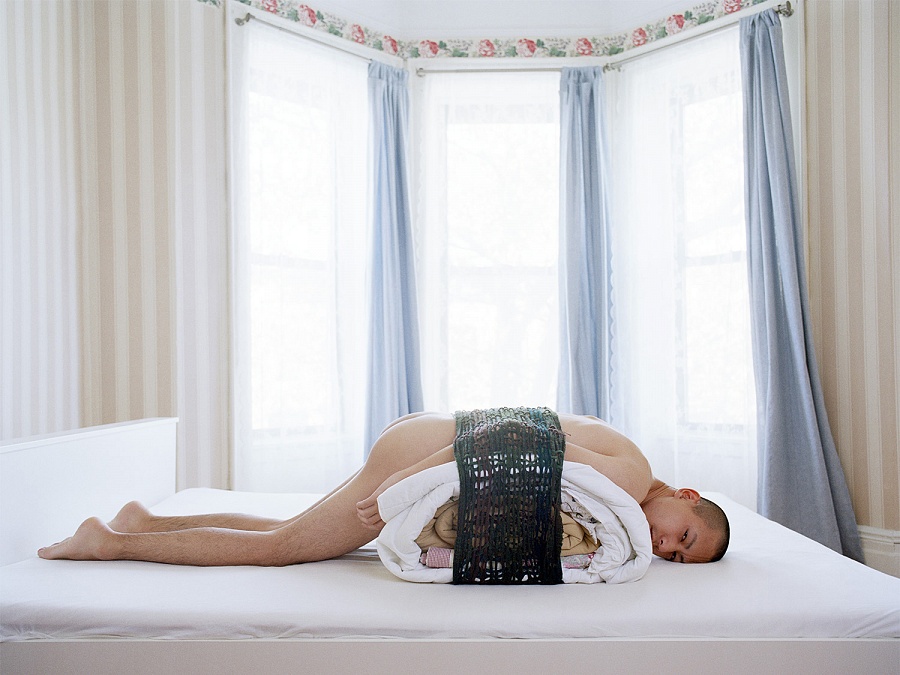
Pixy Liao’s Experimental Relationship is an ongoing photographic project documenting her relationship with her Japanese partner Moro, in which the conventional power dynamics of the heterosexual couple — and of the photographer-subject relationship — are systematically inverted and questioned. Liao, a Chinese woman, photographs Moro in positions of passivity, dependence, and domestic availability that are typically assigned to women in the genre of couple portraiture; he appears arranged, posed, sometimes literally carried or contained. The images are playful and formally elegant, but the play is purposeful: by reversing the conventional arrangement, Liao makes visible the gender assumptions that the conventional arrangement naturalises. The project has been ongoing for nearly two decades, which gives it a temporal dimension that single projects cannot have — the accumulation of images across time documents not just a relationship but the evolution of that relationship, the way two people negotiate power, visibility, and representation together across years.
Queer Voices, Politics of Representation and Who Gets to Be Remembered?
Official archives — state archives, museum collections, published histories — reflect the priorities of those who made them. The communities, relationships, and lives that fell outside the categories those archives recognised were typically not photographed, or were photographed in ways that pathologised or erased them, or left photographs that were destroyed, hidden, or simply never collected. The photographers and collections gathered here address that absence directly: making images of communities that have been excluded from collective memory, or recovering images that survived by accident rather than design. They extend the session’s central question — who gets to be remembered? — into explicitly political territory.
Sébastien Lifshitz Collection
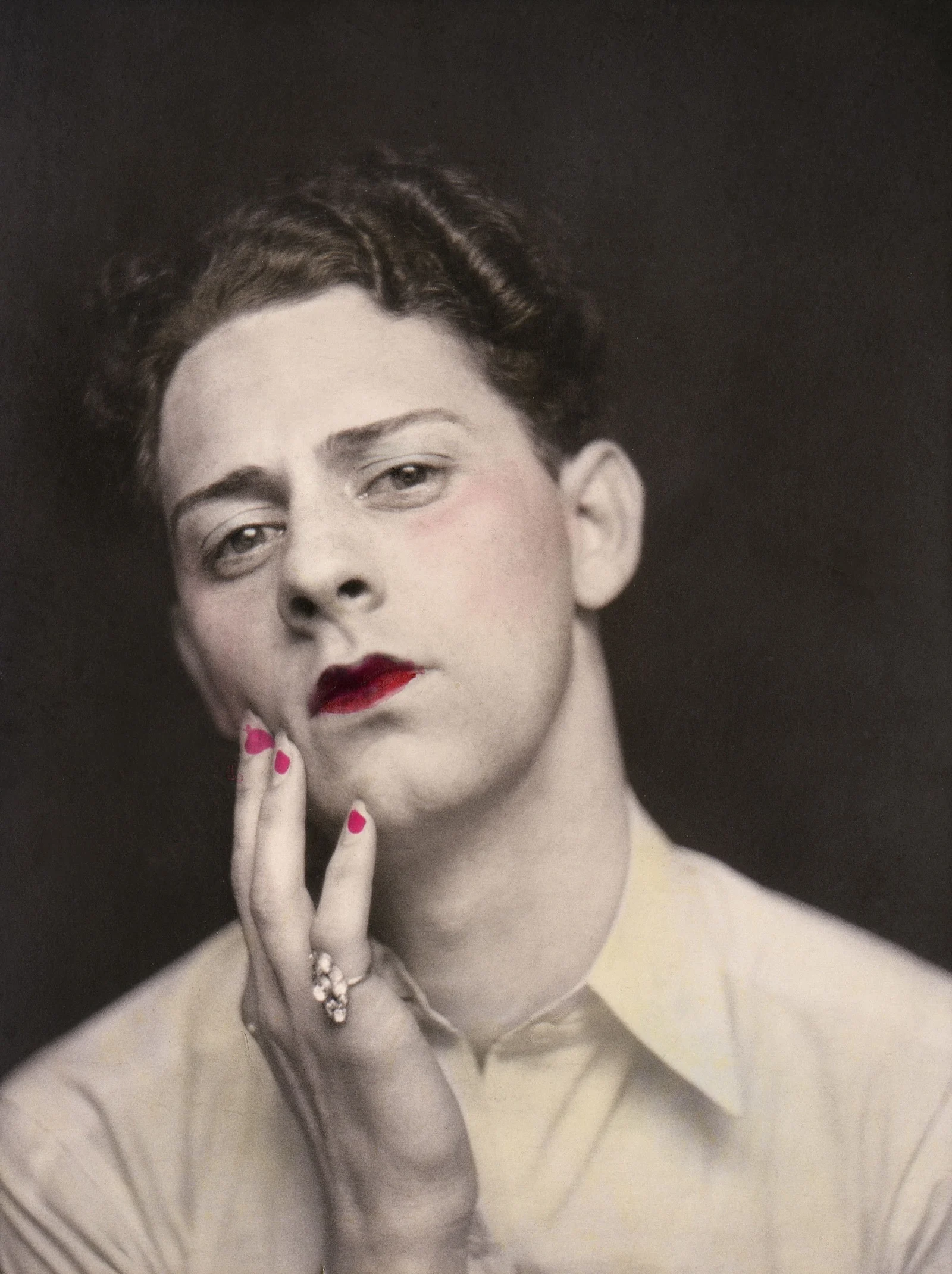
The French filmmaker Sébastien Lifshitz has spent decades assembling a collection of vernacular photographs — snapshots, portraits, photobooth images, amateur prints — depicting queer lives across the twentieth century. The images were made by unknown photographers for private use, and most of them survived by accident: found in flea markets, antique shops, and estate sales after the deaths of their subjects. What Lifshitz’s collection makes visible is the gap between the official archive and the life actually lived: these photographs record same-sex couples, gender non-conforming individuals, and queer communities in moments of tenderness, celebration, and ordinariness that the public culture of their time would not have permitted to circulate. The collection raises a set of questions that run through this section: What is the relationship between photography and historical visibility? Who decides what enters the archive and what is discarded? And what does it mean to recover images of people whose identities were, during their lifetimes, a form of legal and social risk?
Peter Hujar, Portraits in Life and Death, 1976
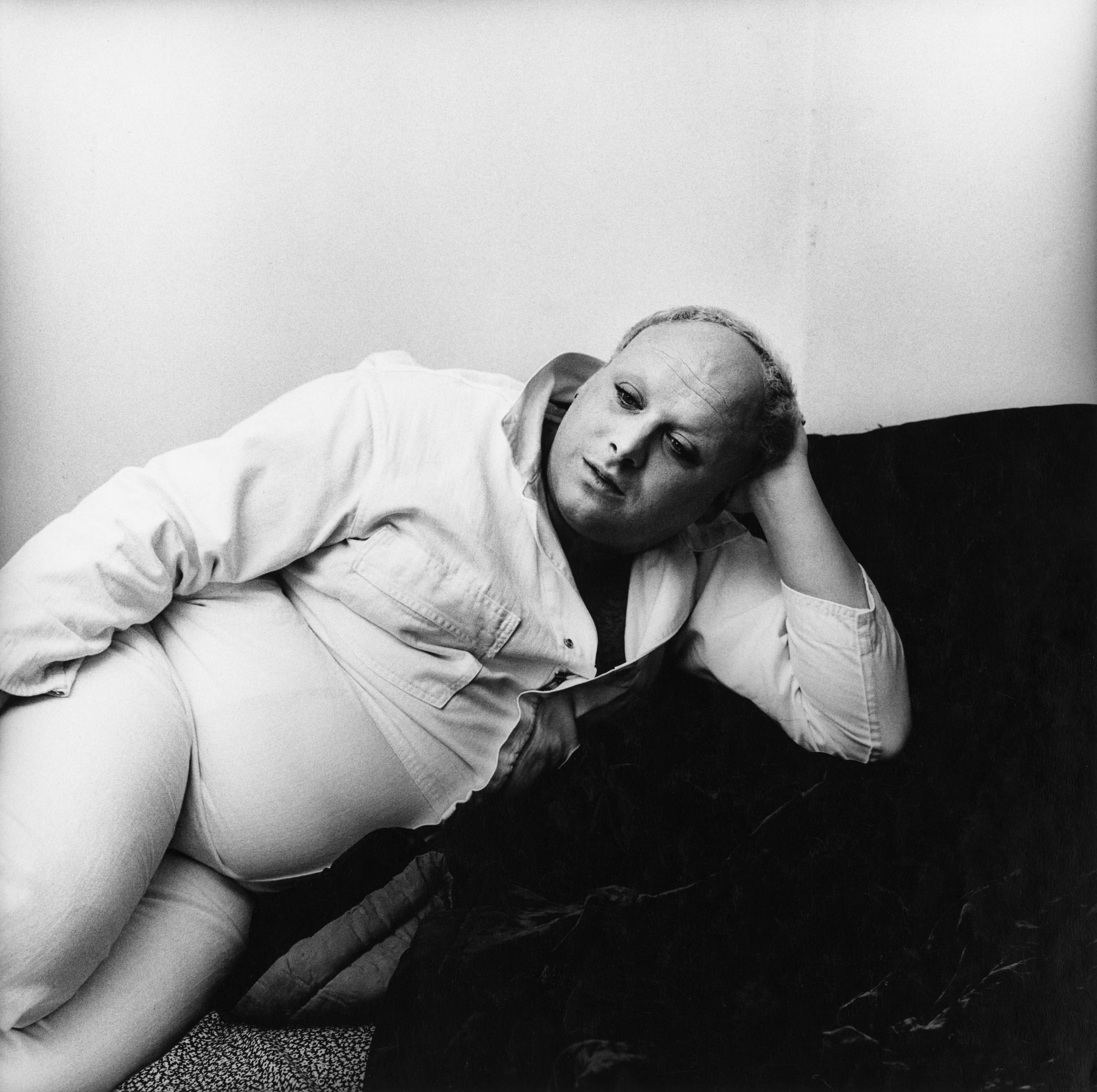
Peter Hujar was a central figure in the downtown New York scene of the 1970s and 1980s — a community of artists, performers, drag queens, and writers that also included Nan Goldin, David Wojnarowicz, and Susan Sontag, all of whom he photographed. His portraits — made in black and white, with a directness and psychological intensity that has few equivalents in the history of the medium — record a world that was devastated by the AIDS crisis: many of his subjects, and Hujar himself, died of AIDS-related illness in the late 1980s. His 1976 book Portraits in Life and Death is organised around two bodies of photographs: portraits of living subjects and photographs of the catacombs of Palermo, in which preserved corpses are displayed in their burial clothes. The juxtaposition is not morbid but philosophical — an insistence on the proximity of life and death, presence and absence, that the AIDS crisis would make viscerally real for the community Hujar had spent his career photographing. Like Goldin’s Ballad, Hujar’s work is a form of witness and a form of mourning: photography as the record of people who might otherwise be forgotten.
Mark Morrisroe, Self-portraits and Portraits, 1980s
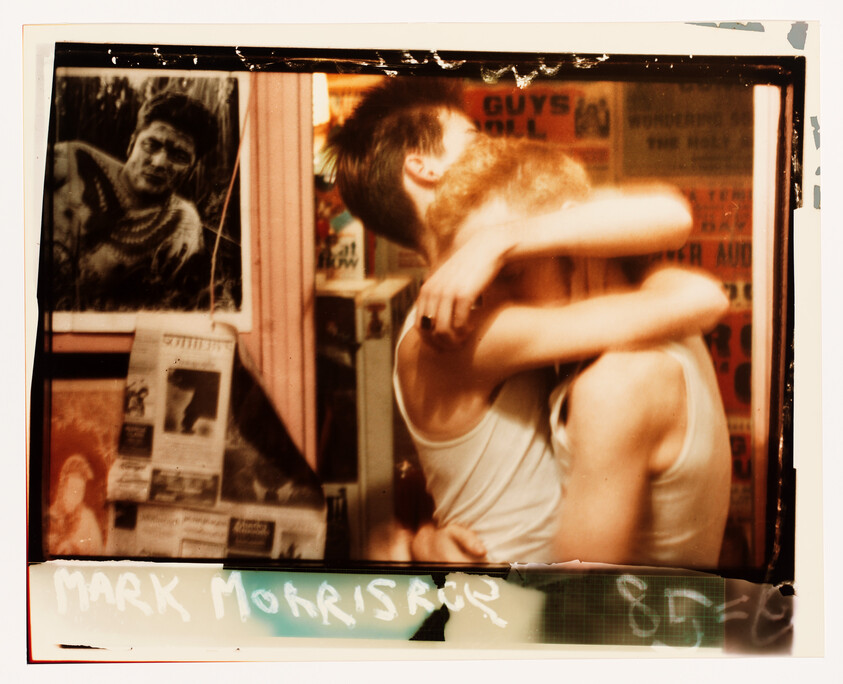
Mark Morrisroe was a Boston-born photographer who worked in the early 1980s in a milieu that overlapped with Nan Goldin’s — the underground club scenes of Boston and New York, populated by drag performers, sex workers, and young artists living at the margins of mainstream culture. Morrisroe died of AIDS-related illness in 1989 at the age of 30, leaving behind a body of work that was largely unknown at the time of his death and has only gradually entered the canon through sustained curatorial effort. His photographs — often self-portraits, made with a formally inventive use of darkroom manipulation, double exposure, and photographic transfer — are suffused with an awareness of the body’s vulnerability and mortality that reads very differently now that his biography is known. Morrisroe is a case study in the politics of photographic memory: his work survived, his reputation did not, and its gradual recovery raises questions about the institutional structures — galleries, museums, estates, critics — that determine which photographers enter history and which disappear.
Zanele Muholi, Faces and Phases, 2006–
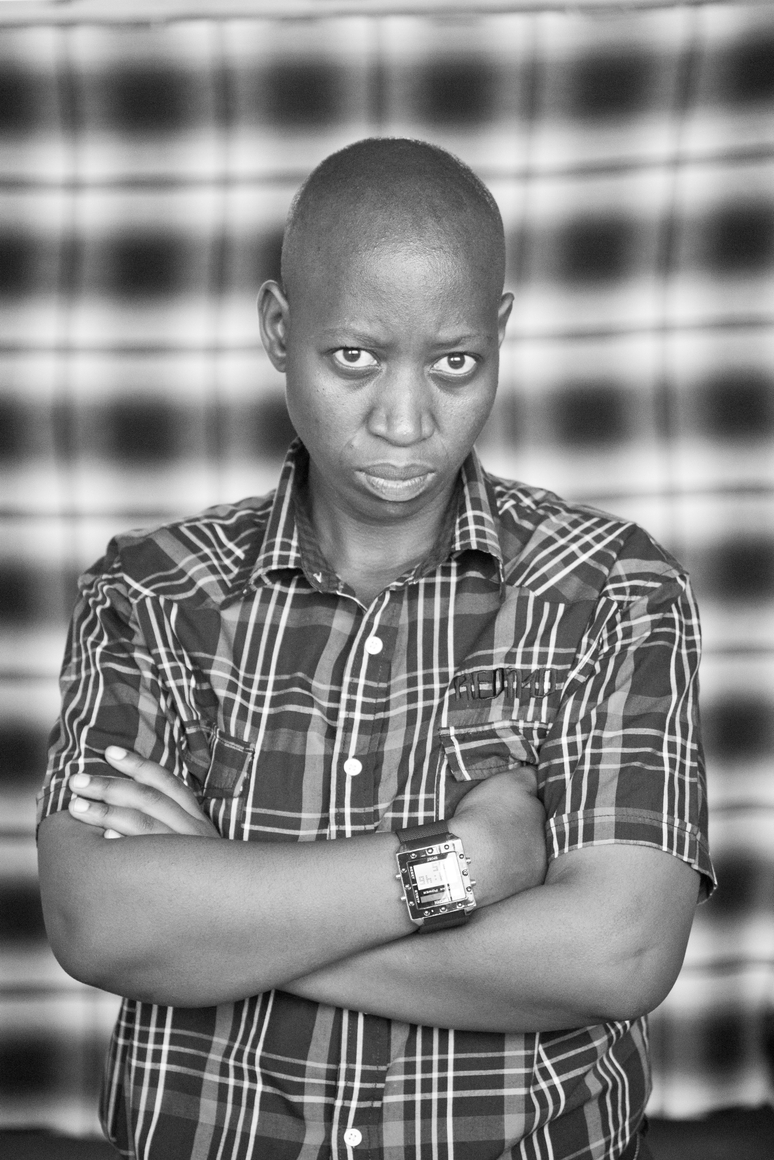
Zanele Muholi is a South African visual activist — their preferred term — whose ongoing project Faces and Phases constitutes one of the most sustained photographic archives of a marginalised community in contemporary art. Begun in 2006, the project comprises hundreds of black-and-white portraits of Black lesbian, gay, bisexual, transgender, queer, and intersex people in South Africa, a country in which same-sex relationships are constitutionally protected but in which LGBTQI+ individuals, and Black lesbian women in particular, remain subject to extreme violence including so-called “corrective rape.” Muholi has described Faces and Phases not as documentary photography but as an act of visual activism: the making of an archive that the state and its official institutions have refused to create. Each portrait is made collaboratively, with the subject’s full participation in how they are presented; the series insists on the visibility, dignity, and individuality of people who are systematically rendered invisible by the social conditions they inhabit. Faces and Phases connects the section’s historical questions about archival survival directly to the present: the archive is not only something that has been lost and recovered, but something that must be actively constructed against ongoing erasure.
Still Life: Photography and the Painting Tradition
The still life is one of the oldest and most philosophically charged genres in Western painting — and one of the most consequential for photography. The Dutch and Flemish still life paintings of the seventeenth century — laden tables, cut flowers, skulls, hourglasses, overturned vessels — were organized around the concept of vanitas: the meditation on time, mortality, and the vanity of earthly things. Every element was a memento mori, a reminder of death; even the most beautiful objects were shown in the process of decay, their petals dropping, their fruit softening. When photography emerged in the nineteenth century, it inherited this tradition almost immediately: the still life was one of the first photographic genres, partly because objects, unlike people, did not move during long exposures. But photography also transformed the genre, introducing its own relationship to time — the instant rather than the accumulated session — and its own claim to indexical truth. The photographers gathered here engage that inheritance explicitly, finding in the dialogue between photography and painting a set of questions about time, beauty, destruction, and what it means for an image to persist.
Laura Letinsky, Ill Form and Void Full>, 2011
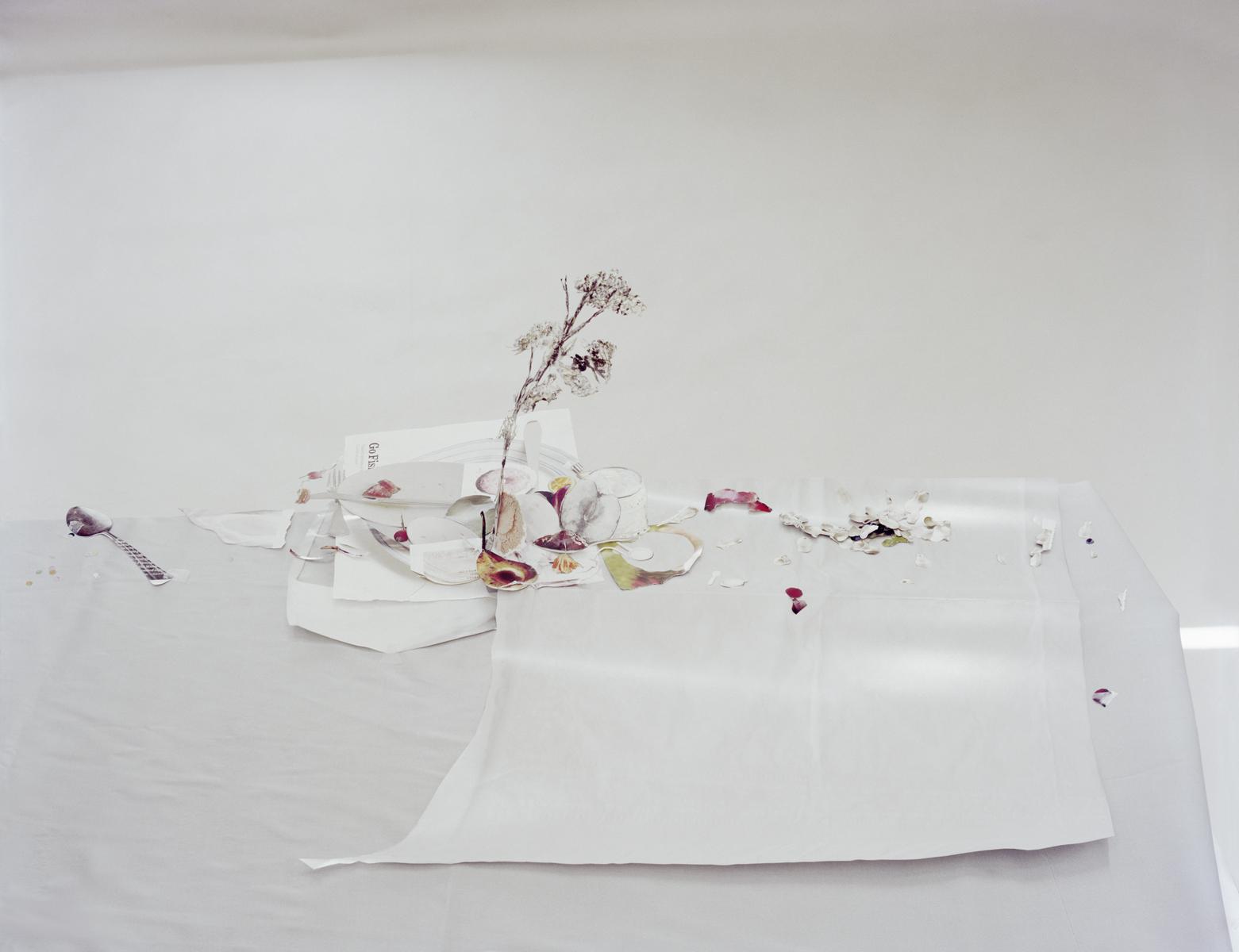
Laura Letinsky photographs the aftermath of meals — half-eaten food, crumpled napkins, scattered crumbs, the residue of fruit on white tablecloths — against backgrounds that often dissolve into abstraction, echoing the white grounds and raking light of Dutch still life painting. Her series Ill Form and Void Full takes its title from a phrase by the philosopher Leibniz describing empty space, and the images have something of that philosophical quality: they are attentive to absence, to what has been consumed, to the trace left by appetite. Letinsky has written explicitly about the vanitas tradition and the memento mori in relation to her practice, and the connection is direct: where Dutch painters showed food in the moment before consumption, Letinsky shows it after, at the point of dissolution and waste. The formal beauty of her images — the precision of light, the delicacy of colour — is inseparable from their subject matter: she makes beautiful images of things that are ending, which is the central gesture of the vanitas tradition.
Taryn Simon, Paperwork and the Will of Capital, 2015
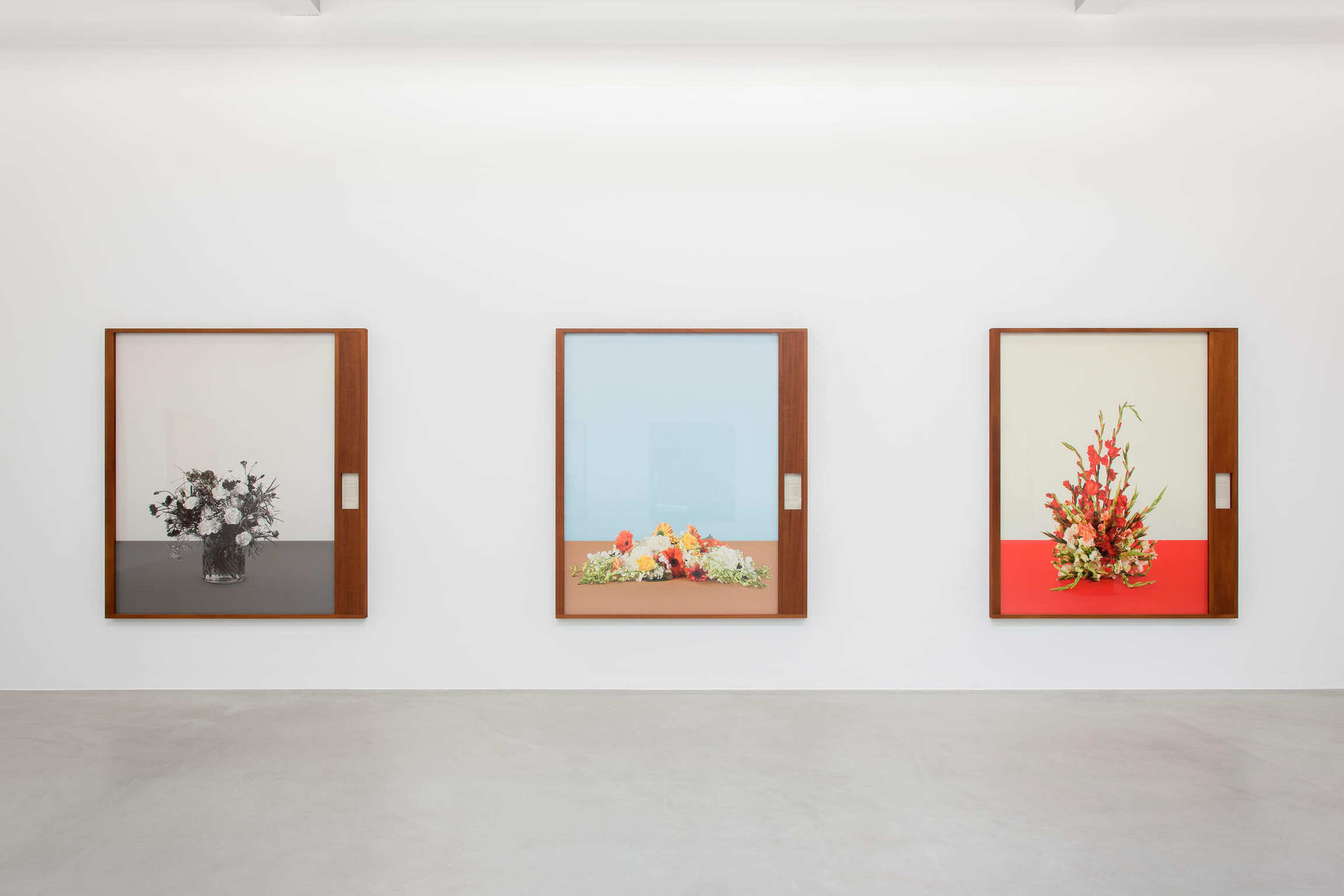
Taryn Simon’s Paperwork and the Will of Capital photographs floral arrangements reconstructed from archival research into the bouquets present at the signings of historic international agreements — trade deals, peace treaties, accords whose consequences have shaped the lives of millions. Simon researched the arrangements from archival photographs and diplomatic records, had them recreated by florists, and photographed them in the manner of formal botanical or studio still life photography, each image paired with a text describing the agreement it commemorates. The work operates as a kind of vanitas in reverse: where the Dutch tradition used beautiful objects to meditate on mortality and the transience of earthly things, Simon uses beautiful images of flowers to point toward the endurance of political arrangements — the agreements signed in those rooms, long after the flowers have died, continue to govern trade, territory, and human movement. The flowers are silent surrogates for power; their beauty is the beauty of concealment.
Ori Gersht, Time After Time, 2007 –
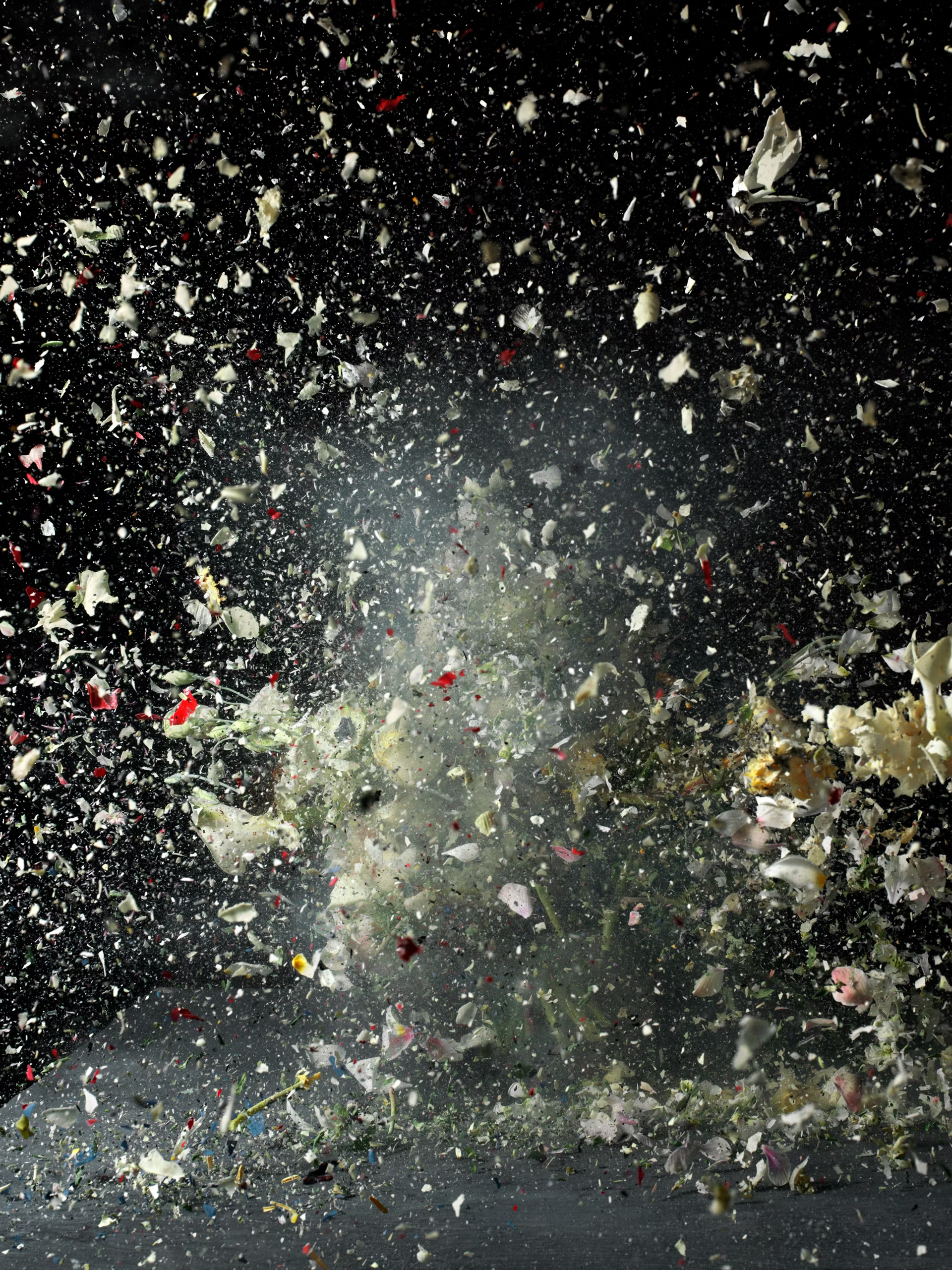
Ori Gersht’s Blow Up series photographs flower arrangements — directly referencing specific Flemish still life paintings — at the moment of their destruction, using high-speed photography to capture the instant of an explosion that reduces the arrangement to scattered petals and fragments. The reference is explicit and precise: Gersht has identified the specific paintings he is translating, so that the viewer can hold the serene, accumulative image of the painting against the violent, instantaneous image of the photograph. The gesture makes literal what the vanitas tradition always implied: that beauty is inseparable from destruction, that the still life is already a record of something dying. But it also does something specific to photography: where the Dutch painter spent days or weeks building an image of transience, Gersht uses the camera’s capacity to arrest a fraction of a second to catch the moment of destruction itself. The photograph here does not preserve the beautiful arrangement; it preserves its annihilation.
Richard Kuiper, Dutch Still Life in Plastic, 2013
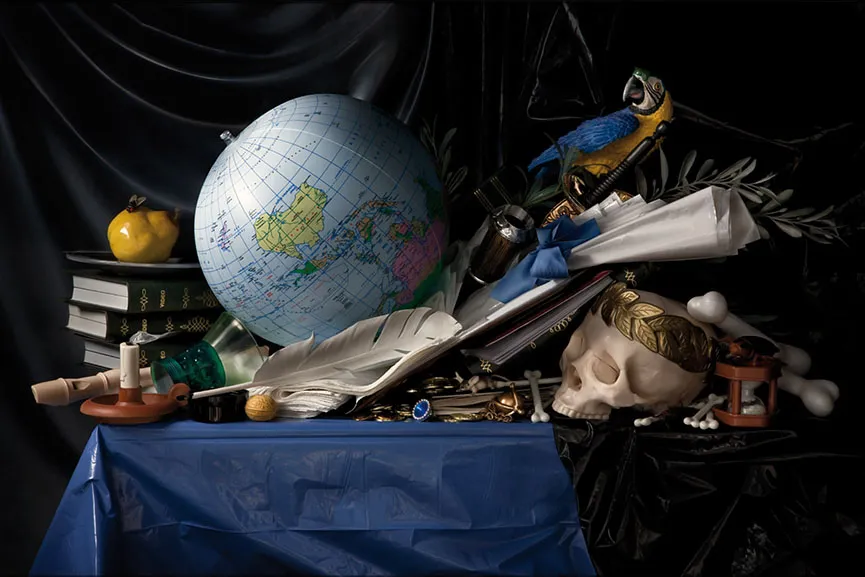
Richard Kuiper’s Dutch Still Life in Plastic recreates the iconographic vocabulary of seventeenth-century Dutch vanitas painting — flowers, fruit, draped fabric, skulls, hourglasses — using objects made entirely of plastic. The series is immediately legible as a translation of painting into photography, and the formal qualities of the images reinforce that: Kuiper uses the raking sidelight, the dark background, and the studied composition of the Dutch tradition with great precision. But the substitution of plastic for organic material produces a sharp conceptual reversal: the vanitas tradition used beautiful, perishable objects to meditate on mortality and the passage of time, while plastic — designed specifically not to decay, to persist in the environment for centuries — denies the very temporality the tradition was built to represent. A plastic skull is not a memento mori; it is its opposite, a material that refuses to be consumed by time. Kuiper’s series is both a loving homage to the painting tradition and a quietly devastating critique of a culture that has replaced organic time with synthetic permanence.
Food Photography: From the Table to the Screen
Food photography has one of the longest and most layered histories in the medium — and one of the most ideologically charged. It begins in the same place as the still life tradition: the laden table, the abundance of fruit and game, the careful arrangement of perishable things under controlled light. But where the vanitas still life used food to meditate on mortality, food photography developed a parallel ambition: to make food look desirable, to trigger appetite, to sell. That commercial logic — which dominated the genre through most of the twentieth century, from cookbooks and menus to magazine advertising — has since been complicated by the explosion of vernacular food imagery on social media, where the photograph of a meal has become a form of social currency, and by a contemporary art practice that uses food to ask questions about simulation, desire, and the relationship between image and object. The section closes at the threshold of the seduction lesson: food photography’s most recent evolution — “food porn,” the viral cake video, the hyper-realistic confection that refuses to be eaten — is less about nourishment than about the image’s capacity to produce longing for something it simultaneously withholds.
Roger Fenton, Still Life with Fruit and Decanter, 1860
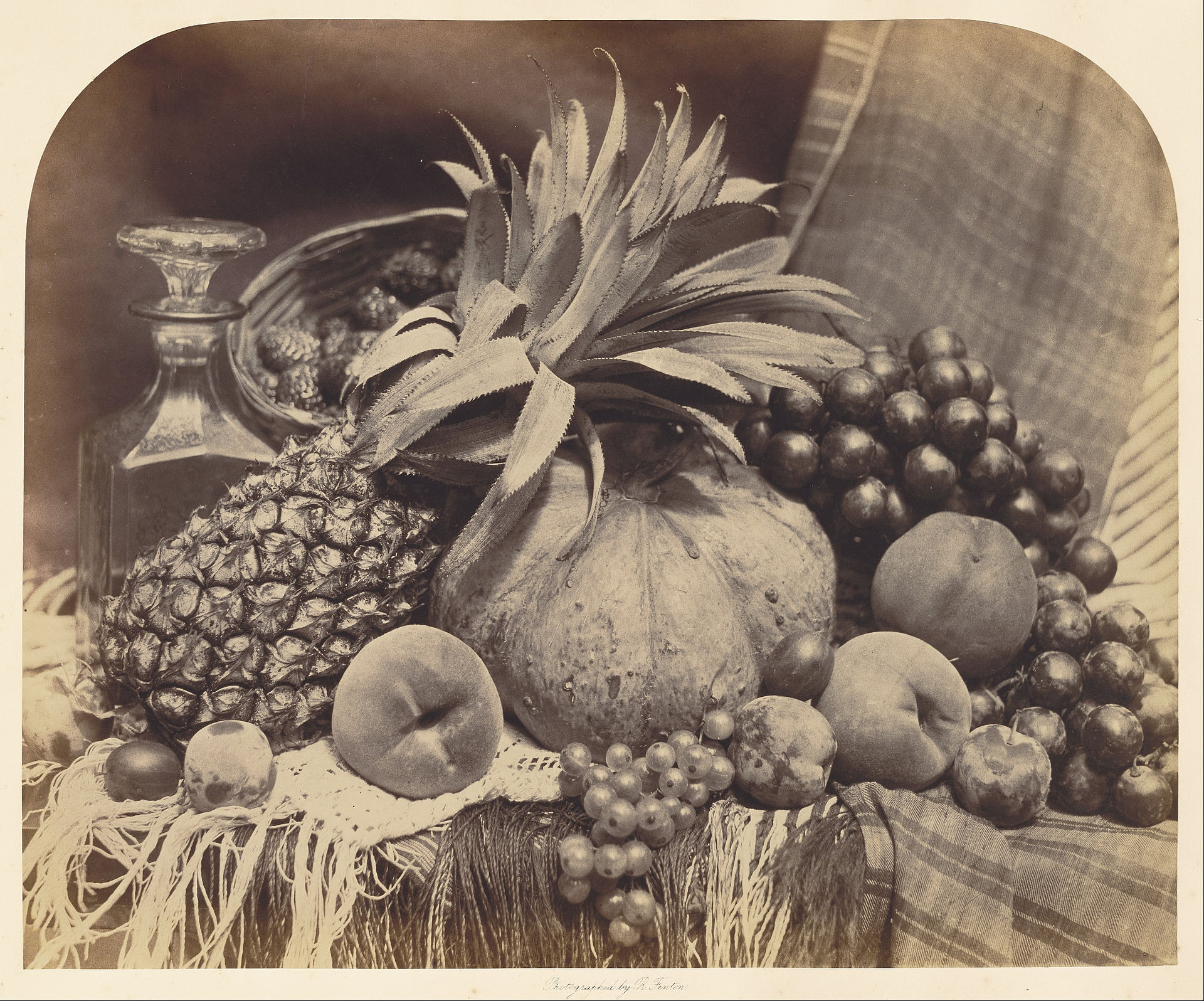
Roger Fenton is best known as a war photographer — his images of the Crimean War are among the earliest photographs of armed conflict — but in the final years of his short career he produced a body of still life photographs that represent one of the most direct and deliberate translations of Dutch painting into the photographic medium. Fenton’s still lifes of fruit, game, flowers, and tableware from around 1860 reproduce the compositional conventions, lighting, and symbolic vocabulary of seventeenth-century Flemish painting with extraordinary fidelity: the raking sidelight, the dark background, the carefully arranged abundance. They were made at a moment when photography was still establishing its relationship to the fine arts, and Fenton’s choice of subject and treatment was partly a claim for the medium’s legitimacy — photography could do what painting did, and do it from life. As the earliest entry in this section, Fenton’s still lifes mark the origin point of food photography’s double inheritance: from the painted tradition on one side, and from the camera’s indexical relationship to the real thing on the other.
Sharon Core, Early American, 2005–2008
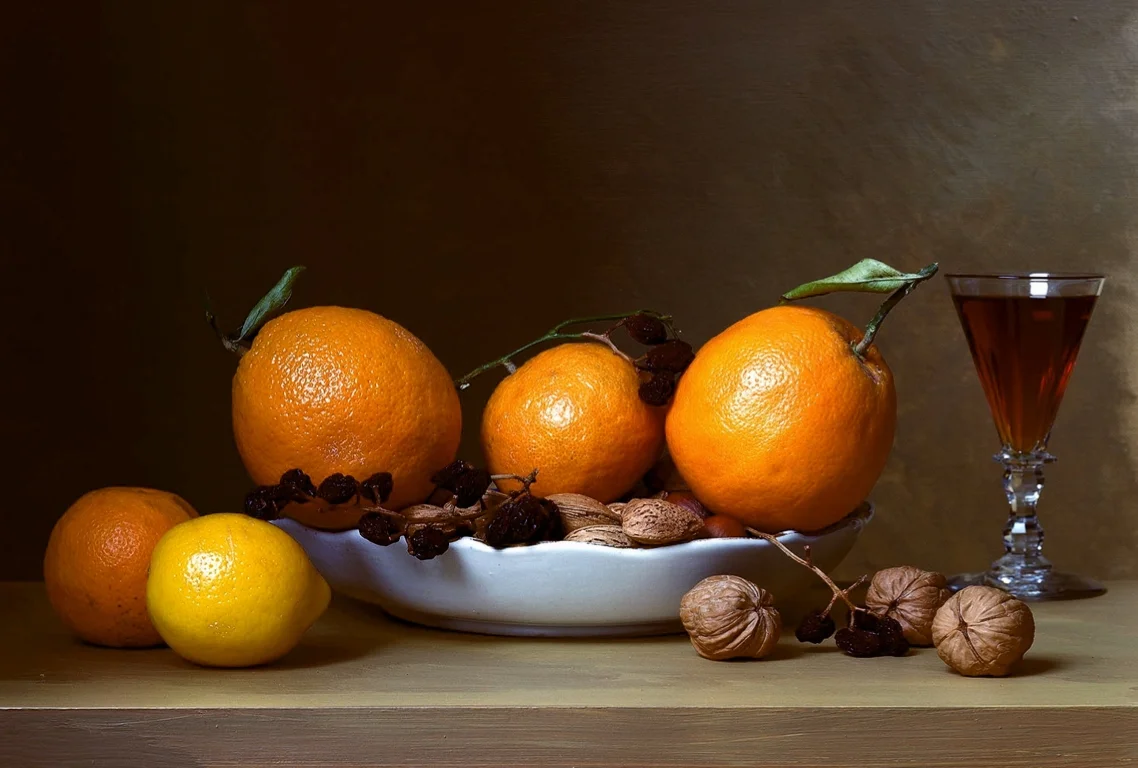
Sharon Core’s Early American series enacts one of the most literal and rigorous translations of painting into photography in contemporary practice. Working from specific 18th and 19th century American still life paintings — by Raphaelle Peale, James Peale, and Severin Roesen among others — Core spent years learning the horticultural and culinary knowledge required to reproduce them: growing heirloom varieties of fruit and vegetables, sourcing period-appropriate vessels, and reconstructing the exact arrangements depicted before photographing them. The results are images that hover between painting and photograph, original and copy, past and present. They raise the simulation question with unusual precision: Core’s photographs are not photographs of paintings but photographs of things arranged to look like paintings — yet the things themselves are real, grown and sourced specifically for this purpose. Her later series Thiebaud (2006), recreating Wayne Thiebaud’s iconic paintings of cakes, pies, and diner food as photographs, extends the same logic into the mid-twentieth century and points directly toward the contemporary confusion between food, image, and object that the “is it cake?” phenomenon crystallises.
Nickolas Muray, McCall’s Magazine, 1940s–1950s
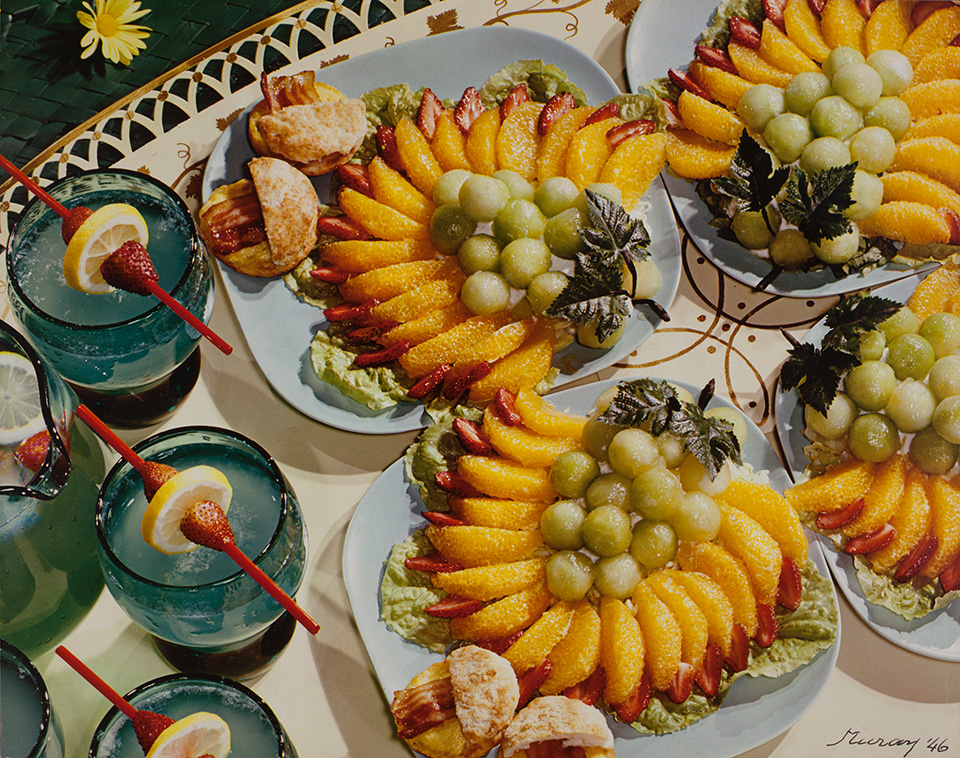
Nickolas Muray was a Hungarian-born photographer who became one of the most technically accomplished colour photographers in mid-century America, producing celebrity portraits and, crucially for this section, food photographs for publications including McCall’s and Ladies’ Home Journal through the 1940s and 1950s. His food images — saturated, perfectly lit, organised around an ideal of domestic abundance and cheerful consumption — defined the visual language of American food advertising at the moment when colour photography was transforming what it meant to sell things through images. Muray’s photographs are not about what food tastes like but about what it promises: comfort, prosperity, the good life made tangible through the right meal in the right kitchen. They are also, viewed now, instructively artificial: the colours are too vivid, the arrangements too perfect, the surfaces too gleaming. The gap between the image and any actual eating experience is wide and deliberate — which is the commercial logic of food photography in its purest form, and the condition that all subsequent food photography either extends or reacts against.
Peter Fischli and David Weiss, Sausage Series, 1979
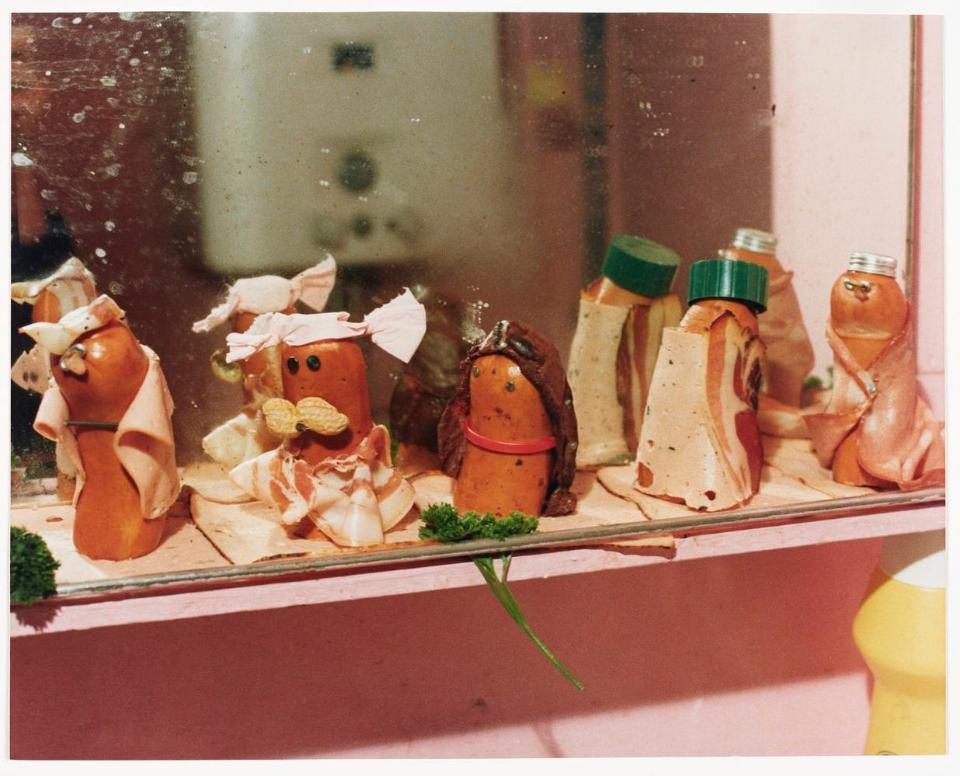
Peter Fischli and David Weiss’s Sausage Series (Wurstserie) is one of the most quietly subversive works in this section: a set of photographs depicting miniature staged scenes — a boxing match, a fashion show, a street scene, a domestic interior — constructed entirely from sausages, salami, and other cured meats, photographed as if documentary. The deadpan presentation is essential: Fischli and Weiss make no visible effort to signal irony; the scenes are lit and framed with the neutral competence of vernacular photography, so that the absurdity of the subject matter arrives slowly. The work operates as a parody of the photograph’s claim to record reality — if anything can be staged and photographed, then the photograph’s relationship to truth is entirely contingent on what was placed in front of the camera. In the context of food photography, the Sausage Series inverts the genre’s usual logic: where food photography typically aestheticises food to produce desire, Fischli and Weiss use food to produce something else entirely — a world in miniature, a comedy of representation, an inquiry into what photography actually does when it points at anything at all.
Lorenzo Vitturi, Dalston Anatomy, 2013
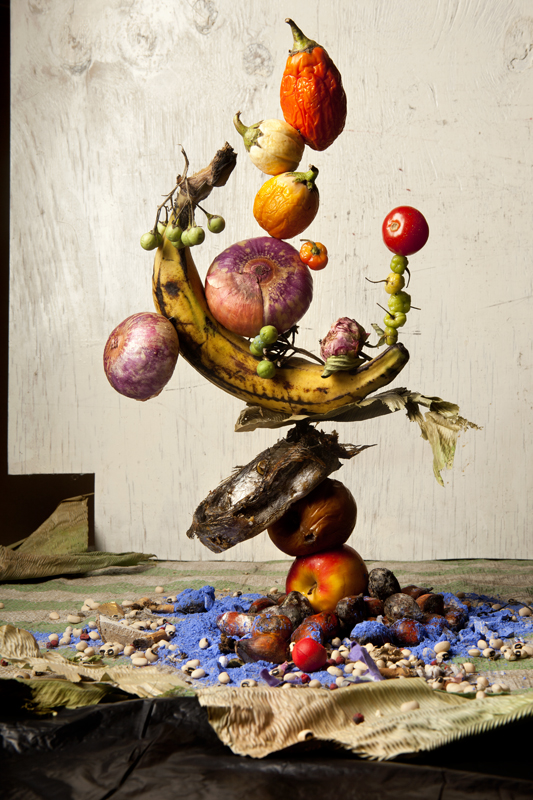
Lorenzo Vitturi’s Dalston Anatomy emerged from an extended engagement with Ridley Road Market in Dalston, east London — a street market serving one of the most culturally diverse communities in the city, its stalls selling African, Caribbean, South Asian, and Eastern European produce alongside fabrics, household goods, and other goods in states of abundance and decay. Working between photography and sculpture, Vitturi assembled temporary arrangements of market materials — fruit, vegetables, fabrics, meat, packaging — photographed them in the studio, then dismantled them, so that the photograph is the only form the arrangement ever had. The work sits at the intersection of food photography, still life, and sculpture: the food is both subject and material, both beautiful and decomposing, both culturally specific and formally abstract. Dalston Anatomy connects the vanitas tradition to the present through the specific texture of urban multicultural life, treating the market — one of the oldest human institutions for the exchange of food — as a site where questions of memory, migration, and the persistence of objects are played out through the daily accumulation and dispersal of perishable things.
Assignment
Make a series of 3–5 still life photographs in which the choice and/or arrangement of objects tells something true about a relationship, a memory, or a loss. The objects should be ones you have chosen deliberately — things that carry some weight of significance or association — and the arrangement, light, and composition should be considered rather than accidental. You are not illustrating a story; you are making a visual equivalent of something that resists easy description. Write a short caption (2–3 sentences) for each image identifying the objects and what you were trying to do with them.
Upload a screenshot of your assignments with your name and caption on this online document
Präsentationen
Lade einen Screenshot deiner Aufgabe mit deinem Namen und einer Bildunterschrift in dieses Online-Dokument hoch.
Diese Sitzung verfolgt die Beziehung der Fotografie zur Erinnerung in zwei Richtungen. Die erste ist sozial und politisch: wie Fotografie kollektive und persönliche Erinnerung konstruiert, bewahrt und verzerrt — in den ritualisierten Bildern des Tourismus, im intimen Archiv des Familienalbums und in den Fotografien von Gemeinschaften, deren Geschichten systematisch aus dem offiziellen Gedächtnis ausgeschlossen wurden. Die zweite ist formal und historisch: wie Fotografie die Konventionen der Malerei übersetzt hat — vor allem die Stillleben-Tradition mit ihrer Meditation über Zeit, Sterblichkeit und das Fortbestehen von Objekten — in ein neues Medium, das ihre Fragen erbt und ihre Mittel transformiert. Gemeinsam offenbaren diese beiden Richtungen, dass Fotografie nicht einfach eine Aufzeichnungstechnologie ist, sondern eine Praxis, die tief verwoben ist mit unserem Verständnis davon, was bleibt, was verschwindet und was es bedeutet, eine Spur zu hinterlassen.
Reise- und Tourismusfotografie
Tourismus ist eine der fotografisch gesättigtsten Praktiken des zeitgenössischen Lebens — und eine der ältesten: Der Impuls, ein Bild von anderswo mitzubringen, geht der Kamera voraus und erbt die Tradition der Grand Tour und der gemalten Veduta. Was die Fotografie hinzufügte, war Zugänglichkeit und Volumen: die Möglichkeit einer persönlichen Aufzeichnung, reproduzierbar und teilbar, die jeder machen konnte. Was diese Zugänglichkeit im Laufe der Zeit hervorbrachte, war eine bemerkenswert standardisierte Bildkultur — dieselben Winkel, dieselben Gesten, dieselben Orte, milliardenfach reproduziert. Die hier versammelten Fotografierenden untersuchen diese Standardisierung kritisch und fragen, was Tourismusfotografie erinnert, was sie einebnet und was sie auslässt.
Martin Parr, Small World, 1990–2017
Martin Parrs Small World ist eine anhaltende, sardonische Untersuchung des Massentourismus, die über fast drei Jahrzehnte in Dutzenden von Ländern entstanden ist. Mit dem grellen Blitz und den gesättigten Farben, die zu seiner Handschrift wurden, fotografiert Parr die Rituale des touristischen Erlebens — die Schlange vor dem Wahrzeichen, das Selfie mit dem Denkmal, den Souvenirstand, die Reisegruppe in Formation — mit einer Präzision, die ständig zwischen Komödie und Kritik kippt. Die Bilder sind nicht menschenfeindlich; dafür ist Parr zu sehr an seinen Sujets interessiert. Aber sie sind unerbittlich aufmerksam gegenüber der Lücke zwischen der Erfahrung, die Tourismus verspricht (Begegnung mit dem Außergewöhnlichen, Eintauchen in das Fremde), und dem, was er typischerweise liefert (eine Menschenmenge, die tut, was man selbst tut, an einem Ort, der für Menschen eingerichtet wurde, die tun, was man selbst tut). Small World wirft die Frage auf, was Reisefotografie eigentlich erinnert: ob das Touristenbild die Aufzeichnung eines besuchten Ortes oder die Aufzeichnung einer inszenierten Darbietung ist — und ob diese Unterscheidung noch eine Rolle spielt, sobald die Fotografie im Album ist.
Roc Herms, Hacer Pantallazo, 2014–
Während Parr sich mit einer Kamera physisch in touristische Szenen hineinbegibt, operiert Roc Herms vollständig auf Distanz — er fotografiert seinen Handybildschirm, während dieser online gefundene Reisebilder anzeigt, und produziert Screenshots von Screenshots in einer Reproduktionskette, die das Originalbild schrittweise degradiert, während sie seine Zirkulation vervielfältigt. Hacer Pantallazo (etwa: „einen Screenshot machen”) behandelt das Touristenbild als Einheit digitaler Währung: etwas, das von Hand zu Hand weitergegeben, neu gepostet, neu gerahmt, aus jedem spezifischen Entstehungs- oder Erfahrungskontext herausgelöst wird. Die Geste — eine Kamera auf einen Bildschirm richten — macht sichtbar, was in der Zirkulation der Reisefotografie normalerweise unsichtbar ist: dass das meiste, was wir als Bilder von Orten konsumieren, keine Fotografien von Orten sind, sondern Fotografien von Fotografien, Bilder von Bildern, Erinnerungen von Erinnerungen. Herms’ Werk wirft auch Fragen nach Autorschaft und dem Status des gefundenen Bildes auf, die mit der breiteren digitalen Bildkultur verbunden sind, auf die der Kurs in späteren Sitzungen zurückkommt.
Familienfotografie zwischen gewählten Bindungen und dysfunktionalen Intimitäten
Die Familienfotografie ist vielleicht die ubiquitärste Form der Fotografie — und eine der ideologisch am stärksten aufgeladenen. Das Familienalbum ist keine bloße Aufzeichnung des Geschehenen, sondern dessen, was die Familie zu erinnern wählt: Es ist redigiert, kuratiert und inszeniert. Die darin enthaltenen Fotografien tendieren zu Feiern — Geburtstagen, Ferien, Meilensteinen — und weg von Konflikten, Krankheit, Trauer oder Ambivalenz. Die hier versammelten Fotografierenden arbeiten gegen diese Tendenz oder neben ihr: Sie machen Bilder, die aufzeichnen, was das Familienalbum typischerweise ausschließt, oder die neu imaginieren, was Familie und Intimität bedeuten können. Sie erweitern die übergreifende Frage der Sitzung, wer erinnert wird und wie.
Richard Billingham, Ray’s a Laugh, 1996
Richard Billingham begann Anfang der 1990er-Jahre, seine Familie in einer beengten Sozialwohnung in den West Midlands zu fotografieren — anfangs um Referenzmaterial für Gemälde zu sammeln, ohne jede Absicht, die Fotografien auszustellen. Was entstand, war Ray’s a Laugh, eine rohe, oft schockierende Aufzeichnung des Alkoholismus seines Vaters Ray, der tätowierten Häuslichkeit seiner Mutter Liz und der Textur eines in Armut und Chaos gelebten Lebens. Die Bilder sind technisch unvollkommen — überstrahlt vom Blitz, körnig, in engen Räumen aufgenommen — und diese Unvollkommenheit fühlt sich wesentlich an: Das sind Fotografien, die so gemacht werden, wie man seine eigene Familie fotografiert, ohne den distanzierenden Apparat professioneller Bildproduktion. Was Billingham, ohne es zu planen, schuf, war ein Anti-Album: Bilder von allem, was die konventionelle Familienfotografie ausschließt. Wie Larry Clarks Tulsa, dem wir in der vorherigen Sitzung begegnet sind, wirft Ray’s a Laugh die Frage auf, was es bedeutet, Menschen zu fotografieren, an die man durch Umstände statt durch Wahl gebunden ist — Menschen, die möglicherweise nicht in der Lage sind, die Konsequenzen zu erwägen, die sich aus dem Erscheinen in Bildern ergeben, die über das Zuhause hinaus zirkulieren. Im Gegensatz zu Clark hat Billingham jedoch stets behauptet, das Werk sei aus Liebe entstanden und seine Familie sei sich der eventuellen Veröffentlichung bewusst und damit einverstanden gewesen.
Anna & Bernhard Blume, Transzendentaler Konstruktivismus, 1993–1995
Anna und Bernhard Blume waren ein deutsches Künstlerpaar, das von den 1970er- bis in die 2000er-Jahre kollaborativ arbeitete und großformatige inszenierte Fotografien schuf, die die visuellen Konventionen des häuslichen Schnappschusses — blitzbelichtet, leicht instabil, scheinbar spontan — einsetzen, um Szenen spektakulären häuslichen Chaos zu inszenieren. In ihren bekanntesten Serien, darunter Transzendentaler Konstruktivismus und Vasenekstasen, brechen gewöhnliche Küchen- und Wohnzimmerumgebungen in grotesker Unordnung auf: Möbel levitieren, Geschirr explodiert in der Luft, die Figuren der Künstler:innen selbst — stets die einzigen Performer:innen — werden in Posen übertriebener Bestürzung oder Unterwerfung festgehalten, während das häusliche Interieur um sie herum aufbegehrt. Die formale Strategie ist präzise: Indem die Blumes die Ästhetik des Familienschnappschusses imitieren, üben sie ihre Kritik von innen an dem Genre, das sie demontieren. Während Billinghams Anti-Album dokumentarisch ist — das Chaos ist real, die Unvollkommenheit ungeplant —, ist das Chaos der Blumes vollständig konstruiert, was den Register von Enthüllung zur Parodie verschiebt. Ihr Werk fragt, was die ordentliche, feierliche Familienfotografie eigentlich unterdrückt: was ausbricht, wenn die Inszenierung häuslicher Normalität an ihre Grenzen getrieben wird. Als deutschsprachiges Künstlerpaar, das explizit innerhalb und gegen die europäische bürgerliche Haushaltskultur arbeitet, bieten die Blumes auch einen Gegenpol zu den überwiegend amerikanischen und asiatischen Perspektiven anderswo in diesem Abschnitt.
Dayanita Singh, Privacy, 2003
Dayanita Singhs Privacy fotografiert die Innenräume indischer Oberschichtshaushalte — Salons, Esstische, Schlafzimmer, Veranden — oft ohne deren Bewohner:innen. Die Abwesenheit ist der Kern: Das sind Räume, die von Belegen gelebter Leben gesättigt sind (die arrangierten Möbel, die Familienfotos an der Wand, die über Generationen akkumulierten Objekte), aus denen sich die Menschen selbst vorübergehend zurückgezogen haben. Singh machte das Werk über mehrere Jahre in Zusammenarbeit mit den fotografierten Familien — was es scharf von voyeuristischer Dokumentarfotografie unterscheidet: Der Zugang ist intim, die Beziehung kollaborativ, die Bilder durch Vertrauen ermöglicht. Privacy erweitert das Nachdenken der Sitzung darüber, was der häusliche Raum erinnert — wie Objekte und Arrangements die Form eines Lebens bewahren, selbst wenn die Person abwesend ist — und wirft Fragen nach der Beziehung zwischen Fotografie, Häuslichkeit und den geschlechtlich markierten Räumen auf, die Frauen insbesondere bewohnen und erhalten. Singh ist auch eine der zentralen Figuren der zeitgenössischen indischen Fotografie, und ihr Werk bietet eine Perspektive auf Familie und Erinnerung, die nicht durch die euro-amerikanischen Traditionen organisiert ist, die weite Teile dieses Kurses dominieren.
Leigh Ledare, Pretend You’re Actually Alive, 2009
Leigh Ledares Pretend You’re Actually Alive ist eines der ethisch und psychologisch komplexesten Werkkorpora der zeitgenössischen Fotografie. Über mehrere Jahre fotografierte Ledare seine Mutter Tina — eine alternde ehemalige Balletttänzerin — in ihrem häuslichen Leben, einschließlich explizit sexueller Situationen mit ihren verschiedenen Partnern. Das Werk entstand mit Tinas voller Beteiligung und aktiver Zusammenarbeit; sie initiierte die fotografischen Situationen häufig selbst und hat öffentlich über das Projekt in Begriffen von Handlungsmacht und Selbstrepräsentation gesprochen. Die kritische Debatte um das Werk war dennoch intensiv und konzentrierte sich auf Fragen, die die Bilder selbst nicht beantworten können: Kann die Familienbeziehung zwischen Fotografierenden und Sujet jemals vollständig von den Machtdynamiken getrennt werden, die sie trägt? Löst die scheinbare Einwilligung des Sujets die ethischen Fragen auf, die der Akt des Fotografierens und Ausstellens aufwirft? Was beinhaltet die eigene Position der Betrachterin oder des Betrachters in Bezug auf diese Bilder? Pretend You’re Actually Alive verdient seinen Platz in diesem Abschnitt nicht, weil es Antworten liefert, sondern weil es die Fragen unausweichlich macht, die Familienfotografie normalerweise zu vermeiden versteht — Fragen über Begehren, Kontrolle, Komplizenschaft und den Unterschied zwischen gesehen werden und repräsentiert werden.
Charlie Engman, Mom, 2020
Charlie Engmans Mom dokumentiert ein anhaltend kollaboratives Fotoprojekt zwischen dem Künstler und seiner Mutter Kathleen, das über viele Jahre während seiner Heimbesuche in Illinois entstanden ist. Die Bilder sind formal einfallsreich und oft seltsam: Kathleen erscheint in aufwändigen häuslichen Tableaux, manchmal in surrealen oder theatralischen Situationen, die die Konventionen der Familienporträtfotografie zu parodieren oder zu erweitern scheinen. Was das Projekt auszeichnet, ist die Art der Zusammenarbeit — Engman und seine Mutter sind echte Mitautor:innen, und das Werk spiegelt eine Beziehung wider, in der die üblichen Hierarchien von Fotografierenden und Sujet wesentlich neu verhandelt wurden. Mom ist ein Porträt einer Beziehung über die Zeit ebenso sehr wie ein Porträt einer Person: Das Buch akkumuliert Bilder aus verschiedenen Phasen beider Leben und macht sichtbar, wie sich die Eltern-Kind-Beziehung verschiebt, fortbesteht und transformiert. Es erweitert die anhaltende Untersuchung des Kurses, wie kollaborative, ethisch fundierte Fotografie in der Praxis aussieht.
Pixy Liao, Experimental Relationship, 2007–
Pixy Liaos Experimental Relationship ist ein fortlaufendes fotografisches Projekt, das ihre Beziehung zu ihrem japanischen Partner Moro dokumentiert, in der die konventionellen Machtdynamiken des heterosexuellen Paares — und der Fotografierenden-Sujet-Beziehung — systematisch umgekehrt und hinterfragt werden. Liao, eine chinesische Frau, fotografiert Moro in Positionen der Passivität, Abhängigkeit und häuslichen Verfügbarkeit, die typischerweise Frauen im Genre der Paarporträtfotografie zugewiesen werden; er erscheint arrangiert, posiert, manchmal buchstäblich getragen oder eingeschlossen. Die Bilder sind spielerisch und formal elegant, aber das Spiel ist zweckgerichtet: Indem die konventionelle Anordnung umgekehrt wird, macht Liao die Geschlechterannahmen sichtbar, die die konventionelle Anordnung naturalisiert. Das Projekt läuft seit fast zwei Jahrzehnten, was ihm eine zeitliche Dimension verleiht, die einzelne Projekte nicht haben können — die Akkumulation von Bildern über die Zeit dokumentiert nicht nur eine Beziehung, sondern deren Entwicklung: wie zwei Menschen Macht, Sichtbarkeit und Repräsentation gemeinsam über Jahre hinweg aushandeln.
Queere Stimmen, Politik der Repräsentation und wer erinnert wird
Offizielle Archive — staatliche Archive, Museumssammlungen, veröffentlichte Geschichten — spiegeln die Prioritäten derer wider, die sie angelegt haben. Die Gemeinschaften, Beziehungen und Leben, die außerhalb der von diesen Archiven anerkannten Kategorien fielen, wurden typischerweise nicht fotografiert, oder auf eine Weise fotografiert, die sie pathologisierte oder auslöschte, oder hinterließen Fotografien, die vernichtet, versteckt oder schlicht nie gesammelt wurden. Die hier versammelten Fotografierenden und Sammlungen adressieren diese Abwesenheit direkt: Sie machen Bilder von Gemeinschaften, die aus dem kollektiven Gedächtnis ausgeschlossen wurden, oder sie bergen Bilder, die durch Zufall statt durch Absicht überlebten. Sie erweitern die zentrale Frage der Sitzung — wer darf erinnert werden? — in explizit politisches Terrain.
Sébastien Lifshitz Kollektion
Der französische Filmemacher Sébastien Lifshitz hat Jahrzehnte damit verbracht, eine Sammlung vernakulärer Fotografien zusammenzustellen — Schnappschüsse, Porträts, Fotoautomatenbilder, Amateurdrucke — die queere Leben des zwanzigsten Jahrhunderts zeigen. Die Bilder wurden von unbekannten Fotografierenden für den privaten Gebrauch gemacht und die meisten überlebten durch Zufall: gefunden auf Flohmärkten, in Antiquitätenläden und Nachlassverkäufen nach dem Tod ihrer Sujets. Was Lifshitz’ Sammlung sichtbar macht, ist die Lücke zwischen dem offiziellen Archiv und dem tatsächlich gelebten Leben: Diese Fotografien dokumentieren gleichgeschlechtliche Paare, geschlechtsnon-konforme Individuen und queere Gemeinschaften in Momenten der Zärtlichkeit, des Feierns und der Alltäglichkeit, die die öffentliche Kultur ihrer Zeit nicht hätte zirkulieren lassen. Die Sammlung wirft eine Reihe von Fragen auf, die durch diesen Abschnitt laufen: Was ist die Beziehung zwischen Fotografie und historischer Sichtbarkeit? Wer entscheidet, was in das Archiv eingeht und was verworfen wird? Und was bedeutet es, Bilder von Menschen zu bergen, deren Identitäten zu ihren Lebzeiten eine Form von rechtlichem und sozialem Risiko darstellten?
Peter Hujar, Portraits in Life and Death, 1976
Peter Hujar war eine zentrale Figur der New Yorker Downtown-Szene der 1970er- und 1980er-Jahre — einer Gemeinschaft von Künstler:innen, Performer:innen, Drag Queens und Schriftsteller:innen, zu der auch Nan Goldin, David Wojnarowicz und Susan Sontag gehörten, die er alle fotografierte. Seine Porträts — in Schwarzweiß, mit einer Direktheit und psychologischen Intensität, die in der Geschichte des Mediums kaum Entsprechungen hat — dokumentieren eine Welt, die durch die AIDS-Krise verwüstet wurde: Viele seiner Sujets und Hujar selbst starben Ende der 1980er-Jahre an AIDS-bedingten Erkrankungen. Sein Buch Portraits in Life and Death von 1976 ist um zwei Bilderkorpora organisiert: Porträts lebender Sujets und Fotografien der Katakomben von Palermo, in denen präservierte Leichname in ihren Grabkleidern ausgestellt sind. Die Gegenüberstellung ist nicht morbide, sondern philosophisch — ein Insistieren auf der Nähe von Leben und Tod, Präsenz und Abwesenheit, die die AIDS-Krise für die Gemeinschaft, die Hujar ein Leben lang fotografiert hatte, auf viszeral reale Weise wahr werden ließ. Wie Goldins Ballad ist Hujars Werk eine Form des Zeugnisses und eine Form der Trauer: Fotografie als Aufzeichnung von Menschen, die sonst vergessen werden könnten.
Mark Morrisroe, Selbstporträts und Porträts, 1980er-Jahre
Mark Morrisroe war ein in Boston geborener Fotograf, der Anfang der 1980er-Jahre in einem Milieu arbeitete, das sich mit Nan Goldins überschnitt — den Underground-Club-Szenen von Boston und New York, bevölkert von Drag-Performer:innen, Sexarbeiter:innen und jungen Künstler:innen, die am Rand der Mainstream-Kultur lebten. Morrisroe starb 1989 im Alter von 30 Jahren an einer AIDS-bedingten Erkrankung und hinterließ ein Werk, das zum Zeitpunkt seines Todes weitgehend unbekannt war und nur durch anhaltende kuratorische Bemühungen allmählich in den Kanon eingegangen ist. Seine Fotografien — oft Selbstporträts, entstanden mit einem formal erfindungsreichen Einsatz von Dunkelkammerbearbeitung, Doppelbelichtung und fotografischem Transfer — sind durchzogen von einem Bewusstsein für die Verletzlichkeit und Sterblichkeit des Körpers, das sich sehr anders liest, seit seine Biografie bekannt ist. Morrisroe ist eine Fallstudie in der Politik des fotografischen Gedächtnisses: Sein Werk überlebte, sein Ruf nicht — und seine allmähliche Wiederentdeckung wirft Fragen nach den institutionellen Strukturen auf — Galerien, Museen, Nachlässe, Kritiker:innen —, die bestimmen, welche Fotografierenden in die Geschichte eingehen und welche verschwinden.
Zanele Muholi, Faces and Phases, 2006–
Zanele Muholi ist eine südafrikanische visuelle Aktivistin — ihr bevorzugter Begriff —, deren fortlaufendes Projekt Faces and Phases eines der nachhaltigsten fotografischen Archive einer marginalisierten Gemeinschaft in der zeitgenössischen Kunst darstellt. Das 2006 begonnene Projekt umfasst Hunderte von Schwarzweißporträts von schwarzen lesbischen, schwulen, bisexuellen, transgender, queeren und intersexuellen Menschen in Südafrika, einem Land, in dem gleichgeschlechtliche Beziehungen verfassungsrechtlich geschützt sind, in dem LGBTQI+-Individuen und schwarze lesbische Frauen im Besonderen jedoch extremer Gewalt ausgesetzt bleiben, einschließlich sogenannter „korrektiver Vergewaltigung”. Muholi hat Faces and Phases nicht als Dokumentarfotografie beschrieben, sondern als Akt visueller Aktivismus: die Schaffung eines Archivs, das der Staat und seine offiziellen Institutionen sich geweigert haben zu schaffen. Jedes Porträt entsteht kollaborativ, mit voller Beteiligung der abgebildeten Person an ihrer Darstellung; die Serie beharrt auf der Sichtbarkeit, Würde und Individualität von Menschen, die durch die sozialen Bedingungen, in denen sie leben, systematisch unsichtbar gemacht werden. Faces and Phases verbindet die historischen Fragen des Abschnitts über das Überleben von Archiven direkt mit der Gegenwart: Das Archiv ist nicht nur etwas, das verloren gegangen und wiedergewonnen wurde, sondern etwas, das aktiv gegen anhaltende Auslöschung aufgebaut werden muss.
Stillleben: Fotografie und die Maltradition
Das Stillleben ist eines der ältesten und philosophisch geladensten Genres der westlichen Malerei — und eines der folgenreichsten für die Fotografie. Die niederländischen und flämischen Stillleben des siebzehnten Jahrhunderts — gedeckte Tische, Schnittblumen, Schädel, Sanduhren, umgestürzte Gefäße — waren um das Konzept der Vanitas organisiert: die Meditation über Zeit, Sterblichkeit und die Vergänglichkeit weltlicher Dinge. Jedes Element war ein Memento mori, eine Mahnung an den Tod; selbst die schönsten Objekte wurden im Prozess des Verfalls gezeigt, mit fallenden Blütenblättern und weich werdendem Obst. Als die Fotografie im neunzehnten Jahrhundert entstand, erbte sie diese Tradition fast sofort: Das Stillleben war eines der ersten fotografischen Genres, teils weil Objekte sich im Gegensatz zu Menschen während langer Belichtungszeiten nicht bewegten. Aber die Fotografie transformierte das Genre auch, indem sie ihre eigene Beziehung zur Zeit einführte — den Augenblick statt der akkumulierten Sitzung — und ihren eigenen Anspruch auf indexikalische Wahrheit. Die hier versammelten Fotografierenden engagieren sich explizit mit diesem Erbe und finden im Dialog zwischen Fotografie und Malerei eine Reihe von Fragen über Zeit, Schönheit, Zerstörung und die Bedeutung des Fortbestehens eines Bildes.
Laura Letinsky, Ill Form and Void Full>, 2011
Laura Letinsky fotografiert die Nachklänge von Mahlzeiten — halb gegessenes Essen, zerknüllte Servietten, verstreute Krümel, den Rückstand von Obst auf weißen Tischdecken — vor Hintergründen, die sich oft in Abstraktion auflösen und das weiße Malereigrund und das schräge Licht niederländischer Stillleben evozieren. Ihre Serie Ill Form and Void Full nimmt ihren Titel von einer Wendung des Philosophen Leibniz, der leeren Raum beschreibt, und die Bilder haben etwas von dieser philosophischen Qualität: Sie sind aufmerksam gegenüber der Abwesenheit, gegenüber dem, was verzehrt wurde, gegenüber der durch Appetit hinterlassenen Spur. Letinsky hat explizit über die Vanitas-Tradition und das Memento mori in Bezug auf ihre Praxis geschrieben, und die Verbindung ist direkt: Während niederländische Maler Essen im Moment vor dem Verzehr zeigten, zeigt Letinsky es danach, am Punkt der Auflösung und des Verfalls. Die formale Schönheit ihrer Bilder — die Präzision des Lichts, die Zartheit der Farbe — ist untrennbar von ihrem Gegenstand: Sie macht schöne Bilder von Dingen, die enden, was die zentrale Geste der Vanitas-Tradition ist.
Taryn Simon, Paperwork and the Will of Capital, 2015
Taryn Simons Paperwork and the Will of Capital fotografiert Blumenarrangements, die aus Archivrecherchen zu den Blumensträußen rekonstruiert wurden, die bei der Unterzeichnung historischer internationaler Abkommen zugegen waren — Handelsverträge, Friedensabkommen, Übereinkünfte, deren Konsequenzen das Leben von Millionen geprägt haben. Simon erforschte die Arrangements anhand von Archivfotografien und diplomatischen Unterlagen, ließ sie von Floristen neu erstellen und fotografierte sie nach Art der formalen botanischen oder Studio-Stillebenfotografie, wobei jedes Bild mit einem Text gepaart ist, der das Abkommen beschreibt, an das es erinnert. Das Werk funktioniert als eine Art umgekehrte Vanitas: Wo die niederländische Tradition schöne Objekte nutzte, um über Sterblichkeit und die Vergänglichkeit weltlicher Dinge nachzudenken, nutzt Simon schöne Bilder von Blumen, um auf die Dauerhaftigkeit politischer Arrangements hinzuweisen — die in jenen Räumen unterzeichneten Abkommen regieren, lange nachdem die Blumen gestorben sind, weiterhin Handel, Territorium und menschliche Bewegungsfreiheit. Die Blumen sind stumme Stellvertreter der Macht; ihre Schönheit ist die Schönheit der Verdeckung.
Ori Gersht, Time After Time, 2007–
Ori Gershts Blow Up-Serie fotografiert Blumenarrangements — mit direktem Bezug auf spezifische flämische Stillleben — im Moment ihrer Zerstörung, wobei Hochgeschwindigkeitsfotografie eingesetzt wird, um den Augenblick einer Explosion festzuhalten, die das Arrangement in verstreute Blütenblätter und Fragmente verwandelt. Der Bezug ist explizit und präzise: Gersht hat die spezifischen Gemälde benannt, die er übersetzt, sodass die Betrachterin oder der Betrachter das ruhige, akkumulierende Bild des Gemäldes gegen das gewaltsame, momentane Bild der Fotografie halten kann. Die Geste macht buchstäblich wahr, was die Vanitas-Tradition stets impliziert hatte: dass Schönheit untrennbar von Zerstörung ist, dass das Stillleben bereits eine Aufzeichnung von etwas Sterbendem ist. Aber sie tut auch etwas Spezifisches für die Fotografie: Während der niederländische Maler Tage oder Wochen damit verbrachte, ein Bild der Vergänglichkeit aufzubauen, nutzt Gersht die Fähigkeit der Kamera, einen Bruchteil einer Sekunde anzuhalten, um den Moment der Zerstörung selbst zu erfassen. Die Fotografie hier bewahrt nicht das schöne Arrangement; sie bewahrt seine Vernichtung.
Richard Kuiper, Dutch Still Life in Plastic, 2013
Richard Kuipers Dutch Still Life in Plastic recreiert das ikonografische Vokabular der niederländischen Vanitasmalerei des siebzehnten Jahrhunderts — Blumen, Früchte, drapierte Stoffe, Schädel, Sanduhren — mit Objekten aus reinem Plastik. Die Serie ist sofort als Übersetzung von Malerei in Fotografie lesbar, und die formalen Qualitäten der Bilder unterstreichen das: Kuiper setzt das schräge Seitenlicht, den dunklen Hintergrund und die durchdachte Komposition der niederländischen Tradition mit großer Präzision ein. Aber die Substitution von Plastik für organisches Material erzeugt eine scharfe konzeptuelle Umkehrung: Die Vanitas-Tradition verwendete schöne, vergängliche Objekte, um über Sterblichkeit und den Lauf der Zeit nachzudenken, während Plastik — speziell dafür entwickelt, nicht zu verfallen, Jahrhunderte in der Umwelt zu überdauern — genau die Zeitlichkeit verneint, die die Tradition zu repräsentieren gebaut wurde. Ein Plastikschädel ist kein Memento mori; er ist sein Gegenteil, ein Material, das sich weigert, von der Zeit verzehrt zu werden. Kuipers Serie ist sowohl eine liebevolle Hommage an die Maltradition als auch eine leise vernichtende Kritik an einer Kultur, die organische Zeit durch synthetische Permanenz ersetzt hat.
Foodfotografie: Vom Tisch zum Bildschirm
Foodfotografie hat eine der längsten und vielschichtigsten Geschichten im Medium — und eine der ideologisch aufgeladensten. Sie beginnt am selben Ort wie die Stillleben-Tradition: dem gedeckten Tisch, dem Überfluss an Früchten und Wild, der sorgfältigen Anordnung vergänglicher Dinge unter kontrolliertem Licht. Doch wo das Vanitas-Stillleben Essen nutzte, um über Sterblichkeit nachzudenken, entwickelte Foodfotografie eine parallele Ambition: Essen begehrenswert erscheinen zu lassen, Appetit auszulösen, zu verkaufen. Diese kommerzielle Logik — die das Genre durch den Großteil des zwanzigsten Jahrhunderts dominierte, von Kochbüchern und Speisekarten bis zur Magazinwerbung — wurde seitdem durch die Explosion vernakulärer Essenbilder in sozialen Medien verkompliziert, wo die Fotografie einer Mahlzeit zu einer Form sozialer Währung geworden ist, und durch eine zeitgenössische Kunstpraxis, die Essen nutzt, um Fragen über Simulation, Begehren und die Beziehung zwischen Bild und Objekt zu stellen. Der Abschnitt schließt an der Schwelle zur Sitzung über Verführung: Foodfotografies jüngste Evolution — „Food Porn”, das virale Kuchenvideo, das hyperrealistische Gebäck, das sich weigert, gegessen zu werden — handelt weniger von Nahrung als von der Fähigkeit des Bildes, Sehnsucht nach etwas zu erzeugen, das es gleichzeitig vorenthält.
Roger Fenton, Still Life with Fruit and Decanter, 1860
Roger Fenton ist vor allem als Kriegsfotograf bekannt — seine Bilder des Krimkriegs gehören zu den frühesten Fotografien bewaffneter Konflikte —, doch in den letzten Jahren seiner kurzen Karriere schuf er einen Korpus von Stillebenfotografien, der eine der direktesten und bewusstesten Übersetzungen der niederländischen Malerei ins fotografische Medium darstellt. Fentons Stillleben von Früchten, Wild, Blumen und Tischgeschirr aus dem Jahr 1860 reproduzieren die kompositorischen Konventionen, die Beleuchtung und das symbolische Vokabular der flämischen Malerei des siebzehnten Jahrhunderts mit außerordentlicher Treue: das schräge Seitenlicht, den dunklen Hintergrund, den sorgfältig arrangierten Überfluss. Sie entstanden in einem Moment, als die Fotografie noch ihre Beziehung zur bildenden Kunst etablierte, und Fentons Wahl von Sujet und Behandlung war teilweise ein Anspruch auf die Legitimität des Mediums — Fotografie konnte tun, was Malerei tat, und es vom Leben aus tun. Als frühester Eintrag in diesem Abschnitt markieren Fentons Stillleben den Ursprungspunkt der doppelten Erbschaft der Foodfotografie: von der Maltradition auf der einen Seite und von der indexikalischen Beziehung der Kamera zum realen Ding auf der anderen.
Sharon Core, Early American, 2005–2008
Sharon Cores Early American-Serie vollzieht eine der wörtlichsten und rigorosesten Übersetzungen von Malerei in Fotografie in der zeitgenössischen Praxis. Ausgehend von spezifischen amerikanischen Stillleben des 18. und 19. Jahrhunderts — von Raphaelle Peale, James Peale und Severin Roesen unter anderen — verbrachte Core Jahre damit, das gartenbauliche und kulinarische Wissen zu erwerben, das zur Reproduktion dieser Werke erforderlich war: Sie zog historische Sorten von Obst und Gemüse an, beschaffte zeitgerechtes Geschirr und rekonstruierte die genauen Arrangements der Gemälde, bevor sie sie fotografierte. Die Ergebnisse sind Bilder, die zwischen Malerei und Fotografie, Original und Kopie, Vergangenheit und Gegenwart schweben. Sie stellen die Simulationsfrage mit ungewöhnlicher Präzision: Cores Fotografien sind keine Fotografien von Gemälden, sondern Fotografien von Dingen, die so arrangiert wurden, dass sie wie Gemälde aussehen — doch die Dinge selbst sind real, eigens für diesen Zweck angebaut und beschafft. Ihre spätere Serie Thiebaud (2006), die Wayne Thiebauds ikonische Gemälde von Kuchen, Torten und Diners-Essen als Fotografien recreiert, erweitert dieselbe Logik ins mittlere zwanzigste Jahrhundert und verweist direkt auf die zeitgenössische Verwirrung zwischen Essen, Bild und Objekt, die das „Is it cake?”-Phänomen kristallisiert.
Nickolas Muray, McCall’s Magazine, 1940er–1950er-Jahre
Nickolas Muray war ein in Ungarn geborener Fotograf, der zu einem der technisch versiertesten Farbfotografen im Amerika der Jahrhundertmitte wurde und Prominentenporträts sowie — entscheidend für diesen Abschnitt — Essensfotografien für Publikationen wie McCall’s und Ladies’ Home Journal in den 1940er- und 1950er-Jahren produzierte. Seine Essensfotografien — gesättigt, perfekt beleuchtet, um ein Ideal häuslichen Überflusses und fröhlichen Konsums organisiert — definierten die Bildsprache der amerikanischen Lebensmittelwerbung in dem Moment, als Farbfotografie transformierte, was es bedeutete, Dinge durch Bilder zu verkaufen. Murays Fotografien handeln nicht davon, wie Essen schmeckt, sondern was es verspricht: Geborgenheit, Wohlstand, das gute Leben, das durch die richtige Mahlzeit in der richtigen Küche greifbar wird. Sie sind auch, aus heutiger Sicht betrachtet, aufschlussreich künstlich: Die Farben sind zu leuchtend, die Arrangements zu perfekt, die Oberflächen zu glänzend. Die Lücke zwischen dem Bild und jeder tatsächlichen Essenserfahrung ist groß und absichtlich — das ist die kommerzielle Logik der Foodfotografie in ihrer reinsten Form und die Bedingung, gegen die alle nachfolgende Foodfotografie entweder ankämpft oder die sie verlängert.
Peter Fischli und David Weiss, Wurstserie, 1979
Peter Fischlis und David Weiss’ Wurstserie ist eines der leise subversivsten Werke in diesem Abschnitt: eine Reihe von Fotografien, die miniaturisierte inszenierte Szenen zeigen — einen Boxkampf, eine Modenschau, eine Straßenszene, ein häusliches Interieur —, die vollständig aus Würsten, Salami und anderen gepökelten Fleischwaren konstruiert und als wären sie dokumentarisch fotografiert wurden. Die Deadpan-Präsentation ist wesentlich: Fischli und Weiss signalisieren keine sichtbare Ironie; die Szenen sind mit der neutralen Kompetenz vernakulärer Fotografie beleuchtet und gerahmt, sodass die Absurdität des Sujets langsam ankommt. Das Werk funktioniert als Parodie des fotografischen Anspruchs, Realität aufzuzeichnen — wenn alles inszeniert und fotografiert werden kann, dann ist die Beziehung der Fotografie zur Wahrheit vollständig davon abhängig, was vor die Kamera gestellt wurde. Im Kontext der Foodfotografie kehrt die Wurstserie die übliche Logik des Genres um: Wo Foodfotografie Essen typischerweise ästhetisiert, um Begehren zu erzeugen, verwenden Fischli und Weiss Essen, um etwas völlig anderes zu erzeugen — eine Welt im Miniaturformat, eine Komödie der Repräsentation, eine Untersuchung dessen, was Fotografie eigentlich tut, wenn sie auf irgendetwas zeigt.
Lorenzo Vitturi, Dalston Anatomy, 2013
Lorenzo Vitturis Dalston Anatomy entstand aus einer ausgedehnten Auseinandersetzung mit dem Ridley Road Market in Dalston, East London — einem Straßenmarkt, der eine der kulturell vielfältigsten Gemeinschaften der Stadt bedient, dessen Stände afrikanische, karibische, südasiatische und osteuropäische Produkte neben Stoffen, Haushaltswaren und anderen Gütern in Zuständen von Überfluss und Verfall verkaufen. Zwischen Fotografie und Skulptur arbeitend, assemblierte Vitturi temporäre Arrangements aus Marktmaterialien — Früchte, Gemüse, Stoffe, Fleisch, Verpackungen —, fotografierte sie im Studio und demontierte sie dann, sodass die Fotografie die einzige Form ist, die das Arrangement je hatte. Das Werk steht an der Schnittstelle von Foodfotografie, Stillleben und Skulptur: Das Essen ist sowohl Sujet als auch Material, sowohl schön als auch verrottend, sowohl kulturell spezifisch als auch formal abstrakt. Dalston Anatomy verbindet die Vanitas-Tradition mit der Gegenwart durch die spezifische Textur urbanen multikulturellen Lebens und behandelt den Markt — eine der ältesten menschlichen Institutionen für den Austausch von Lebensmitteln — als einen Ort, an dem Fragen von Erinnerung, Migration und dem Fortbestehen von Objekten durch die tägliche Akkumulation und Zerstreuung vergänglicher Dinge ausgespielt werden.
Aufgabe
Erstelle eine Serie von 3–5 Stillebenfotografien, in denen die Wahl und/oder Anordnung der Objekte etwas Wahres über eine Beziehung, eine Erinnerung oder einen Verlust erzählt. Die Objekte sollten bewusst gewählt sein — Dinge, die eine gewisse Bedeutung oder Assoziation tragen —, und die Anordnung, das Licht und die Komposition sollten durchdacht statt zufällig sein. Du illustrierst keine Geschichte; du machst ein visuelles Äquivalent von etwas, das sich schwer beschreiben lässt. Schreibe für jedes Bild eine kurze Bildunterschrift (2–3 Sätze), die die Objekte benennt und beschreibt, was du damit versucht hast.
Lade einen Screenshot deiner Aufgabe mit deinem Namen und einer Bildunterschrift in dieses Online-Dokument hoch.