The Lure of Comfort The Lure of Comfort
Presentations:
Create a portrait that combines traditional photography and face filter techniques (or other digital forms of manipulation), and reflects on ideas of beauty, identity, and the role of digital and networked images in seducing through portrait photography and images of the face.
Upload a screenshot of your assignment with your name and a caption on this online document
Feeling Good: from the Image as Comfort to Cute Propaganda
Elad Lassry, Egyptian Mau, 2010
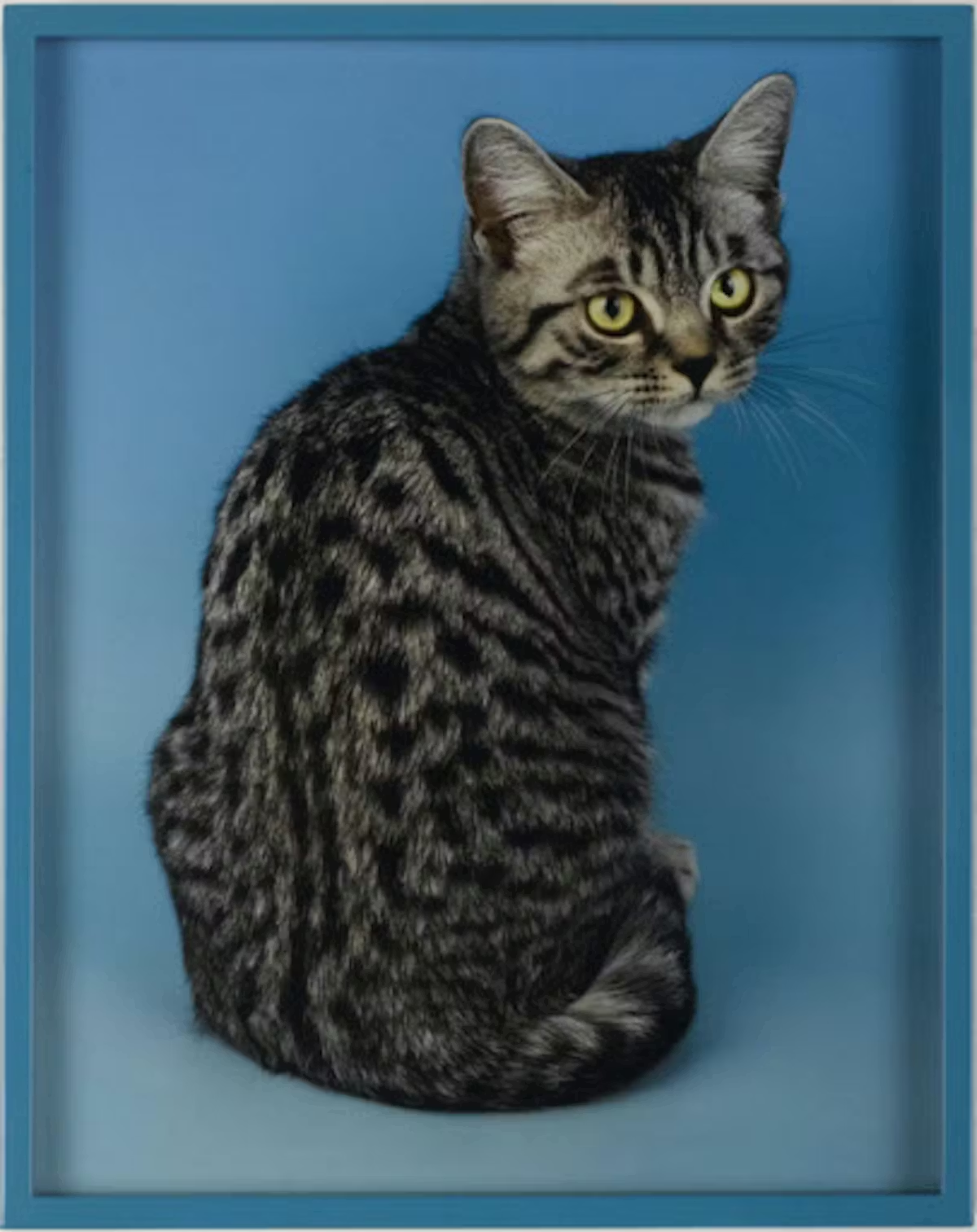
Elad Lassry (b. 1977) works across photography, film, and sculpture, drawing on the visual conventions of commercial and editorial image-making — catalogue spreads, studio portraits, product shots — to probe how photographs produce meaning through format and framing rather than content alone. His images are displayed in custom frames whose colours are matched to the dominant hues of the photograph itself, folding presentation into the work.
Egyptian Mau belongs to a group of works in which Lassry photographs pedigree cats — animals whose breed names already carry a weight of classification, connoisseurship, and desire. Presented with the same deadpan neutrality as his still lifes and human portraits, the cat becomes at once a specimen and a star: a creature whose image circulates as freely online as in any product catalogue. The work raises a quiet but persistent question about what it means to photograph something we love to look at — and what photography does to the things it renders endlessly reproducible. The Egyptian Mau, one of the oldest domesticated cat breeds and a fixture of internet culture, is a particularly loaded subject: a living archive of human projection, aestheticised longing, and the compulsive pleasures of the animal image.
Dina Kelberman, The Wave, 2025
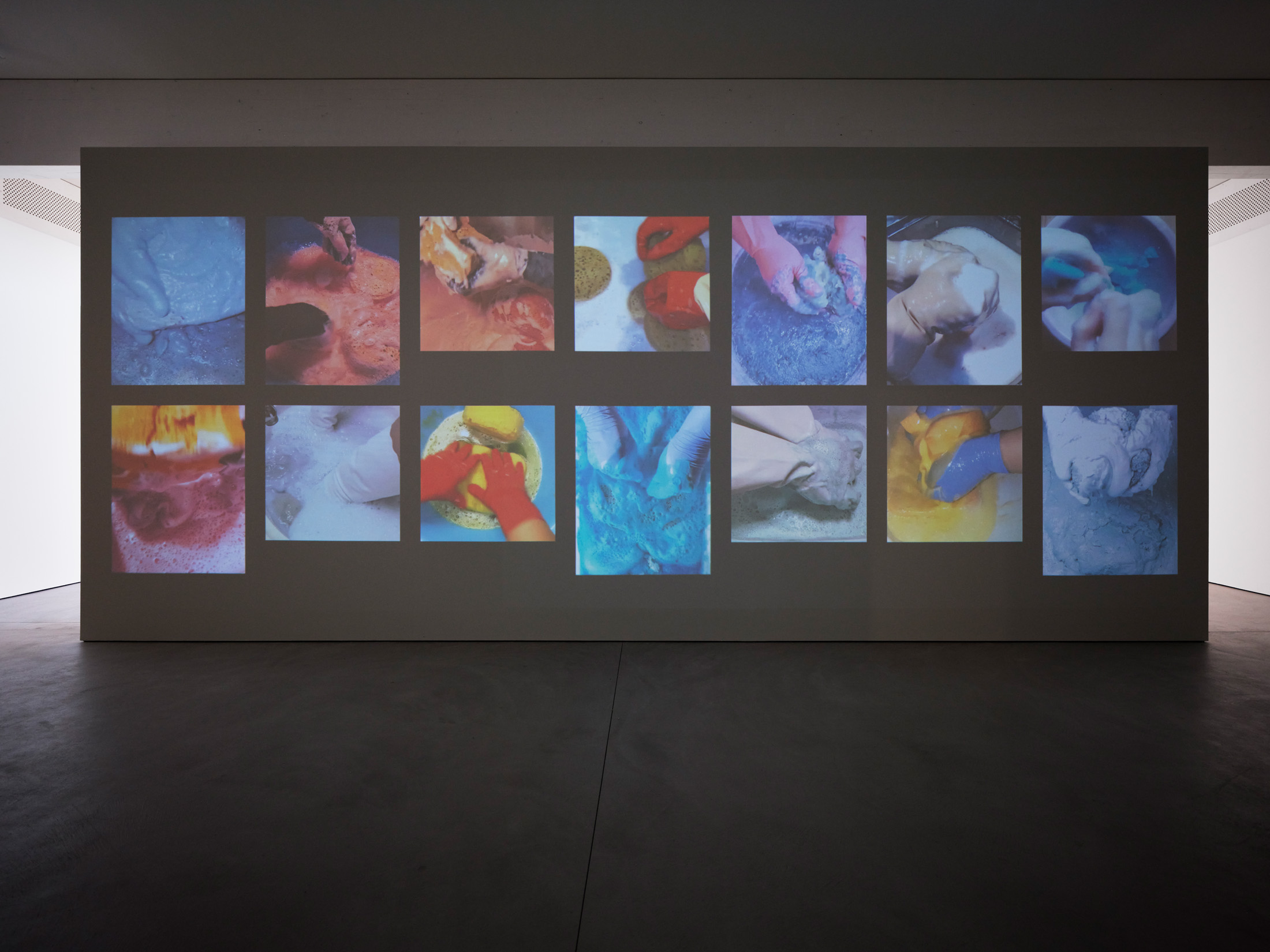
For The Wave, Dina Kelberman (b. 1979) has collected thousands of ASMR sponge videos from the social media platform Instagram. A growing online phenomenon, ASMR (Autonomous Sensory Meridian Response) can best be described as a tingling, relaxing sensation triggered by soft sounds, gentle touches or soothing visuals. Kelberman narrowed her search down to POV shots (from the point of view of the subject in a video) of gloved hands performing intimate acts with foamy sponges – squishing, lathering and tearing them apart. Kelberman transforms these videos into an immersive installation, organising them from ‘soothing’ to ‘abrasive’ and projecting them at large scale on opposing walls.
The resulting cacophony of sounds and visuals amplifies the original ASMR experience, revealing the paradoxical nature of this content – simultaneously intimate and invasive, personal yet public. Through this presentation, Kelberman exposes the complex tensions lurking within this audiovisual phenomenon that captivates our senses through its aesthetic allure, sonic landscapes and hypnotic repetition.
AI-generated ASMR and Satisfying Videos
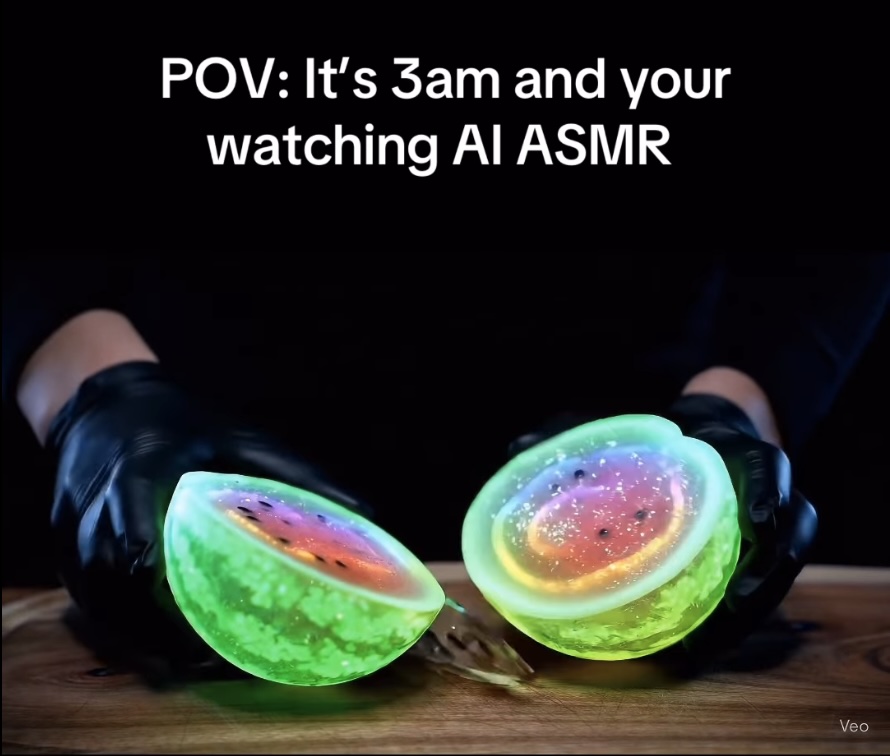
Alongside human-made ASMR content, a growing wave of AI-generated “satisfying videos” has emerged across platforms like TikTok and Instagram — algorithmically optimised loops of slicing, pouring, and compressing, engineered to trigger pleasurable sensory responses without any lived experience behind them. These videos draw on what film theorist Laura U. Marks calls “haptic visuality”: the capacity of images to evoke the sense of touch, making us feel textures, temperatures, and surfaces through our eyes alone. When this tactile quality is synthesised by AI rather than recorded from reality, the result is at once seductive and uncanny.
Media theorist Valentina Tanni describes this kind of content through the concept of “shell content” — a mode of media production that prioritises sensory activation over meaning, and affect over interpretation. AI-generated satisfying videos make this logic especially visible: when sensory triggers are generated beyond the limits of lived experience, pleasure tips into strangeness, and gratification cycles endlessly without resolution. Shell content, Tanni argues, mirrors the logic of the feed itself — always excessive, never quite complete.
Min Dai, Rate My Cake, 2025
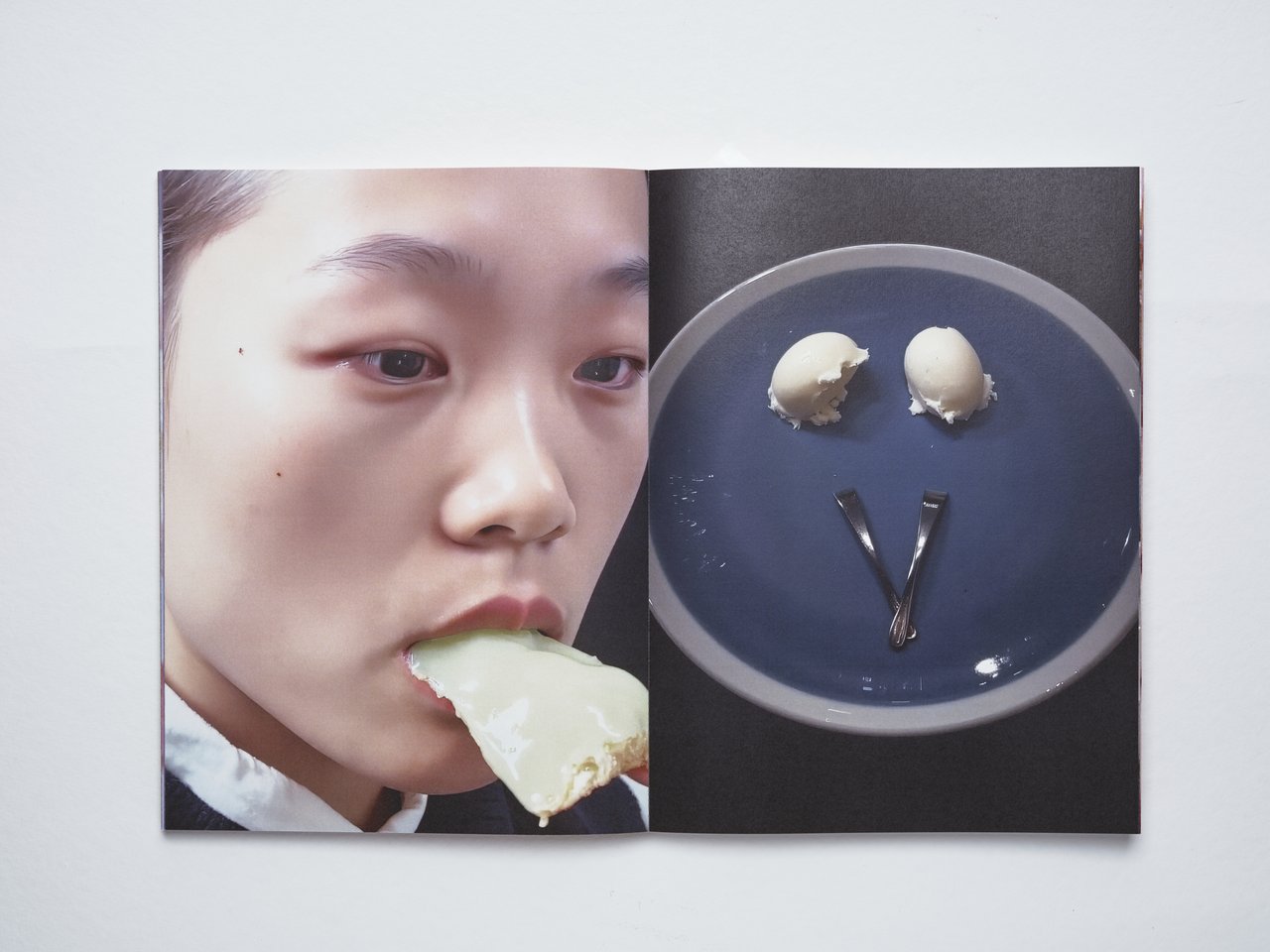
In Rate My Cake, Min Dai uses AI image generation as a form of self-portraiture, training a model on her own face and dissolving it into a dataset of overlit, impossibly glossy cakes — too soft, too perfect, wrong in just the right way. The project begins from a question about desire: what do we hunger for, and what do we hide? By merging her likeness with sugary surfaces that are visually compelling yet physically unreal, Dai explores how digital images can carry the emotional weight of longing while remaining entirely synthetic.
The work sits at the intersection of the satisfying and the unsettling, using the aesthetics of food photography and AI generation to ask whether desire can take the shape of a self-portrait.
Eva and Franco Mattes, The Bots, 2020
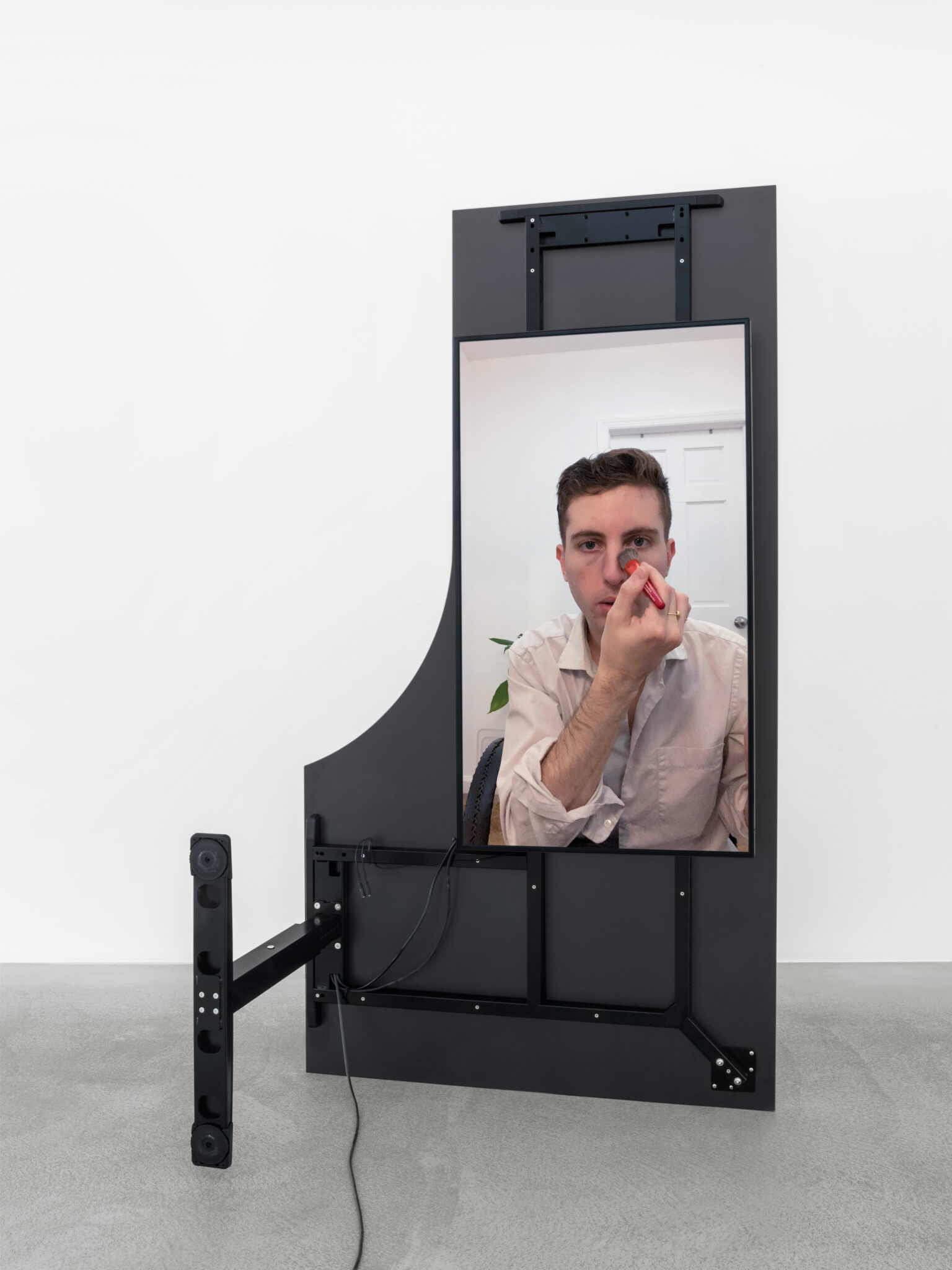
The Bots is a seven-episode video installation series based on interviews with content moderators who worked at Facebook’s Berlin moderation centre, conducted over the course of a year in collaboration with journalist Adrian Chen. The moderators’ testimonies — detailing daily exposure to violence, sexual abuse, hate speech, and extremist content — were reenacted by actors filming themselves at home on their phones, and are presented on screens mounted on the backs of the same brand of office desk used at the Berlin facility.
To share these stories while evading censorship, Eva and Franco Mattes adopted the visual language of fake makeup tutorials — a format commonly used on social media to smuggle sensitive content past automated filters. The result is a deliberately jarring double register: serious accounts of psychological harm and platform labour are continuously interrupted by cosmetic tips. The parallel is pointed — just as makeup conceals imperfections on the face, content moderation “beautifies” the internet by rendering its most disturbing material invisible. The Bots exposes the hidden human cost of that process, as well as the affective and seductive aesthetics used to keep it out of sight.
Noura Tafeche, Annihilation Core Inherited Lore ٩(͡๏̯͡๏)۶, 2023–
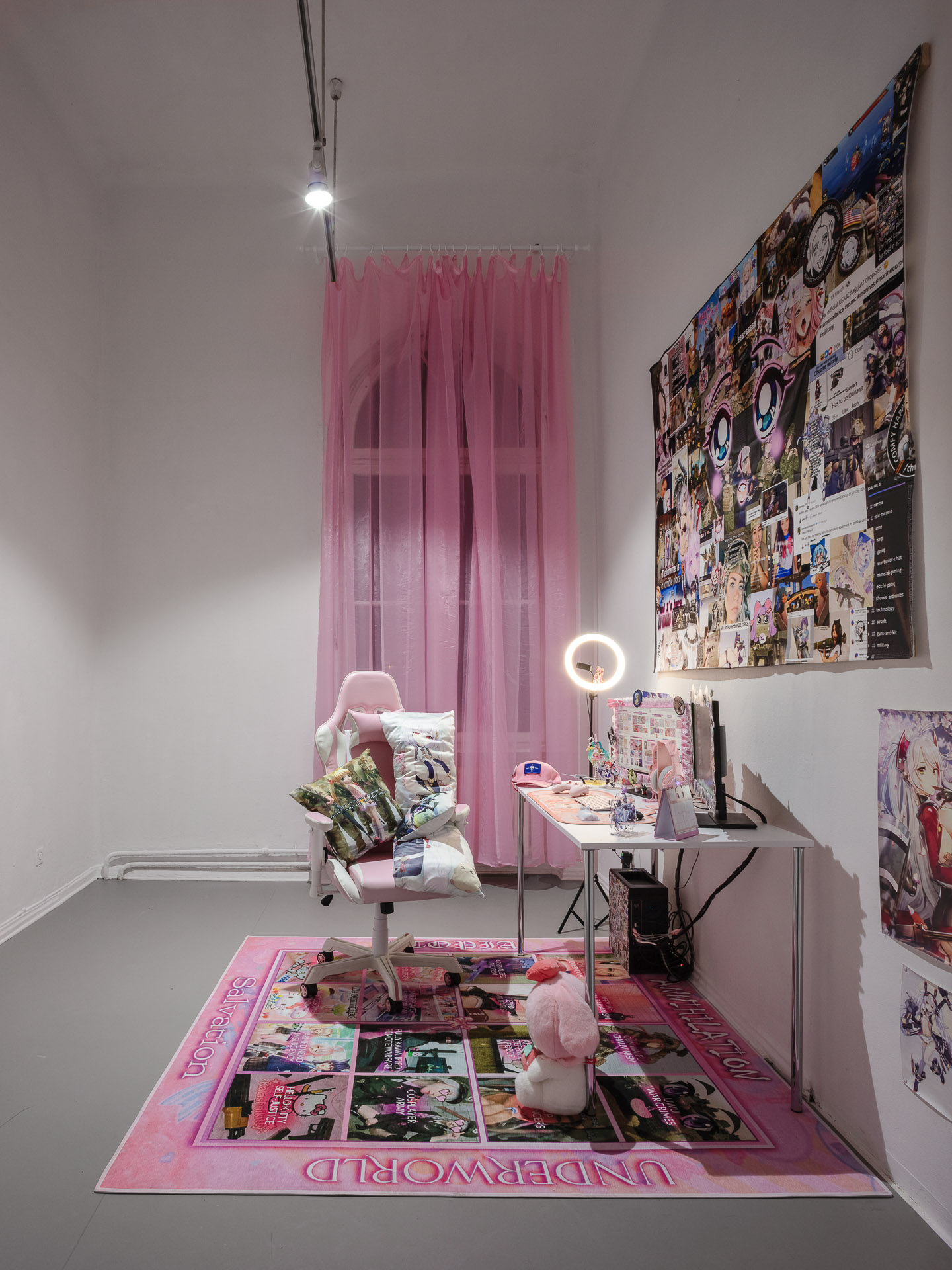
In Annihilation Core Inherited Lore ٩(͡๏̯͡๏)۶, Noura Tafeche (b. 1987) investigates how cuteness aesthetics are weaponised online to spread military propaganda and violence. Drawing on four years of research and an archive of over 30,000 files, Tafeche reveals how pastel-coloured plushies, manga fan art and doe eyes can become vehicles for war messaging, sexualised aggression, weapons fetishisation and alt-right ideologies.
Tafeche maps aesthetic forms from ‘kawaii’ (a Japanese cultural phenomenon which emphasises cuteness and innocence) to gaming, TikTok and fan art, illustrating how viral content like memes or online dance challenges can promote misogyny, supremacism and racism. The installation combines an immersive environment with interactive access to the artist’s research archive, exposing how the seemingly most innocent forms of mainstream visual culture can be infiltrated by harmful propaganda.
Eriko Miyata, My Soulgem is Dull Color, 2025

My Soulgem is Dull Color interweaves childhood photographs from family albums with AI generated figures of militarised female characters based on the action figures of the Kantai Collection – a game where the representation of World War II warships is personified as teenage girls with personality characteristics reflecting the history of each ship. By morphing between personal memories and militarised cute female characters, the artist reflects on the role of kawaii culture in her native Japan and the role it has in shaping female subjects and identities.
Tutorial
Assignment
Read: james taylor-foster, ASMRology, 2025
Make: Create a small dataset of 10-20 photographs based on a specific style or subject. Create a LoRA in Replicate following the tutorial, or bring them to class to train the LoRA then. Think of some of the theme shown in class – animals, food, cuteness, ASMR – and try to think of what images you can photograph to create affective and emotional responses. You can bring an additional dataset of digital images from different sources to explore different aesthetics and meanings.