Course Overview & Calendar Course Overview & Calendar
About the Course
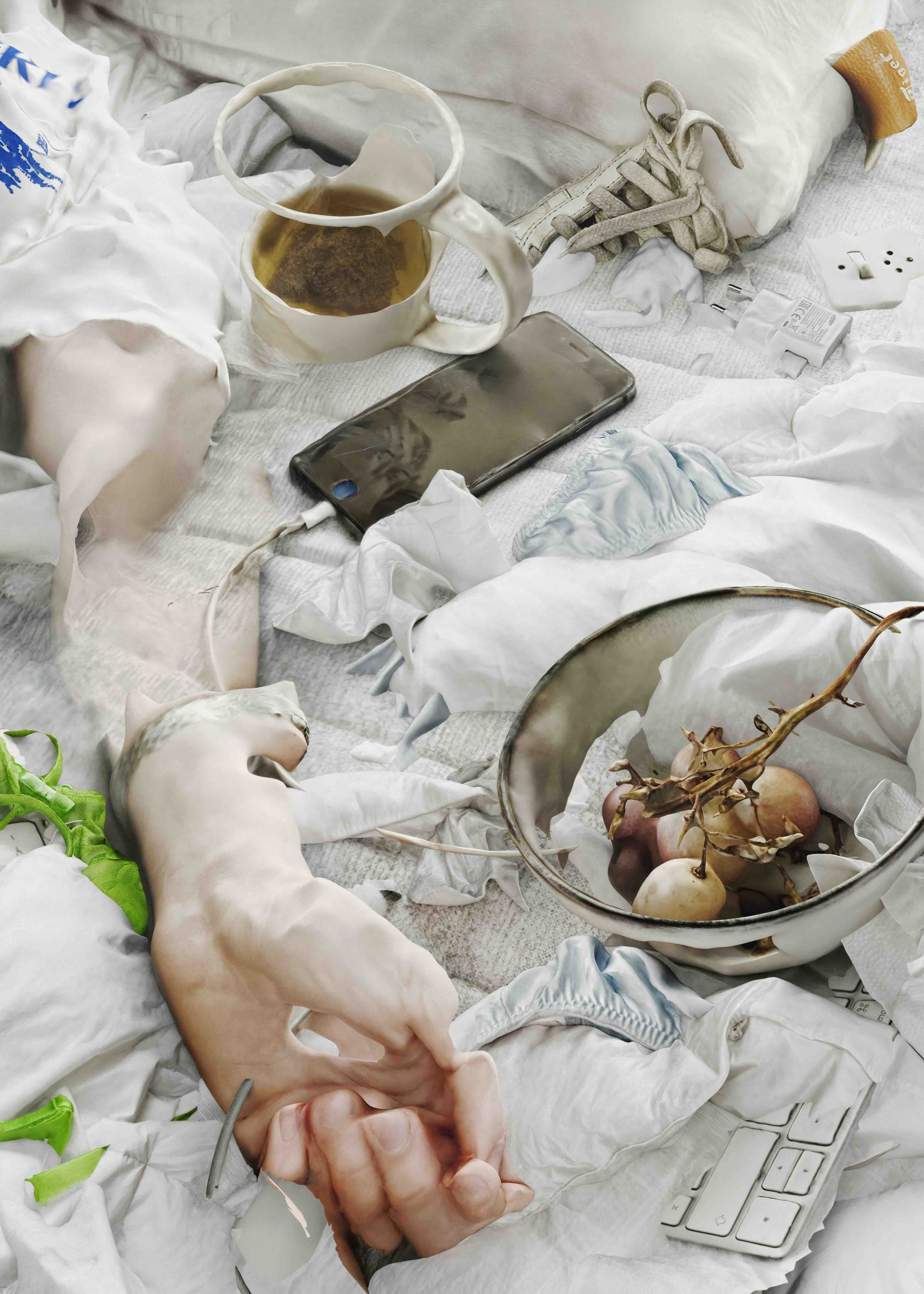
Bedbound is an exploration of the bed as one of the most contested and contradictory sites of contemporary life. Simultaneously a space of refuge and confinement, desire and isolation, protest and passivity, the bed accumulates the tensions of how we live, labour, and connect today.
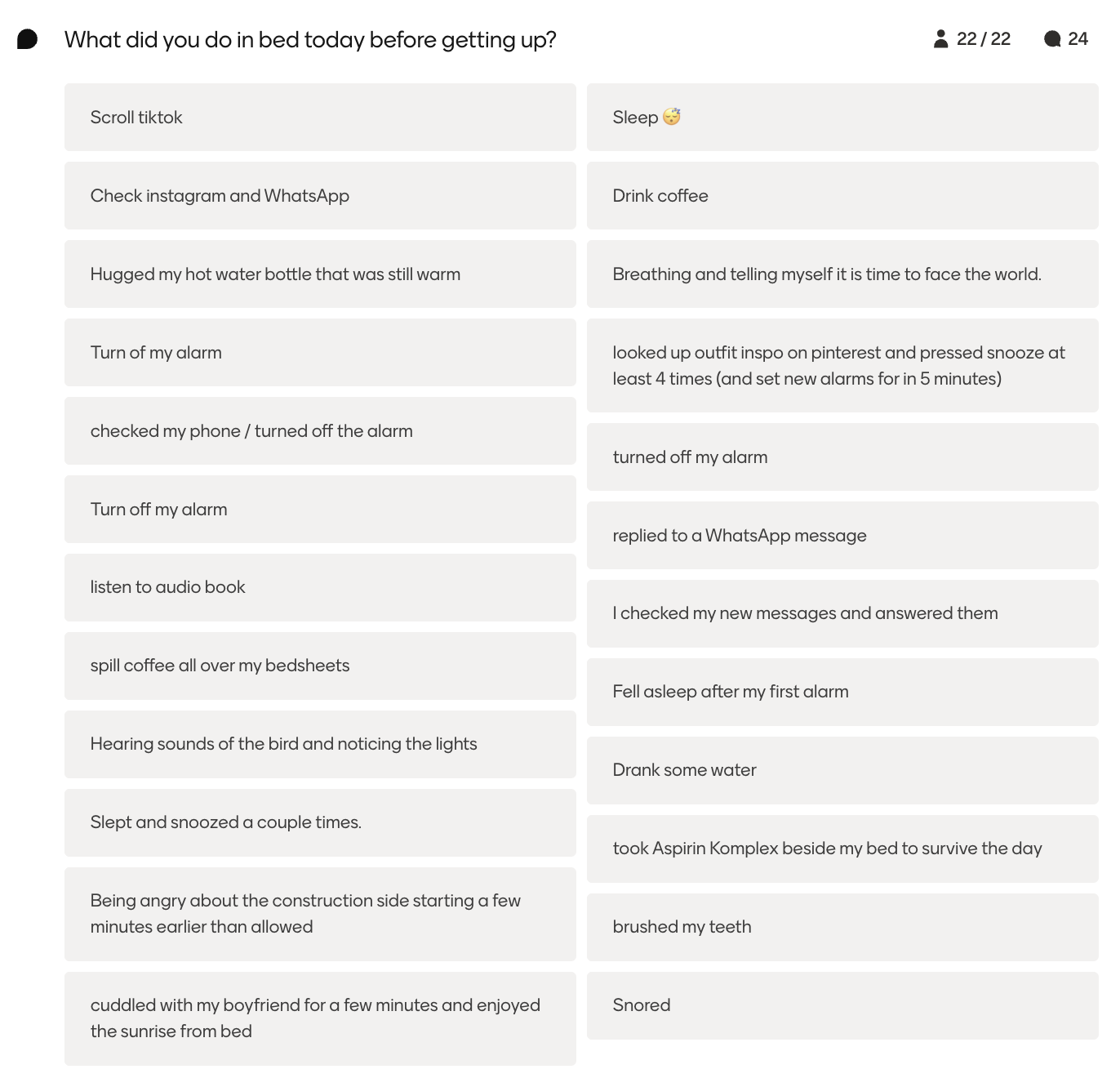
The bed has long contained different and even opposing dimensions, but recently it has also become a crucial space for late capitalism’s systematic erosion of rest. Digital economies have attempted to colonise sleep, privacy, and recuperation in favour of continuous productivity and digital consumption. Against this backdrop, the bed becomes a battleground: a place where doomscrolling and algorithmic anxiety infiltrate what was once a sanctuary, where Netflix binges and bed selfies blur the boundaries between leisure and labour.
As the bed converges with the screen, it becomes a site for photographic production and image consumption, of mediated proximity, of longing and dreams. The bedroom becomes a space of self-construction and tactical aesthetics, where the intimate space becomes a stage and the self an image to be composed, shared, and consumed.
Bedbound also considers the bed as a site of the body in extremis: through disability, chronic illness, and enforced immobility, where stillness is not chosen but rather imposed, and where the medical industrial complex renders the bed a space of alienation as much as care. Yet the bed has equally served as a platform for resistance: from the radical horizontality of Lennon and Ono’s Bed-Ins to quieter, everyday acts of refusal.
Under the sheets, bedtime stories meet “bed-rotting” bodies, desire turns into exhaustion, the personal becomes political, the private becomes networked, the dreaming self meets the scrolling self, and rest itself becomes an act of defiance.
The course will explore the role of the bed across five thematic clusters:
-
The Sanctuary
The bed and the promises of rest, privacy, desire and dreams. -
The Battleground
The bed colonised by labour, capital, the screen. -
The Stage
The bed as a place for self-construction and photographic production, a stage for “the girl online”. -
The Sickbed
The bed as a space for illness, immobility and stillness, the site of the medical gaze where care and alienation converge. -
The Barricade
The bed as a site for protest, refusal, and resistance.
Bedbound is a collaboration with Fotomuseum Winterthur, ECAL and Elías Querejeta Zine Eskola. The project will unfold online on the permanentbeta.network platform, culminating in a publication and an exhibition at Fotomuseum Winterthur in October 2027.
Mapping
https://docs.google.com/drawings/d/1PnRJ8H_yVR1ANN0sMPEEEZ_oNKIrFSB39o5blKF08rw/edit?usp=sharing
Reading
Weekly Assignments
Weekly assignments are added to this document: docs.google.com/document/d/1bOUnf8612hV7KNlkn1MF4mayiAJEVsrXqhSHDMhreNg
Week 1: for 13.10.2026
Bring an image, an object, or a text that speaks to the way you understand your space of the bed. It can be your own bed or a bed you know, found or made, literal or abstract. You decide how personal it gets.
- Upload your item, with a caption of two sentences explaining your choice, to the shared document by the evening before class (12.10.2026).
- In class, you present it in about one minute. Objects are welcome, so bring them along.
Mid Terms
The Midterms will offer a chance to present the work in progress: here students are expected to visualise their ideas through prototypes, sketches, experiments, and to submit a plan for the next phase of research, production and presentation of the final work.
Final Projects
Final projects must be uploaded as a folder with your name and surname here: drive.google.com/drive/folders/1kb1kzMWwG2jsWb12VH2Lk9B3gaIUsbDE
The folder must contain:
- Images, videos, code and/or pdf files of your creative outputs
- Word Document containing Project Title, Student Name, Short Description (150-300 words)
- Word Document with your written text or interview (1000 - 1500 words)
Calendar
| Date | Topic |
|---|---|
| 6.10.2026 | INTRODUCTION |
| 13.10.2026 | 1. The Sanctuary |
| 20.10.2026 | 2. The Battleground |
| 27.10.2026 | 3. The Stage |
| 3.11.2026 | -Workshop Week - no class- |
| 10.11.2026 | -Self Study- |
| 17.11.2026 | 4. The Sickbed |
| 24.11.2026 | 5. The Barricade |
| 1.12.2026 | MID TERM PRESENTATIONS |
| 8.12.2026 | Project Development |
| 15.12.2026 | Studio visit Jana Sofie Liebe (in Zurich) |
| 5.1.2027 | Project Development |
| 12.1.2027 | Project Development |
| 19.1.2027 | FINAL PRESENTATIONS |
Syllabus
Artworks and Projects
- Caesar, Sofia. 2019. Workation. https://cargocollective.com/sofiacaesar/workation.
- Calle, Sophie. 1979. The Sleepers. https://www.mcba.ch/en/collection/the-sleepers-antoine-gonthier-twentieth-sleeper-and-patrice-x-twenty-first-sleeper/.
- Carolan, Micaela. n.d. 100 Empty Cam Rooms. https://donotresearch.substack.com/p/micaela-carolan-100-empty-cam-rooms.
- Chodzko, Adam. 2016. Sleepers. https://www.adamchodzko.com/works/sleepers/.
- Emin, Tracey. 1998. My Bed.
- Goldin, Nan. 1973–86. The Ballad of Sexual Dependency. https://www.artlimited.net/agenda/nan-goldin-the-ballad-of-sexual-dependency-exhibition-gagosian-london/en/7586898.
- Hampe, Elisa. 2026. Through My Hands Broken Into Fingers.
- Kostic, Filip. 2021. Bed PC. https://filipkostic.computer/.
- Manon. 2019. Der Wachsaal.
- Mekas, Jonas. 1969 (2025). John & Yoko BED-IN FOR PEACE. https://www.artsy.net/artwork/jonas-mekas-john-and-yoko-bed-in-for-peace-1969.
- Ono, Yoko, and John Lennon. 1969. Bed-In. Queen Elizabeth Hotel, Montreal. Photo: Gerry Deiter. © Joan Athey. https://www.moma.org/audio/playlist/15/382.
- Rist, Pipilotti. 2016. 4th Floor To Mildness.
- Soda, Molly. 2023. “ROOM MAKEOVER! messy girl aesthetic inspired girl clutter ♡.” https://mollysoda.substack.com/p/girl-clutter.
- Thomas, Mackenzie. 2026. I’m At Home. https://www.youtube.com/watch?v=fccuzvnb8JA.
- Tillmans, Wolfgang. 2016. Kammerspiele. https://flash—art.com/article/wolfgang-tillmans-today-is-the-first-day-wiels-brussels/.
- Vespignani, Federico. 2026. Nice Rooms with Beautiful Views. https://www.federicovespignani.com/nice-rooms-with-beautiful-views.
- Warburton, Alan. 2016. Sprites I–IV. https://alanwarburton.co.uk/sprites.
- Zavitsanos, Constantina. 2009. Self Portrait (EMDR). https://constantinazavitsanos.com/artwork/5270863.html.
Articles and Books
- Bossi, Laura, ed. 2025. L’Empire du sommeil. Paris: In Fine éditions d’art. https://www.fr.fnac.ch/a21770429/Collectif-L-empire-du-sommeil.
- Colomina, Beatriz. 2014. The Century of the Bed. https://web.archive.org/web/20230924171615/https://issuu.com/departure/docs/cb14_century-of-the-bed_lowres.
- Colomina, Beatriz. 2021. “The 24/7 Bed: Privacy and Publicity in the Age of Social Media.” In How to Relate: Wissen, Künste, Praktiken / Knowledge, Arts, Practices, edited by Annika Haas, Maximilian Haas, Hanna Magauer, and Dennis Pohl, 186–200. Bielefeld: transcript Verlag. https://doi.org/10.1515/9783839457658-015.
- Crary, Jonathan. 2013. 24/7: Late Capitalism and the Ends of Sleep. London: Verso. https://www.versobooks.com/en-gb/products/2315-24-7.
- Friend, Sarah. n.d. “Terminal Surrender.” ABS Digital Art. https://absdigitalart.substack.com/p/terminal-surrender.
- Gerken, Tom. 2023. “Sleep Streams: How Kai Cenat and Others Make Money Filming Themselves Sleep.” BBC News. https://www.bbc.com/news/technology-66524539.
- Hardcastle, Kate. 2025. “Rise of the Sleepfluencer: Why Everyone’s Obsessed with Snoozing Better.” Forbes, March 26, 2025. https://www.forbes.com/sites/katehardcastle/2025/03/26/rise-of-the-sleepfluencer-why-everyones-obsessed-with-snoozing-better/.
- Moreland, Quinn. 2024. “Pop Star Hannah Diamond Is the Blueprint of ‘Peak Girl’.” Nylon, February 20, 2024. https://www.nylon.com/entertainment/hannah-diamond-perfect-picture-album-ai-kpop.
- rhodes, h. 2023. “Bed/Life: Chronic Illness, Postcolonial Entanglements, and Queer Intimacy in the Stay.” Disability Studies Quarterly 43 (1). https://doi.org/10.18061/dsq.v43i1.9664.
- Shepherd, Harriet. 2025. “Amanda Wall Turns to the Bed—Not for Rest, but for Resistance.” Lampoon Magazine, December 4, 2025. https://lampoonmagazine.com/amanda-wall-interview-paintings-bed-stain-scars-digital-decay-obsessive-compulsive-disorder/.
- Singer, Jill. 2025. “Is Bed Rotting the Biggest Trend to Come Out of Milan?” Sight Unseen, April 25, 2025. https://www.sightunseen.com/2025/04/is-bed-rotting-the-biggest-trend-to-come-out-of-milan/.
- Stoffelen, Ruben. 2026. “The Ideal Male Living Space – and What It Says about Masculinity, Precarity, and Domestic Space.” Nuda Paper, July 2, 2026. https://nudapaper.com/the-ideal-male-living-space/.
- Zhou, Eric. 2025. “Should You Be Sleepmaxxing to Boost Health and Happiness?” Harvard Health Publishing, March 6, 2025. https://www.health.harvard.edu/blog/should-you-be-sleepmaxxing-to-boost-health-and-happiness-202503063090.
Code of Conduct
This course is a space for intellectual curiosity, open inquiry, and genuine exchange of ideas. My wish is that sessions feel energising and thought-provoking — a place where you feel both safe and challenged to think in new ways. The guidelines below exist to protect and sustain that environment for everyone.
I am committed to providing an educational experience that is free of harassment and intimidation for all participants, regardless of gender identity and expression, age, sexual orientation, disability, physical appearance, body size, race, ethnicity, nationality, religion (or lack thereof), or technology choices. I will not tolerate any form of harassment, discrimination, suppression, or violence.
Harassment may include, but is not limited to: offensive verbal comments, deliberate intimidation, stalking or following, harassing photography or recording, sustained disruption of the learning environment, inappropriate or non-consensual physical contact, unwelcome sexual attention, and/or refusing to respect the limits or boundaries set by another participant. Suppressive behaviour is defined as any communication that stifles, belittles, or dismisses another person’s contribution. Participants who have been asked to stop any behaviour are expected to comply immediately. These expectations apply to everyone in our classroom community — including me as your teacher.
Debate, critical inquiry, and the free exchange of ideas are not only permitted but actively encouraged. A great discussion involves real disagreement — what it does not involve is making anyone feel unsafe or unwelcome. If you experience or witness harassment, threatening behaviour, or any form of suppression, I encourage you to speak up directly or come to me immediately. Your voice in this room matters.
It is my intent that students from all backgrounds and perspectives be well served by this course, and that the diversity you bring to the classroom be recognised as a genuine resource and strength. I will design activities that value and accommodate a diversity of experiences and viewpoints. I will gladly address you by the name and pronoun you specify. I am also committed to making individual arrangements for disabilities or religious needs — please let me know early in the semester so we can plan together.
Students
Inhalt des Kurses
Bedbound untersucht das Bett als einen der umkämpftesten und widersprüchlichsten Orte des gegenwärtigen Lebens. Zugleich Ort der Zuflucht und der Einschränkung, des Begehrens und der Isolation, des Protests und der Passivität, bündelt das Bett die Spannungen dessen, wie wir heute leben, arbeiten und miteinander in Verbindung treten.
Das Bett vereint seit jeher unterschiedliche, ja gegensätzliche Dimensionen. In jüngerer Zeit ist es jedoch auch zu einem zentralen Schauplatz der systematischen Aushöhlung von Ruhe durch den Spätkapitalismus geworden. Digitale Ökonomien haben versucht, Schlaf, Privatsphäre und Erholung zugunsten permanenter Produktivität und digitalen Konsums zu kolonisieren. Vor diesem Hintergrund wird das Bett zum Schlachtfeld: ein Ort, an dem Doomscrolling und algorithmische Angst in einen einstigen Zufluchtsort eindringen, an dem Netflix-Marathons und Bett-Selfies die Grenzen zwischen Freizeit und Arbeit verwischen.
Indem das Bett mit dem Bildschirm verschmilzt, wird es zu einem Ort fotografischer Produktion und des Bildkonsums, vermittelter Nähe, von Sehnsucht und Träumen. Das Schlafzimmer wird zum Raum der Selbstkonstruktion und taktischer Ästhetiken, in dem der intime Raum zur Bühne und das Selbst zu einem Bild wird, das komponiert, geteilt und konsumiert wird.
Bedbound betrachtet das Bett zudem als Ort des Körpers in extremis: durch Behinderung, chronische Krankheit und erzwungene Immobilität, wo Stillstand nicht gewählt, sondern auferlegt wird und wo der medizinisch-industrielle Komplex das Bett ebenso zu einem Raum der Entfremdung wie der Fürsorge macht. Doch das Bett diente ebenso als Plattform des Widerstands: von der radikalen Horizontalität der Bed-Ins von Lennon und Ono bis zu leiseren, alltäglichen Akten der Verweigerung.
Unter den Laken treffen Gutenachtgeschichten auf „Bed-Rotting“-Körper, Begehren schlägt in Erschöpfung um, das Persönliche wird politisch, das Private wird vernetzt, das träumende Selbst trifft auf das scrollende Selbst, und Ruhe selbst wird zu einem Akt des Trotzes.
Der Kurs erkundet die Rolle des Bettes anhand von fünf thematischen Clustern:
-
The Sanctuary
Das Bett und die Versprechen von Ruhe, Privatsphäre, Begehren und Träumen. -
The Battleground
Das Bett, kolonisiert von Arbeit, Kapital und Bildschirm. -
The Stage
Das Bett als Ort der Selbstkonstruktion und fotografischen Produktion, eine Bühne für „the girl online“. -
The Sickbed
Das Bett als Raum von Krankheit, Immobilität und Stillstand, Ort des medizinischen Blicks, an dem Fürsorge und Entfremdung zusammenfallen. -
The Barricade
Das Bett als Ort des Protests, der Verweigerung und des Widerstands.
Bedbound ist eine Zusammenarbeit mit dem Fotomuseum Winterthur, der ECAL und der Elías Querejeta Zine Eskola. Das Projekt entfaltet sich online auf der Plattform permanentbeta.network und mündet im Oktober 2027 in eine Publikation und eine Ausstellung im Fotomuseum Winterthur.
Mapping
https://docs.google.com/drawings/d/1PnRJ8H_yVR1ANN0sMPEEEZ_oNKIrFSB39o5blKF08rw/edit?usp=sharing
Reading
Wöchentliche Aufgaben
Die wöchentlichen Aufgaben werden diesem Dokument hinzugefügt: docs.google.com/document/d/1bOUnf8612hV7KNlkn1MF4mayiAJEVsrXqhSHDMhreNg
Woche 1: für den 13.10.2026
Bringt ein Bild, ein Objekt oder einen Text mit, der zeigt, wie ihr euren Raum des Bettes versteht. Das kann euer eigenes Bett oder ein Bett sein, das ihr kennt, gefunden oder gemacht, wörtlich oder abstrakt. Wie persönlich ihr dabei werdet, entscheidet ihr selbst.
- Ladet euren Beitrag mit einer Bildunterschrift von zwei Sätzen, die eure Wahl erklärt, bis spätestens am Abend vor dem Unterricht (12.10.2026) in das gemeinsame Dokument hoch.
- Im Unterricht stellt ihr ihn in etwa einer Minute vor. Objekte sind willkommen, bringt sie gerne mit.
Zwischenpräsentationen
Die Zwischenpräsentationen bieten die Gelegenheit, die laufende Arbeit vorzustellen: Ihr sollt eure Ideen anhand von Prototypen, Skizzen und Experimenten visualisieren und einen Plan für die nächste Phase der Recherche, Produktion und Präsentation der Abschlussarbeit einreichen.
Abschlussprojekte
Die Abschlussprojekte müssen als Ordner mit eurem Vor- und Nachnamen hier hochgeladen werden: drive.google.com/drive/folders/1kb1kzMWwG2jsWb12VH2Lk9B3gaIUsbDE
Der Ordner muss enthalten:
- Bilder, Videos, Code und/oder PDF-Dateien eurer kreativen Arbeit
- Word-Dokument mit Projekttitel, Name und Kurzbeschreibung (150–300 Wörter)
- Word-Dokument mit eurem schriftlichen Text oder Interview (1000–1500 Wörter)
Kalender
| Datum | Thema |
|---|---|
| 6.10.2026 | EINFÜHRUNG |
| 13.10.2026 | 1. The Sanctuary |
| 20.10.2026 | 2. The Battleground |
| 27.10.2026 | 3. The Stage |
| 3.11.2026 | -Workshopwoche – kein Unterricht- |
| 10.11.2026 | -Selbststudium- |
| 17.11.2026 | 4. The Sickbed |
| 24.11.2026 | 5. The Barricade |
| 1.12.2026 | ZWISCHENPRÄSENTATIONEN |
| 8.12.2026 | Projektentwicklung |
| 15.12.2026 | Studio visit Jana Sofie Liebe (in Zürich) |
| 5.1.2027 | Projektentwicklung |
| 12.1.2027 | Projektentwicklung |
| 19.1.2027 | ABSCHLUSSPRÄSENTATIONEN |
Literatur
Kunstwerke und Projekte
- Caesar, Sofia. 2019. Workation. https://cargocollective.com/sofiacaesar/workation.
- Calle, Sophie. 1979. The Sleepers. https://www.mcba.ch/en/collection/the-sleepers-antoine-gonthier-twentieth-sleeper-and-patrice-x-twenty-first-sleeper/.
- Carolan, Micaela. n.d. 100 Empty Cam Rooms. https://donotresearch.substack.com/p/micaela-carolan-100-empty-cam-rooms.
- Chodzko, Adam. 2016. Sleepers. https://www.adamchodzko.com/works/sleepers/.
- Emin, Tracey. 1998. My Bed.
- Goldin, Nan. 1973–86. The Ballad of Sexual Dependency. https://www.artlimited.net/agenda/nan-goldin-the-ballad-of-sexual-dependency-exhibition-gagosian-london/en/7586898.
- Hampe, Elisa. 2026. Through My Hands Broken Into Fingers.
- Kostic, Filip. 2021. Bed PC. https://filipkostic.computer/.
- Manon. 2019. Der Wachsaal.
- Mekas, Jonas. 1969 (2025). John & Yoko BED-IN FOR PEACE. https://www.artsy.net/artwork/jonas-mekas-john-and-yoko-bed-in-for-peace-1969.
- Ono, Yoko, and John Lennon. 1969. Bed-In. Queen Elizabeth Hotel, Montreal. Photo: Gerry Deiter. © Joan Athey. https://www.moma.org/audio/playlist/15/382.
- Rist, Pipilotti. 2016. 4th Floor To Mildness.
- Soda, Molly. 2023. “ROOM MAKEOVER! messy girl aesthetic inspired girl clutter ♡.” https://mollysoda.substack.com/p/girl-clutter.
- Thomas, Mackenzie. 2026. I’m At Home. https://www.youtube.com/watch?v=fccuzvnb8JA.
- Tillmans, Wolfgang. 2016. Kammerspiele. https://flash—art.com/article/wolfgang-tillmans-today-is-the-first-day-wiels-brussels/.
- Vespignani, Federico. 2026. Nice Rooms with Beautiful Views. https://www.federicovespignani.com/nice-rooms-with-beautiful-views.
- Warburton, Alan. 2016. Sprites I–IV. https://alanwarburton.co.uk/sprites.
- Zavitsanos, Constantina. 2009. Self Portrait (EMDR). https://constantinazavitsanos.com/artwork/5270863.html.
Artikel und Bücher
- Bossi, Laura, ed. 2025. L’Empire du sommeil. Paris: In Fine éditions d’art. https://www.fr.fnac.ch/a21770429/Collectif-L-empire-du-sommeil.
- Colomina, Beatriz. 2014. The Century of the Bed. https://web.archive.org/web/20230924171615/https://issuu.com/departure/docs/cb14_century-of-the-bed_lowres.
- Colomina, Beatriz. 2021. “The 24/7 Bed: Privacy and Publicity in the Age of Social Media.” In How to Relate: Wissen, Künste, Praktiken / Knowledge, Arts, Practices, edited by Annika Haas, Maximilian Haas, Hanna Magauer, and Dennis Pohl, 186–200. Bielefeld: transcript Verlag. https://doi.org/10.1515/9783839457658-015.
- Crary, Jonathan. 2013. 24/7: Late Capitalism and the Ends of Sleep. London: Verso. https://www.versobooks.com/en-gb/products/2315-24-7.
- Friend, Sarah. n.d. “Terminal Surrender.” ABS Digital Art. https://absdigitalart.substack.com/p/terminal-surrender.
- Gerken, Tom. 2023. “Sleep Streams: How Kai Cenat and Others Make Money Filming Themselves Sleep.” BBC News. https://www.bbc.com/news/technology-66524539.
- Hardcastle, Kate. 2025. “Rise of the Sleepfluencer: Why Everyone’s Obsessed with Snoozing Better.” Forbes, March 26, 2025. https://www.forbes.com/sites/katehardcastle/2025/03/26/rise-of-the-sleepfluencer-why-everyones-obsessed-with-snoozing-better/.
- Moreland, Quinn. 2024. “Pop Star Hannah Diamond Is the Blueprint of ‘Peak Girl’.” Nylon, February 20, 2024. https://www.nylon.com/entertainment/hannah-diamond-perfect-picture-album-ai-kpop.
- rhodes, h. 2023. “Bed/Life: Chronic Illness, Postcolonial Entanglements, and Queer Intimacy in the Stay.” Disability Studies Quarterly 43 (1). https://doi.org/10.18061/dsq.v43i1.9664.
- Shepherd, Harriet. 2025. “Amanda Wall Turns to the Bed—Not for Rest, but for Resistance.” Lampoon Magazine, December 4, 2025. https://lampoonmagazine.com/amanda-wall-interview-paintings-bed-stain-scars-digital-decay-obsessive-compulsive-disorder/.
- Singer, Jill. 2025. “Is Bed Rotting the Biggest Trend to Come Out of Milan?” Sight Unseen, April 25, 2025. https://www.sightunseen.com/2025/04/is-bed-rotting-the-biggest-trend-to-come-out-of-milan/.
- Stoffelen, Ruben. 2026. “The Ideal Male Living Space – and What It Says about Masculinity, Precarity, and Domestic Space.” Nuda Paper, July 2, 2026. https://nudapaper.com/the-ideal-male-living-space/.
- Zhou, Eric. 2025. “Should You Be Sleepmaxxing to Boost Health and Happiness?” Harvard Health Publishing, March 6, 2025. https://www.health.harvard.edu/blog/should-you-be-sleepmaxxing-to-boost-health-and-happiness-202503063090.
Verhaltenskodex
Dieser Kurs ist ein Raum für intellektuelle Neugier, offenes Fragen und einen echten Austausch von Ideen. Mein Wunsch ist, dass sich die Sitzungen belebend und anregend anfühlen – ein Ort, an dem ihr euch sowohl sicher fühlt als auch herausgefordert werdet, auf neue Weise zu denken. Die folgenden Richtlinien dienen dazu, dieses Umfeld für alle zu schützen und zu erhalten.
Ich verpflichte mich, allen Teilnehmenden eine Lernerfahrung frei von Belästigung und Einschüchterung zu bieten, unabhängig von Geschlechtsidentität und -ausdruck, Alter, sexueller Orientierung, Behinderung, äußerem Erscheinungsbild, Körpergröße, Hautfarbe, ethnischer Zugehörigkeit, Nationalität, Religion (oder deren Fehlen) oder Technologiewahl. Ich werde keinerlei Form von Belästigung, Diskriminierung, Unterdrückung oder Gewalt tolerieren.
Belästigung kann unter anderem umfassen: beleidigende verbale Äußerungen, gezielte Einschüchterung, Stalking oder Verfolgen, belästigendes Fotografieren oder Aufnehmen, anhaltende Störung der Lernumgebung, unangemessenen oder nicht einvernehmlichen Körperkontakt, unerwünschte sexuelle Aufmerksamkeit und/oder die Weigerung, die von anderen Teilnehmenden gesetzten Grenzen zu respektieren. Als unterdrückendes Verhalten gilt jede Form von Kommunikation, die den Beitrag einer anderen Person erstickt, herabsetzt oder abtut. Von Teilnehmenden, die aufgefordert wurden, ein Verhalten zu beenden, wird erwartet, dass sie dem sofort nachkommen. Diese Erwartungen gelten für alle in unserer Kursgemeinschaft – auch für mich als eure Lehrperson.
Debatte, kritisches Hinterfragen und der freie Austausch von Ideen sind nicht nur erlaubt, sondern ausdrücklich erwünscht. Eine gute Diskussion beinhaltet echten Dissens – was sie nicht beinhaltet, ist, dass sich jemand unsicher oder unwillkommen fühlt. Wenn ihr Belästigung, bedrohliches Verhalten oder irgendeine Form von Unterdrückung erlebt oder beobachtet, ermutige ich euch, direkt das Wort zu ergreifen oder sofort zu mir zu kommen. Eure Stimme in diesem Raum zählt.
Ich möchte, dass Studierende mit allen Hintergründen und Perspektiven in diesem Kurs gut aufgehoben sind und dass die Vielfalt, die ihr in den Unterricht einbringt, als echte Ressource und Stärke anerkannt wird. Ich werde Aktivitäten so gestalten, dass sie eine Vielfalt von Erfahrungen und Sichtweisen wertschätzen und berücksichtigen. Ich spreche euch gerne mit dem Namen und dem Pronomen an, die ihr angebt. Ebenso bin ich bereit, individuelle Vereinbarungen für Behinderungen oder religiöse Bedürfnisse zu treffen – bitte sagt mir früh im Semester Bescheid, damit wir gemeinsam planen können.
Studierende
-
Grellert Anna vvvv
-
Grill Louis vxvv
-
Schewz Christina vvxv
-
Veljkovic Adrijana vxvv
-
Schindel Emily vvvv
-
Schubert Alexander vvxv
-
Burgard Hanna vvxv
-
Studt Janne vvxx
-
Parkhidko Kateryna vvvv
-
Schmitt Alexandra vvvv USB
-
Kinast Jule vvvv
-
Schmotz Hanna vxvv
-
Lobo de Macedo Rosa vvvv
-
Weinzierl Paula vvvv
-
Hunstein Hanna vvvv
-
Lickert Michaela vvvv
-
Schiechtele Natalie vvvv
-
Dogru Medine vvvv USB
-
Kilic Merve vvvv
-
Yong Sihavann (Vann) vvvx
-
Grünewald Janne vvvv
-
Homberg Lilly xvxv
-
Hampp Dalina vvvv