A History of Photography and the Digital Image through the Pope Eine Geschichte der Fotografie und des digitalen Bildes anhand des Papstes
In this lecture I follow a series of images of the pope to touch on key moments in the history of photography and the digital image. Technical and cultural at once, these moments mark the transformations of the medium since its inception.
The choice of the pope as a guiding figure is partly arbitrary. A papacy is long enough for an election and a death to be photographed under very different conditions. The Holy See is, moreover, among the most conservative institutions in existence, and the last absolute monarchy in Europe, so its encounters with photographic and digital culture are unusually visible, and often awkward. I hope this does not offend anyone of Catholic faith: the images connected to the pontiff serve here as examples for a reflection on a medium in constant flux.
The sequence is not strictly chronological. It follows six conceptual shifts: from the photograph as trace, to the photograph as commodity, to the photograph as construction, to the image as circulation, to the image as attention, and finally to the image as statistics. Each section introduces an image, explains the pope’s role in it, and anchors the episode in a key text from photography and media theory.
Pope Pius IX: The Photograph as Trace
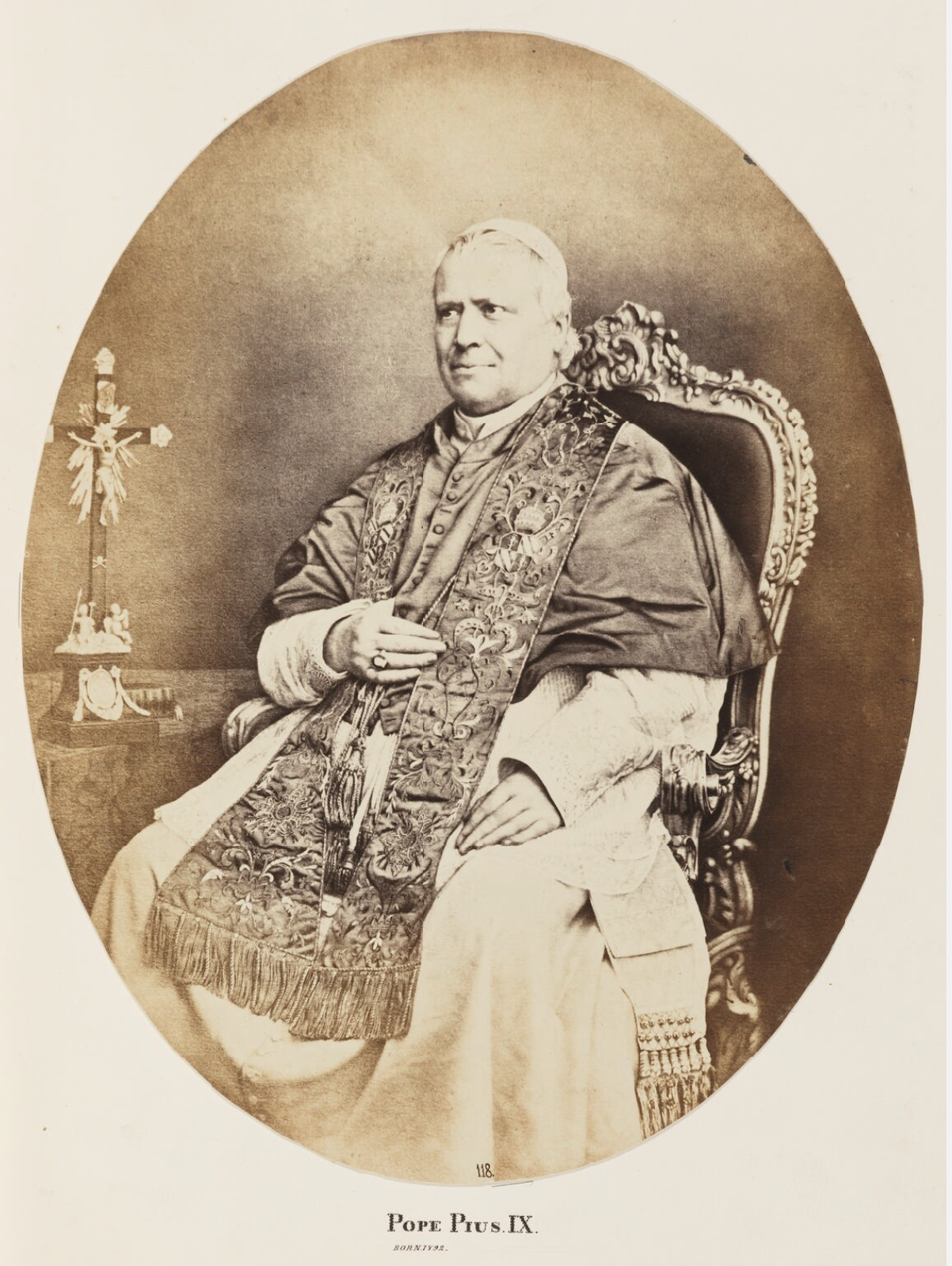
Giovanni Maria Mastai-Ferretti (1792–1878), Pius IX, is generally described as the first pope to be photographed. He also had the longest reign of any pope after Saint Peter (1846–78), and it was a reign of political collapse. Elected with a liberal reputation, he fled Rome during the revolutions of 1848, returned as a conservative, and watched the papal territories absorbed into the new Italian nation state (1861; Rome fell in 1870). He ended his life as the self-declared “prisoner of the Vatican”, the last of the “king popes”.
The arrival of photography was a second controversy running alongside the political one. The medium spread quickly across Europe but was not welcomed everywhere, least of all in conservative circles, and painting had been the Church’s own image technology for centuries. Giuseppe Pecci, a Jesuit theologian and the elder brother of Pius IX’s successor, Leo XIII, is reported to have refused to be photographed for most of his life, judging painting a far superior and more benevolent way of presenting a human being (Kühne 1880). His brother, by contrast, would be filmed in 1896, in what is usually described as the first moving image of a pope.
Pius IX accepted the new medium and sat for the camera on many occasions. We do not know exactly when or by whom most of these portraits were made, but they circulated as cartes de visite: the Royal Collection holds an 1862 example by Fratelli d’Alessandri, bought for Queen Victoria. For the art historian Vicente Jesús Díaz Burillo, this photograph is a founding moment of the modern papacy: an institution that survives modernity by adopting technical image reproduction. The first photographs of a pope are therefore both a technological milestone and a moment of cultural adaptation.
The second image sharpens the point.
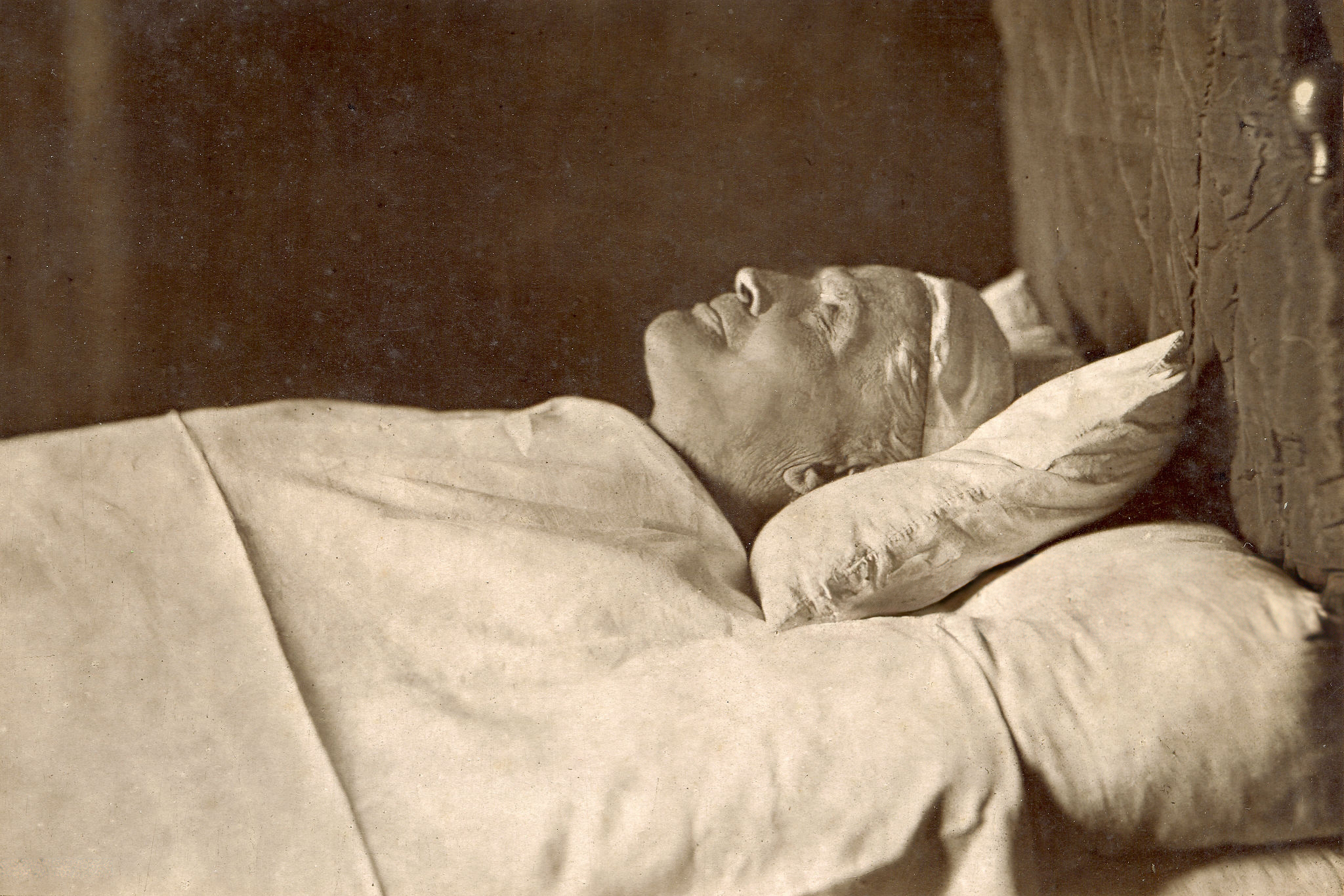
The pope who first allowed his living body to be photographed was also photographed after death. Here the question is no longer whether photography can compete with painting, but what the relation is between a photograph and something that has been.
Key text: Roland Barthes, Camera Lucida (1980).
- That-has-been (ça a été). Barthes defines the photograph as a certificate of presence: something or someone existed in front of the lens at a specific moment. Photography’s truth is the truth of a trace. For a more detailed gloss, see this annotated reading.
- Photography and death. Because the moment is irretrievably gone, every photograph carries a small version of death. The person photographed becomes what Barthes calls the spectrum, a returning ghost. His own example is a portrait of a man awaiting execution, in which he reads at once “he is dead and he is going to die”. The post-mortem portrait of Pius IX is a literal version of this.
Pope Pius XII: The Photograph as Commodity
By the time Eugenio Pacelli became Pius XII (1939–58), photography was no novelty for the papacy. Under his predecessor, Pius XI, the Holy See had built an illustrated press of its own, from L’Illustrazione Vaticana (1930–38) to the weekly L’Osservatore Romano della Domenica (1934), and the pope circulated in the picture magazines of the world. What remained contested was who controlled which images. The “screaming popes” that Francis Bacon began painting in 1949 show how fully the pope had become a photographic subject: Bacon worked from black-and-white reproductions of Velázquez’s Portrait of Pope Innocent X and from press photographs of Pius XII carried on the sedia gestatoria (National Gallery of Canada; Phaidon).
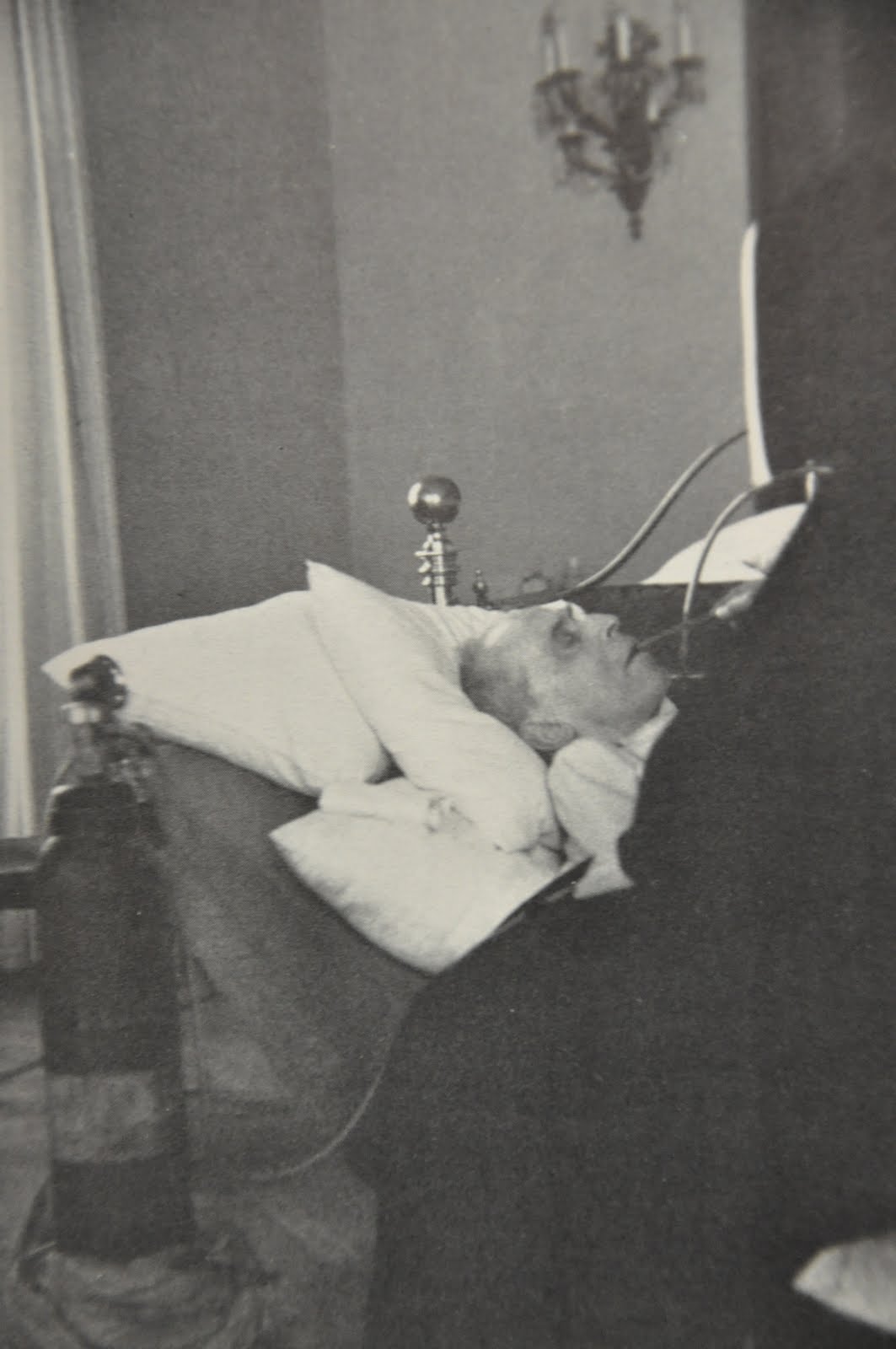
Pius XII’s personal physician, Riccardo Galeazzi-Lisi, photographed the pope on his deathbed and passed the pictures, with an article, to Paris Match and an Italian magazine, reportedly for $25,000. The cardinals dismissed him on 20 October 1958. What scandalised was less the existence of the photographs than their circulation: intimate, unauthorised images of a pope, turned into a commodity for the illustrated press.
Nearly forty years later the rules were written down. The apostolic constitution Universi Dominici Gregis, issued by John Paul II in February 1996, forbids using “any means whatsoever” to photograph or film the pope on his sickbed or after death, or to record his words for later reproduction (art. 30). Documentary photographs after death require the permission of the Cardinal Camerlengo, who will only allow the pope to be photographed in pontifical vestments. The text does not give its motive, although the website Catholic Answers suggests that it may go back to 1958, and that it is also the reason why there are no photographs of a sick pope. When Francis was in hospital in February 2025, the images of him on a respirator that circulated on social media were AI-generated fakes, as the website noted: where the real image is forbidden, the fake finds a vacancy. The pope has since become a recurring subject of AI-generated imagery, a phenomenon examined by The Guardian.
Key text: Walter Benjamin, “The Work of Art in the Age of Mechanical Reproduction” (1935/36).
- Cult value and exhibition value. Benjamin distinguishes between images valued for their ritual function, bound to presence, uniqueness, and an “aura”, and images valued for being shown. Mechanical reproduction shifts the weight from the first to the second.
- The last refuge of cult value: the face. In early photography, he argues, cult value survives in the portrait, in the cult of remembrance of absent or dead loved ones. The deathbed image of a pope is the extreme case: the most ritually charged face at the most ritually charged moment.
- Collision. Read this way, the Paris Match episode is a collision of the two values: an image of cult sold at the newsstand for its exhibition value. The later prohibition can be read as an attempt to regain control over that boundary.
Pope Benedict XVI: The Photograph as Construction
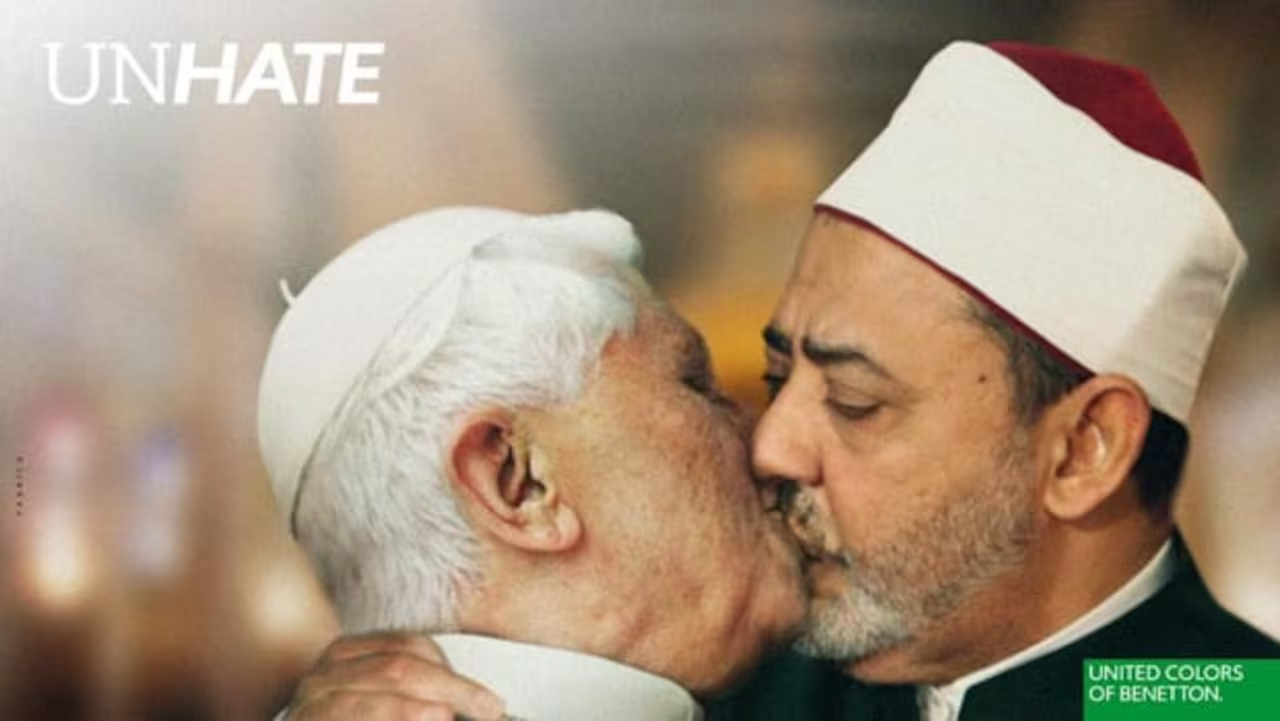
In November 2011 Benetton launched Unhate, a campaign of photomontages showing political enemies kissing on the lips: Barack Obama and Hugo Chávez, Benjamin Netanyahu and Mahmoud Abbas, and Benedict XVI with a leading Egyptian imam. The company presented the campaign as a call for tolerance and “global love”, a way of making visible how hatred grows from fear of the other. The Vatican denounced the image of the pope as an unacceptable provocation, an offence to the faithful and an example of advertising violating elementary respect in order to attract attention. Benetton withdrew it about an hour after the protest, as reported by The Guardian and by CBC/AP.
Nobody believed this photograph, and it offended anyway. This is the first sign that images act regardless of whether they are true, a point to which we will return. It is also the moment to ask what the digital changed. Photographs had been retouched and montaged since the nineteenth century, but digital tools made manipulation seamless, cheap, and ordinary. Here the pope is raw material: a recognisable, highly codified body that can be moved into any scene.
Key text: William J. Mitchell, The Reconfigured Eye: Visual Truth in the Post-Photographic Era (1992).
- The end of photographic truth. Analogue photography relied on a physical, causal link between the world and the image (“the camera never lies”), which gave photographs the status of objective evidence.
- The digital shift. Digital images are grids of discrete pixels rather than continuous analogue traces. They are therefore mutable, seamless to edit, and easy to synthesise from scratch. Mitchell names this the post-photographic era, and it is a crisis of the real: where Barthes’ photograph certifies, Mitchell’s image only proposes.
Pope John Paul II: The Photograph as Circulation
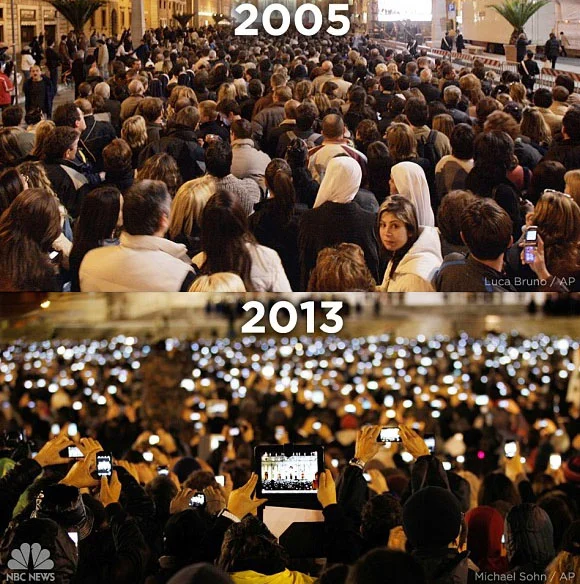
In March 2013 NBC News tweeted a composite of two photographs of crowds in St. Peter’s Square, eight years apart. The 2005 crowd holds up a scattering of phones; the 2013 crowd is a field of lit screens. “What a difference 8 years makes”, the tweet said, and the image went viral. The comparison is somewhat misleading, as HuffPost pointed out: the bottom photograph does show the crowd welcoming the newly elected Francis, but the top one was not taken at a papal election. It shows the days after the death of John Paul II, when his body was carried across the square. The comparison set a mourning crowd beside a celebrating one and let the caption do the rest.
The episode returns us to Pius IX and Pius XII. The death of a pope, once documented by a single post-mortem print and then by leaked bedside photographs, is now witnessed by a crowd in which everyone is a photographer. The comparison image is itself a networked image: it is copied, stripped of context, captioned, and passed on for what it communicates rather than for what it records.
Key text: Daniel Rubinstein and Katrina Sluis, “A Life More Photographic: Mapping the Networked Image” (2008).
Writing at the rise of Web 2.0 and early smartphone use, the authors argue that the digital image should not be seen as an immaterial copy of the analogue print but as something new: the networked image.
- From memento to data stream. Snapshot photography was print-oriented, private, and tied to special occasions. The networked image is fluid, endlessly reproducible, and oriented towards transmission. It is made with ubiquitous smartphones and becomes part of the banal flow of daily life.
- Photography as social currency. The value of an image shifts from its aesthetic quality or permanence to its use in communication, sharing, and self-presentation. Photographing becomes a performative, communal act.
- The dissolution of the original. Images exist to be edited, tagged, shared, and remixed. The art-historical fixation on a single authoritative print dissolves, and who controls an image becomes blurred as human and machine collaborate.
Pope Francis: The Image as Attention
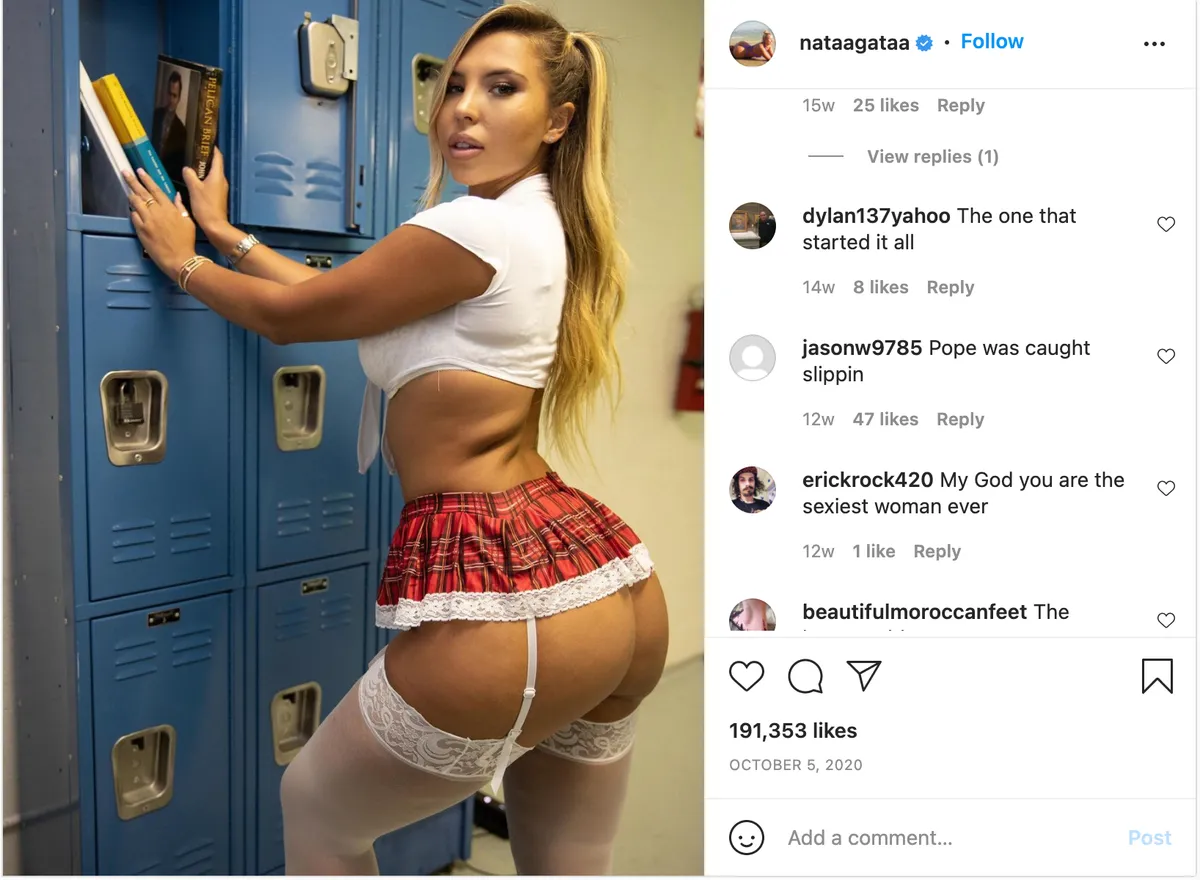
In November 2020 an Instagram photograph of the Brazilian model Natalia Garibotto in lingerie received thousands of likes. One of them came from the official account of Pope Francis. The like was noticed in mid-November, about six weeks after the photograph was posted, and removed the next day. A Vatican spokesperson told The Guardian that the Holy See could rule out that it had come from them, and that they had turned to Instagram for explanations. Garibotto joked that at least she was “going to heaven”. It is tempting to read the episode as proof that the seduction of images is so strong that even the most pious cannot resist it.
A like is a transaction. Attention is given to an image, its power of seduction is quantified, and value is created through circulation. Here the like of @franciscus also reads as an act of validation convertible into a place in paradise: perhaps a form of networked indulgence for the online age.

About a month later it appeared to happen again. A like from @franciscus surfaced on a photograph of another model, whose account is private, and a screenshot circulated as proof, in the early-internet tradition of “pics or it didn’t happen”. The Spanish site mag24.es greeted it with “here we go again”. Italian media were quick to speculate: was it a real like from the pope’s entourage, a fake, a publicity stunt, a human error, or a hack? Il Giornale noted that many suspected a successful Photoshop job meant to raise the profile of a model described as an OnlyFans star, and that the only evidence was a screenshot.
Whether either like was genuine remains unresolved, and I confess a preference for the hypothesis that @franciscus was also susceptible to the seduction of images. Lead us not into temptation. Equally appealing, though entirely speculative, is the idea of the account being hijacked as a prank by the Chinese hackers who, that summer, reportedly concealed an attack on Vatican networks in a forged letter of condolences from the Secretary of State. Yet the question of authenticity matters less for my argument than the explanations themselves. The speculations of the Italian press already give an accurate overview of who acts behind the surface of the networked image: hackers who can steal digital identities, Photoshop virtuosos with more or less ethical goals, influencers inventing strategies to grow their social capital, and tired social media managers and precarious communication interns who might forget to log out of the pope’s account while admiring half-naked models on a coffee break. They are all part of the networked workforce of the attention economy. They are also part of the invisible infrastructure that lets images appear on our screens: rendering farms, undersea cables, satellites, servers, coltan mines.
Behind every seductive image that tempts us into giving a token of attention lies a network of submerged stakeholders and resources, a very material infrastructure with a growing impact on the global environment. The seduction of images is built on top of this planetary system of human and machinic agents.
Key text: Jodi Dean, “Communicative Capitalism: Circulation and the Foreclosure of Politics” (2005).
- Circulation over meaning. Dean argues that in networked media what counts is that a message circulates, not that it is heard or answered. Participation, expression, and inclusion are captured and monetised as contributions to the flow.
- The “authenticity” trap. We can read influencer photography through this lens. Audiences crave real connection, so influencers mimic intimacy with bedroom mirrors, unretouched skin, and confessional selfies. But this is not intimacy; it is the capture of affect. The influencer turns emotional life and bodily likeness into a visual commodity, and vulnerability becomes an aesthetic strategy for algorithmic relevance and sponsorship.
The Balenciaga Pope: The Image as Statistics

In March 2023 a Chicago-area construction worker, Pablo Xavier, used Midjourney to generate images of Pope Francis in a huge white puffer coat and posted them to Facebook and Reddit, as he told BuzzFeed News. A Twitter user shared one of them with a casual “OKAAYYY”, and it went massively viral. Many people took it to be real, among them the journalist Ryan Broderick, who wrote about it in his newsletter Garbage Day. The tell is the cup that looks like a Starbucks cup in the pope’s hand. As the writer Joel Golby put it in The Guardian, he thought he was immune to being fooled online until he saw the pope in a coat.
Broderick offers three reasons why the image travelled so far. The casual way it was shared invited no scrutiny. Midjourney version 5 was simply very good, and its users had discovered that it excels at what looks like high-fashion photography. And the pope is strange and does strange things all the time: he has blessed a Lamborghini, so a big puffer coat is not hard to believe. Broderick’s verdict is that this was probably the first real mass-level AI hoax, and that the alarmist commentary to follow was entirely predictable.
Compare it with Benetton in 2011. There the image was a montage of photographs and nobody was fooled. Here the image was never a photograph at all, and many were fooled. Compare it also with the like of 2020: the dynamics of attention and circulation that made the pope a recurring figure in networked images now feed the generation of images themselves.
Key text: Hito Steyerl, “Mean Images” (2023).
Steyerl critiques tools like DALL-E and Midjourney. Algorithmic generation shifts visual culture from photographic representation to statistical rendering based on masses of scraped online data.
- Statistical averages, not representation. A generative model does not capture reality as photography does, nor does it create from nothing. It computes a statistical “mean” of its dataset, so its images are patchworks of the most common data points.
- The double meaning of “mean”. Beyond the average, these images are “mean” because they are extractive. They depend on the unpaid work of artists and the underpaid work of microworkers who tag data, and they often amplify the sexism, racism, and other biases of the historical data.
The Pope Trajectory
Laid side by side, the images tell their own history of photography.
| Pope | Image | Photographic shift | Key text |
|---|---|---|---|
| Pius IX | Portraits, 1860s–1878 | The photograph as trace of a body | Barthes, Camera Lucida (1980) |
| Pius XII | Deathbed photographs, 1958 | The photograph as commodity | Benjamin, “The Work of Art in the Age of Mechanical Reproduction” (1935/36) |
| Benedict XVI | Benetton Unhate, 2011 | The photograph as construction | W. J. Mitchell, The Reconfigured Eye (1992) |
| John Paul II / Francis | St. Peter’s Square, 2005 and 2013 | The image as circulation | Rubinstein and Sluis (2008) |
| Francis | The Instagram like, 2020 | The image as attention | Dean (2005) |
| Francis | The puffer coat, 2023 | The image as statistics | Steyerl (2023) |
We begin with a body that was once in front of a lens and end with an image that comes from no body at all, only from the average of millions of other images. In between, the pope moves from being the subject of a photograph to being its commodity, its raw material, its audience, its object of attention, and finally its statistical residue. No shift replaces the one before. The trace, the leak, the montage, the crowd, the like, and the average all coexist in the images we encounter today, and the course will keep returning to this accumulation.
In dieser Vorlesung folge ich einer Reihe von Bildern des Papstes, um zentrale Momente in der Geschichte der Fotografie und des digitalen Bildes zu streifen. Technisch und kulturell zugleich markieren diese Momente die Transformationen des Mediums seit seinen Anfängen.
Die Wahl des Papstes als Leitfigur ist teilweise willkürlich. Ein Pontifikat ist lang genug, dass Wahl und Tod eines Papstes unter sehr unterschiedlichen Bedingungen fotografiert werden. Der Heilige Stuhl ist zudem eine der konservativsten Institutionen überhaupt und die letzte absolute Monarchie Europas; seine Begegnungen mit der fotografischen und digitalen Kultur sind daher besonders sichtbar und oft unbeholfen. Ich hoffe, dass sich niemand katholischen Glaubens davon beleidigt fühlt: Die Bilder rund um den Pontifex dienen hier als Beispiele für eine Reflexion über ein Medium im ständigen Wandel.
Die Abfolge ist nicht streng chronologisch. Sie folgt sechs konzeptuellen Verschiebungen: von der Fotografie als Spur über die Fotografie als Ware und als Konstruktion sowie das Bild als Zirkulation und als Aufmerksamkeit bis zum Bild als Statistik. Jeder Abschnitt stellt ein Bild vor, erläutert die Rolle des Papstes darin und verankert die Episode in einem Schlüsseltext der Foto- und Medientheorie.
Papst Pius IX.: Die Fotografie als Spur
Giovanni Maria Mastai-Ferretti (1792–1878), Pius IX., gilt gemeinhin als der erste fotografierte Papst. Er hatte zudem das längste Pontifikat aller Päpste nach dem heiligen Petrus (1846–78), und es war ein Pontifikat des politischen Zerfalls. Mit einem liberalen Ruf gewählt, floh er während der Revolutionen von 1848 aus Rom, kehrte als Konservativer zurück und musste miterleben, wie die päpstlichen Gebiete im neuen italienischen Nationalstaat aufgingen (1861; Rom fiel 1870). Er beendete sein Leben als selbsterklärter „Gefangener des Vatikans“, als letzter der „Königspäpste“.
Die Ankunft der Fotografie war eine zweite Kontroverse neben der politischen. Das Medium verbreitete sich rasch in Europa, wurde aber nicht überall willkommen geheissen, am wenigsten in konservativen Kreisen, und die Malerei war über Jahrhunderte die eigene Bildtechnologie der Kirche. Giuseppe Pecci, ein jesuitischer Theologe und älterer Bruder von Leo XIII., dem Nachfolger Pius’ IX., soll sich zeitlebens weitgehend geweigert haben, fotografiert zu werden; er hielt die Malerei für eine weitaus überlegene und wohlwollendere Darstellung des Menschen (Kühne 1880). Sein Bruder hingegen wurde 1896 gefilmt, was in der Regel als das erste bewegte Bild eines Papstes gilt.
Pius IX. nahm das neue Medium an und sass der Kamera mehrfach Modell. Wir wissen nicht genau, wann und von wem die meisten dieser Porträts angefertigt wurden, doch sie zirkulierten als Cartes de Visite: Die Royal Collection besitzt ein Exemplar von 1862 von Fratelli d’Alessandri, das für Queen Victoria erworben wurde. Für den Kunsthistoriker Vicente Jesús Díaz Burillo ist diese Fotografie ein Gründungsmoment des modernen Papsttums: einer Institution, die die Moderne überdauert, indem sie die technische Bildreproduktion übernimmt. Die ersten Fotografien eines Papstes sind somit zugleich ein technischer Meilenstein und ein Moment kultureller Anpassung.
Das zweite Bild spitzt diesen Punkt zu.
Der Papst, der als erster seinen lebenden Körper fotografieren liess, wurde auch nach seinem Tod fotografiert. Die Frage lautet hier nicht mehr, ob die Fotografie mit der Malerei konkurrieren kann, sondern in welchem Verhältnis eine Fotografie zu etwas steht, das gewesen ist.
Schlüsseltext: Roland Barthes, Camera Lucida (1980).
- Das Es-ist-so-gewesen (ça a été). Barthes definiert die Fotografie als Zertifikat der Anwesenheit: Etwas oder jemand befand sich zu einem bestimmten Zeitpunkt vor dem Objektiv. Die Wahrheit der Fotografie ist die Wahrheit einer Spur. Eine ausführlichere Erläuterung bietet diese kommentierte Lektüre.
- Fotografie und Tod. Weil der Moment unwiederbringlich vergangen ist, trägt jede Fotografie eine kleine Version des Todes in sich. Die fotografierte Person wird zu dem, was Barthes das Spectrum nennt, einer wiederkehrenden Erscheinung. Sein eigenes Beispiel ist das Porträt eines Mannes, der auf seine Hinrichtung wartet und in dem er zugleich liest: „er ist tot und er wird sterben“. Das Post-mortem-Porträt von Pius IX. ist eine buchstäbliche Version davon.
Papst Pius XII.: Die Fotografie als Ware
Als Eugenio Pacelli 1939 Pius XII. wurde, war die Fotografie für das Papsttum längst keine Neuheit mehr. Unter seinem Vorgänger Pius XI. hatte der Heilige Stuhl eine eigene illustrierte Presse aufgebaut, von L’Illustrazione Vaticana (1930–38) bis zur Wochenzeitung L’Osservatore Romano della Domenica (1934), und der Papst zirkulierte in den Bildmagazinen der Welt. Umstritten blieb, wer welche Bilder kontrolliert. Die „schreienden Päpste“, die Francis Bacon ab 1949 malte, zeigen, wie sehr der Papst zum fotografischen Gegenstand geworden war: Bacon arbeitete nach Schwarz-Weiss-Reproduktionen von Velázquez’ Portrait of Pope Innocent X und nach Pressefotografien von Pius XII. auf der Sedia gestatoria (National Gallery of Canada; Phaidon).
Der Leibarzt von Pius XII., Riccardo Galeazzi-Lisi, fotografierte den Papst auf dem Sterbebett und gab die Aufnahmen zusammen mit einem Artikel an Paris Match und eine italienische Zeitschrift weiter, Berichten zufolge für 25’000 US-Dollar. Die Kardinäle entliessen ihn am 20. Oktober 1958. Skandalös war weniger die Existenz der Fotografien als ihre Zirkulation: intime, nicht autorisierte Bilder eines Papstes, verwandelt in eine Ware für die illustrierte Presse.
Knapp vierzig Jahre später wurden die Regeln festgeschrieben. Die Apostolische Konstitution Universi Dominici Gregis von Johannes Paul II. vom Februar 1996 verbietet es, den Papst auf dem Krankenbett oder nach dem Tod mit irgendwelchen Mitteln zu fotografieren oder zu filmen oder seine Worte zur späteren Wiedergabe aufzuzeichnen (Art. 30). Dokumentarische Aufnahmen nach dem Tod bedürfen der Erlaubnis des Kardinalkämmerers (Camerlengo), der nur Aufnahmen des Papstes in päpstlichen Gewändern gestattet. Der Text nennt kein Motiv; Catholic Answers vermutet, es könne auf 1958 zurückgehen. Das Verbot ist auch der Grund, warum es keine Fotografien eines kranken Papstes gibt. Als Franziskus im Februar 2025 im Spital lag, waren die in den sozialen Medien kursierenden Bilder von ihm am Beatmungsgerät KI-generierte Fälschungen, wie Catholic Answers festhielt: Wo das echte Bild verboten ist, findet die Fälschung eine Leerstelle. Der Papst ist seither ein wiederkehrendes Motiv KI-generierter Bilder geworden, ein Phänomen, das The Guardian untersucht hat.
Schlüsseltext: Walter Benjamin, „Das Kunstwerk im Zeitalter seiner technischen Reproduzierbarkeit“ (1935/36).
- Kultwert und Ausstellungswert. Benjamin unterscheidet zwischen Bildern, die wegen ihrer rituellen Funktion geschätzt werden, gebunden an Gegenwart, Einmaligkeit und eine „Aura“, und Bildern, die geschätzt werden, weil sie gezeigt werden. Die technische Reproduktion verlagert das Gewicht vom einen zum anderen.
- Das letzte Refugium des Kultwerts: das Antlitz. In der frühen Fotografie, so Benjamin, überlebt der Kultwert im Porträt, im Kult der Erinnerung an die fernen oder verstorbenen Lieben. Das Bild des Papstes auf dem Sterbebett ist der Extremfall: das rituell aufgeladenste Gesicht im rituell aufgeladensten Moment.
- Kollision. So gelesen ist die Paris-Match-Episode ein Zusammenstoss der beiden Werte: ein Kultbild, das für seinen Ausstellungswert am Kiosk verkauft wird. Das spätere Verbot lässt sich als Versuch lesen, die Kontrolle über diese Grenze zurückzugewinnen.
Papst Benedikt XVI.: Die Fotografie als Konstruktion
Im November 2011 lancierte Benetton Unhate, eine Kampagne aus Fotomontagen, die politische Gegner beim Kuss auf den Mund zeigen: Barack Obama und Hugo Chávez, Benjamin Netanjahu und Mahmud Abbas sowie Benedikt XVI. mit einem führenden ägyptischen Imam. Das Unternehmen präsentierte die Kampagne als Aufruf zu Toleranz und „global love“, als Versuch, sichtbar zu machen, wie Hass aus der Angst vor dem Anderen entsteht. Der Vatikan verurteilte das Bild des Papstes als inakzeptable Provokation, als Beleidigung der Gläubigen und als Beispiel dafür, wie Werbung elementare Regeln des Respekts verletzt, um durch Provokation Aufmerksamkeit zu erzeugen. Benetton zog das Bild etwa eine Stunde nach dem Protest zurück, wie The Guardian und CBC/AP berichteten.
Niemand hielt diese Fotografie für echt, und dennoch löste sie Empörung aus. Das ist das erste Anzeichen dafür, dass Bilder unabhängig davon wirken, ob sie wahr sind, ein Punkt, auf den wir zurückkommen werden. Es ist auch der Moment, danach zu fragen, was das Digitale verändert hat. Fotografien wurden seit dem 19. Jahrhundert retuschiert und montiert, doch digitale Werkzeuge machten die Manipulation nahtlos, billig und alltäglich. Der Papst ist hier Rohmaterial: ein erkennbarer, hochgradig kodifizierter Körper, der in jede beliebige Szene versetzt werden kann.
Schlüsseltext: William J. Mitchell, The Reconfigured Eye: Visual Truth in the Post-Photographic Era (1992).
- Das Ende der fotografischen Wahrheit. Die analoge Fotografie beruhte auf einer physischen, kausalen Verbindung zwischen Welt und Bild („die Kamera lügt nie“), die Fotografien den Status objektiver Beweise verlieh.
- Die digitale Verschiebung. Digitale Bilder sind Raster aus diskreten Pixeln und keine kontinuierlichen analogen Spuren. Sie sind daher veränderbar, nahtlos zu bearbeiten und leicht von Grund auf zu synthetisieren. Mitchell nennt dies das postfotografische Zeitalter, und es ist eine Krise des Realen: Wo Barthes’ Fotografie bezeugt, schlägt Mitchells Bild nur vor.
Papst Johannes Paul II.: Die Fotografie als Zirkulation
Im März 2013 twitterte NBC News eine Gegenüberstellung zweier Fotografien von Menschenmengen auf dem Petersplatz, acht Jahre auseinander. Die Menge von 2005 hält eine Handvoll Telefone hoch; die Menge von 2013 ist ein Meer aus leuchtenden Bildschirmen. „What a difference 8 years makes“, lautete der Tweet, und das Bild ging viral. Der Vergleich ist, wie die HuffPost anmerkte, etwas irreführend: Das untere Foto zeigt tatsächlich die Menge, die den neu gewählten Franziskus begrüsst, das obere wurde jedoch nicht bei einer Papstwahl aufgenommen. Es zeigt die Tage nach dem Tod von Johannes Paul II., als sein Leichnam über den Platz getragen wurde. Die Gegenüberstellung stellte eine trauernde Menge neben eine jubelnde und überliess den Rest der Bildunterschrift.
Die Episode führt uns zu Pius IX. und Pius XII. zurück. Der Tod eines Papstes, einst durch einen einzigen Post-mortem-Abzug und dann durch heimlich weitergegebene Aufnahmen vom Sterbebett dokumentiert, wird heute von einer Menge bezeugt, in der alle fotografieren. Das Vergleichsbild ist selbst ein vernetztes Bild: Es wird kopiert, aus seinem Kontext gelöst, beschriftet und weitergereicht für das, was es kommuniziert, und nicht für das, was es aufzeichnet.
Schlüsseltext: Daniel Rubinstein und Katrina Sluis, „A Life More Photographic: Mapping the Networked Image“ (2008).
Die Autor:innen schreiben zur Zeit des Aufstiegs von Web 2.0 und der frühen Smartphone-Nutzung und argumentieren, das digitale Bild solle nicht als immaterieller Ersatz des analogen Abzugs verstanden werden, sondern als etwas Neues: das vernetzte Bild (networked image).
- Vom Andenken zum Datenstrom. Die Schnappschussfotografie war auf den Abzug ausgerichtet, privat und an besondere Anlässe gebunden. Das vernetzte Bild ist fliessend, endlos reproduzierbar und auf Übertragung ausgerichtet. Es entsteht mit allgegenwärtigen Smartphones und wird Teil des banalen Alltagsflusses.
- Fotografie als soziale Währung. Der Wert eines Bildes verschiebt sich von seiner ästhetischen Qualität oder Dauerhaftigkeit hin zu seinem Nutzen für Kommunikation, Teilen und Selbstdarstellung. Fotografieren wird zu einem performativen, gemeinschaftlichen Akt.
- Die Auflösung des Originals. Bilder existieren, um bearbeitet, getaggt, geteilt und geremixt zu werden. Die kunsthistorische Fixierung auf einen einzigen autoritativen Abzug löst sich auf, und die Frage, wer ein Bild kontrolliert, wird unscharf, wenn Mensch und Maschine zusammenarbeiten.
Papst Franziskus: Das Bild als Aufmerksamkeit
Im November 2020 erhielt eine Instagram-Fotografie des brasilianischen Models Natalia Garibotto in Unterwäsche Tausende Likes. Einer davon stammte vom offiziellen Account von Papst Franziskus. Der Like wurde Mitte November bemerkt, etwa sechs Wochen nach der Veröffentlichung der Fotografie, und am nächsten Tag entfernt. Ein Sprecher des Vatikans erklärte gegenüber The Guardian, der Heilige Stuhl könne ausschliessen, dass der Like von ihm stamme, und man habe sich mit der Bitte um Erklärungen an Instagram gewandt. Garibotto scherzte, sie sei nun wenigstens “going to heaven”. Es ist verlockend, die Episode als Beleg dafür zu lesen, dass die Verführungskraft der Bilder so stark ist, dass selbst die Frömmsten ihr nicht widerstehen können.
Ein Like ist eine Transaktion. Einem Bild wird Aufmerksamkeit geschenkt, seine Verführungskraft wird quantifiziert, und durch Zirkulation entsteht Wert. Der Like von @franciscus lässt sich hier auch als Akt der Bestätigung lesen, der sich in einen Platz im Paradies umrechnen lässt: vielleicht ein vernetzter Ablass für das Online-Zeitalter.
Etwa einen Monat später schien sich das Ganze zu wiederholen. Ein Like von @franciscus tauchte bei der Fotografie eines anderen Models auf, dessen Account privat ist, und ein Screenshot zirkulierte als Beweis, ganz in der Tradition des frühen Internets: „pics or it didn’t happen“. Die spanische Seite mag24.es quittierte es mit „here we go again“. Italienische Medien spekulierten rasch: War es ein echter Like aus dem Umfeld des Papstes, ein Fake, ein Werbegag, ein menschlicher Fehler oder ein Hack? Il Giornale hielt fest, viele vermuteten eine gelungene Photoshop-Montage, die das Profil eines als OnlyFans-Star beschriebenen Models stärken solle, und der einzige Beweis sei ein Screenshot.
Ob einer der beiden Likes echt war, bleibt ungeklärt, und ich gestehe eine Vorliebe für die Hypothese, dass auch @franciscus der Verführung der Bilder erlegen ist. Und führe uns nicht in Versuchung. Ebenso reizvoll, wenngleich rein spekulativ, ist die Vorstellung, der Account sei als Streich von den chinesischen Hackern gekapert worden, die in jenem Sommer Berichten zufolge einen Angriff auf Vatikan-Netzwerke in einem gefälschten Kondolenzschreiben des Kardinalstaatssekretärs versteckt hatten. Doch für mein Argument ist die Frage der Echtheit weniger wichtig als die Erklärungen selbst. Die Spekulationen der italienischen Presse geben bereits einen treffenden Überblick darüber, wer hinter der Oberfläche des vernetzten Bildes agiert: Hacker:innen, die digitale Identitäten stehlen können, Photoshop-Virtuos:innen mit mehr oder weniger ethischen Zielen, Influencer:innen, die Strategien zur Mehrung ihres sozialen Kapitals entwickeln, sowie müde Social-Media-Manager:innen und prekär beschäftigte Kommunikationspraktikant:innen, die vergessen könnten, sich aus dem Account des Papstes auszuloggen, während sie in der Kaffeepause halbnackte Models bewundern. Sie alle gehören zur vernetzten Arbeiterschaft der Aufmerksamkeitsökonomie. Sie sind auch Teil der unsichtbaren Infrastruktur, die Bilder auf unseren Bildschirmen erscheinen lässt: Rendering-Farmen, Tiefseekabel, Satelliten, Server, Coltan-Minen.
Hinter jedem verführerischen Bild, das uns dazu bringt, ein Zeichen unserer Aufmerksamkeit zu schenken, liegt ein Netzwerk verborgener Akteur:innen und Ressourcen, eine äusserst materielle Infrastruktur mit wachsenden Auswirkungen auf die globale Umwelt. Die Verführung der Bilder ruht auf diesem planetarischen System menschlicher und maschineller Instanzen.
Schlüsseltext: Jodi Dean, „Communicative Capitalism: Circulation and the Foreclosure of Politics“ (2005).
- Zirkulation vor Bedeutung. Dean argumentiert, in vernetzten Medien zähle, dass eine Nachricht zirkuliert, nicht dass sie gehört oder beantwortet wird. Teilhabe, Ausdruck und Inklusion werden als Beiträge zum Fluss vereinnahmt und monetarisiert.
- Die „Authentizitätsfalle“. Durch diese Linse lässt sich Influencer-Fotografie lesen. Das Publikum sehnt sich nach echter Verbindung, also imitieren Influencer:innen Intimität mit Schlafzimmerspiegeln, unretuschierter Haut und bekenntnishaften Selfies. Doch das ist keine Intimität, sondern die Vereinnahmung von Affekt. Die Influencer:innen verwandeln ihr Gefühlsleben und ihr körperliches Erscheinungsbild in eine visuelle Ware, und Verletzlichkeit wird zu einer ästhetischen Strategie für algorithmische Relevanz und Sponsoring.
Der Balenciaga-Papst: Das Bild als Statistik
Im März 2023 generierte ein Bauarbeiter aus dem Raum Chicago, Pablo Xavier, mit Midjourney Bilder von Papst Franziskus in einer riesigen weissen Pufferjacke und stellte sie auf Facebook und Reddit, wie er BuzzFeed News erzählte. Ein Twitter-Nutzer teilte eines davon mit einem beiläufigen „OKAAYYY“, und es ging massiv viral. Viele hielten es für echt, darunter der Journalist Ryan Broderick, der in seinem Newsletter Garbage Day darüber schrieb. Das verräterische Detail ist der Becher in der Hand des Papstes, der wie ein Starbucks-Becher aussieht. Der Autor Joel Golby schrieb im Guardian, er habe sich für immun gegen Täuschungen im Netz gehalten, bis er den Papst im Mantel gesehen habe.
Broderick nennt drei Gründe, warum sich das Bild so weit verbreitete. Die beiläufige Art, wie es geteilt wurde, lud nicht zum genauen Hinsehen ein. Midjourney in Version 5 war schlicht sehr gut, und seine Nutzer:innen hatten entdeckt, dass es sich hervorragend für Bilder eignet, die wie Modefotografie aussehen. Und der Papst ist seltsam und tut ständig seltsame Dinge: Er hat einen Lamborghini gesegnet, eine grosse Pufferjacke ist also nicht schwer zu glauben. Brodericks Urteil lautet, es habe sich wohl um den ersten echten KI-Hoax im Massenmassstab gehandelt, und die alarmistischen Kommentare, die folgen würden, seien völlig vorhersehbar gewesen.
Vergleichen wir es mit Benetton 2011. Dort war das Bild eine Montage aus Fotografien, und niemand wurde getäuscht. Hier war das Bild nie eine Fotografie, und viele wurden getäuscht. Vergleichen wir es auch mit dem Like von 2020: Die Dynamiken von Aufmerksamkeit und Zirkulation, die den Papst zu einer wiederkehrenden Figur vernetzter Bilder machten, speisen nun die Erzeugung der Bilder selbst.
Schlüsseltext: Hito Steyerl, „Mean Images“ (2023).
Steyerl kritisiert Werkzeuge wie DALL-E und Midjourney. Algorithmische Generierung verschiebt die visuelle Kultur von der fotografischen Repräsentation hin zu einer statistischen Wiedergabe auf der Grundlage riesiger Mengen aus dem Netz gescrapter Daten.
- Statistische Durchschnitte statt Repräsentation. Ein generatives Modell erfasst die Wirklichkeit nicht wie die Fotografie, erschafft aber auch nichts aus dem Nichts. Es berechnet einen statistischen „Mittelwert“ (mean) seines Datensatzes, seine Bilder sind daher Flickenteppiche der häufigsten Datenpunkte.
- Die doppelte Bedeutung von „mean“. Über den Durchschnitt hinaus sind diese Bilder „mean“ im Sinne von gemein, weil sie extraktiv sind. Sie beruhen auf der unbezahlten Arbeit von Künstler:innen und der unterbezahlten Arbeit von Mikroarbeiter:innen, die Daten annotieren, und sie verstärken häufig Sexismus, Rassismus und andere Verzerrungen der historischen Daten.
Die Papst-Trajektorie
Nebeneinandergelegt erzählen die Bilder ihre eigene Geschichte der Fotografie.
| Papst | Bild | Fotografische Verschiebung | Schlüsseltext |
|---|---|---|---|
| Pius IX. | Porträts, 1860er–1878 | Die Fotografie als Spur eines Körpers | Barthes, Camera Lucida (1980) |
| Pius XII. | Fotografien vom Sterbebett, 1958 | Die Fotografie als Ware | Benjamin, „Das Kunstwerk im Zeitalter seiner technischen Reproduzierbarkeit“ (1935/36) |
| Benedikt XVI. | Benetton Unhate, 2011 | Die Fotografie als Konstruktion | W. J. Mitchell, The Reconfigured Eye (1992) |
| Johannes Paul II. / Franziskus | Petersplatz, 2005 und 2013 | Das Bild als Zirkulation | Rubinstein und Sluis (2008) |
| Franziskus | Der Instagram-Like, 2020 | Das Bild als Aufmerksamkeit | Dean (2005) |
| Franziskus | Die Pufferjacke, 2023 | Das Bild als Statistik | Steyerl (2023) |
Wir beginnen mit einem Körper, der einst vor einer Linse stand, und enden mit einem Bild, das von keinem Körper stammt, sondern nur aus dem Durchschnitt von Millionen anderer Bilder. Dazwischen wandert der Papst vom Gegenstand einer Fotografie zu deren Ware, Rohmaterial, Publikum und Aufmerksamkeitsobjekt und schliesslich zu ihrem statistischen Rückstand. Keine Verschiebung ersetzt die vorherige. Die Spur, die Indiskretion, die Montage, die Menge, der Like und der Durchschnitt bestehen in den Bildern, denen wir heute begegnen, nebeneinander fort, und der Kurs wird immer wieder auf diese Akkumulation zurückkommen.